
Vandaag of morgen in huis

Kwaliteit gegarandeerd

Welkomstaanbiedingen ontgrendelen: GRATIS bezorging | Tot 80% korting | Gratis 30 dagen JoyPlus-proefperiode
Download de app
Drinking less sugar sounds simple, but the label on a sugar-free fruit drink does not always tell the whole story. A package marked “zero sugar” may contain sweeteners, while a fruit drink with no added sugar can still contain natural sugars from fruit. Serving size, fruit percentage and pack format can also have a major impact on price and suitability.
As a Joybuy Product Recommendation Officer, I filter the most important product information into practical guidance. This helps you quickly identify which sugar-free soft drink, tropical fruit drink or low-calorie beverage best suits your needs.
A fruit juice with no added sugar can still contain natural fruit sugars. For example, Appelsientje Orange Juice lists 8.6 grams of sugar per 100 ml, despite stating that no sugar has been added. That is different from a drink containing 0 grams of sugar.
Always check:
A zero-sugar drink may be low in calories while still containing several sweeteners, flavourings, acids or colourings. That does not automatically make it unsuitable, but it can be important for taste and personal preference.
For example, Wicky Raspberry lists 1 kcal and less than 0.1 grams of sugar per 100 ml. The ingredients list includes sucralose and acesulfame-K, among other ingredients. If you prefer a shorter ingredients list or natural sweeteners, you therefore need to look beyond the front of the package.
A 1.5-litre bottle is convenient with a meal or when serving several people. For school, work or travel, cans and small bottles are more practical. A multipack of fruit drinks may offer a lower price per serving, but it takes up more storage space and is less suitable if you first want to try different flavours.
Always compare products per 100 ml, rather than looking only at the package as a whole. This lets you compare a 200 ml serving fairly with a 330 ml can or a 1.5-litre bottle.
As a reference point based on the available product information:
A higher fruit percentage does not automatically mean less sugar. It mainly helps you understand how much fruit the drink contains.
Check whether a product is sweetened with sucralose, acesulfame-K, steviol glycosides or other sweeteners. This is particularly relevant if you want to avoid a specific flavour profile or ingredient composition.
Also pay attention to allergens. According to the ingredients list, Taksi Tropical Fruit Drink contains 40% milk components, despite conflicting allergen information in the product data. If you have a milk allergy, always check the physical label and the latest product information before ordering.
For home use, 1-litre and 1.5-litre packages are often practical. Smaller portions are more convenient on the go and make it easier to limit the total amount consumed at one time.
Before purchasing, check:
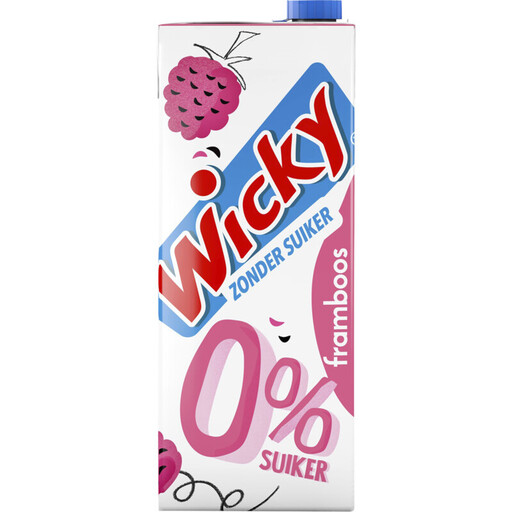
Why it suits this profile: A large bottle is suitable for families, meals and everyday use at home. The raspberry flavour is a good choice for anyone looking for a straightforward sugar-free soft drink.
The nutritional information lists 1 kcal and less than 0.1 grams of sugar per 100 ml. This makes it easier to distinguish between “sugar-free” and “no added sugar”.
1.5-litre contents, 1 kcal per 100 ml and added vitamin E according to the product information. Contains sweeteners such as sucralose and acesulfame-K.
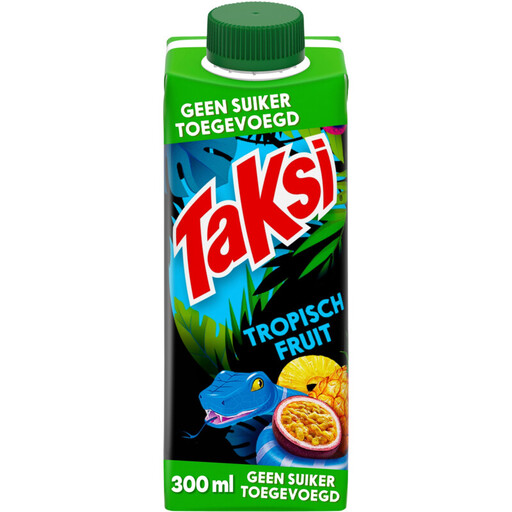
Why it suits this profile: The 300 ml format is convenient for on-the-go use. The combination of pineapple, passion fruit and apple offers a different flavour profile from standard sugar-free soft drinks.
The drink is described as having no added sugar, but the label lists 2.4 grams of sugar per 100 ml. This prevents you from confusing “no added sugar” with sugar-free.
300 ml per bottle, 11 kcal per 100 ml and 17 mg of vitamin C per 100 ml according to the product information. Please note: the product contains milk components.

Why it suits this profile: A tray of twelve cans is ideal for households that regularly serve or take a tropical fruit drink with them.
The product description states 30% passion fruit juice and 17 kcal per 100 ml. This allows you to compare fruit percentage and energy content rather than judging the drink by its tropical packaging alone.
12 cans of 330 ml, with no added sugar according to the product information and suitable for serving chilled.
We have curated an up-to-date selection of products that match these practical buying criteria and the available Dutch product information.
For families, Wicky Mango Fruit Drink 6 x 200 ml and Capri-Sun Monster Alarm Zero Sugar 10 x 200 ml are practical multipacks. The product information for both lists less than 0.5 grams of sugar per 100 ml; Wicky Mango also contains added vitamin C.
If you are looking for a larger stock of tropical flavours, you can also compare Iam Superjuice Mango, Lychee, Pink Guava, Mangosteen and Soursop. These products are sold in trays of 12 x 330 ml. Depending on the flavour, the stated calorie content ranges from around 15 to 18 kcal per 100 ml. Always check the current label, as ingredients and nutritional values may change.
No. “No added sugar” means that no extra sugar has been added according to the product information. Fruit naturally contains sugar. Always compare the sugar content per 100 ml in the nutrition table.
A 300 ml bottle, 330 ml can or 200 ml carton is generally easier to take with you than a 1.5-litre bottle. For a family or regular use at home, a multipack or large bottle may be more practical.
They are often low in calories, but this depends on the recipe. Wicky Raspberry lists 1 kcal per 100 ml, while Iam Superjuice Soursop lists 18 kcal per 100 ml. Check the nutritional information and serving size before buying a sugar-free drink.
