
Vandaag of morgen in huis

Kwaliteit gegarandeerd

Welkomstaanbiedingen ontgrendelen: GRATIS bezorging | Tot 80% korting | Gratis 30 dagen JoyPlus-proefperiode
Download de app
Apple juice may seem like a simple choice, but there’s a big difference between 100% pure apple juice, a fruit drink and an apple and peach drink. Terms such as “no added sugar” and “natural” can also be misleading if you don’t check the label.
So the most important question isn’t just which flavour you like. You’ll also want to consider how much fruit juice it contains, what size suits your needs and which ingredients you expect. This practical guide will help you compare apple juice using information you can check for yourself.
Apple juice with no added sugar still contains naturally occurring fruit sugars. A product made with 100% apple juice can therefore contain around 9 to 11 grams of sugar per 100 millilitres. Always check the nutrition table, not just the front of the pack.
A fruit drink may contain less sugar per 100 millilitres because it has been diluted with water. However, this also means it contains a lower proportion of fruit.
With 100% pure apple juice, the product information states that the contents are apple juice, often from concentrate. A fruit drink usually contains water and a lower proportion of juice. Examples include apple and pear juice, apple and peach drinks, and lightly sparkling varieties.
Check the order of the ingredients. Those listed first are present in the largest quantities. A list that starts with “water, fruit juice from concentrate” indicates a drink, not pure juice.
A 1.5-litre bottle may seem like good value, but apple juice usually needs to be kept chilled after opening and used within the time stated on the pack. For a smaller household, a 1-litre bottle or single-serve pack may be more practical. A 1.5-litre bottle may be a better fit for families or for serving with several meals.
So compare the price per litre as well as how long you expect the juice to last.
If you want a pure fruit flavour, choose a product clearly labelled 100% apple juice or with a similar fruit content. For example, Flevosap Apple Juice lists apple juice as its only ingredient. Appelsientje Golden Apple Pure Juice lists concentrated apple juice and 100% fruit content.
Apple and pear juice has a different balance of flavours. Flevosap Apple Pear Juice lists 50% apple juice and 50% pear juice. This is worth considering if you’re looking for a milder, sweeter fruit flavour.
Compare the values per 100 millilitres. According to the product information provided, Surango Apple Juice contains 88 kcal and 20.4 grams of sugars per 100 millilitres. For a fruit drink such as DubbelFrisss Apple Peach, the product specification gives 23 kcal and 5.5 grams of sugars per 100 millilitres.
A lower energy value may be linked to dilution or the use of sweeteners. For example, DubbelFrisss Apple Peach 0.35 litre lists sucralose and around 1 kcal per 100 millilitres. So always check the full ingredients list if you want to avoid sweeteners.
You can identify organic apple juice by the organic label and the accompanying information on the pack. For example, Bio+ Apple Juice is labelled “organic” and lists apple juice as an ingredient. Organic doesn’t automatically mean a product contains less sugar; the nutrition table is still the best guide.
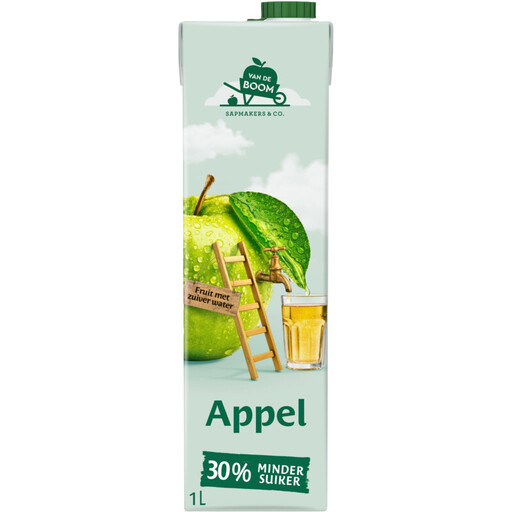
Why it suits this profile: The 1-litre pack is a manageable size for everyday use, and the product information states that it contains 70% fruit drink and no added sugar.
The fruit content and ingredients are clearly listed, so you won’t mistake it for 100% pure apple juice.
1-litre pack; according to the product information, 29 kcal and 6.7 grams of sugar per 100 millilitres.
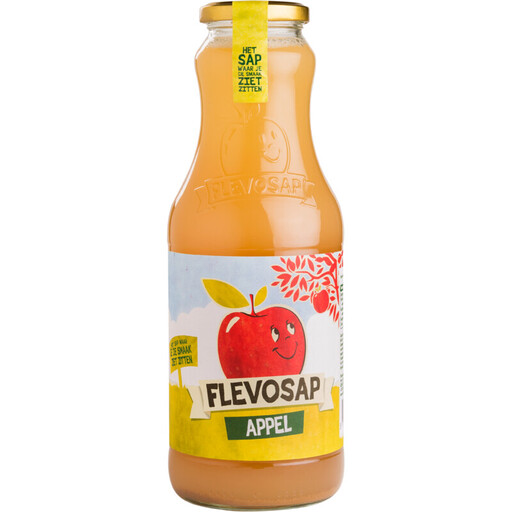
Why it suits this profile: The product information describes it as 100% pure apple juice, lightly filtered and with no added ingredients.
According to the information provided, the ingredients list consists of 100% apple juice, with no added flavourings or preservatives.
100% fruit; 1-litre pack; 46 kcal per 100 millilitres according to the product information.
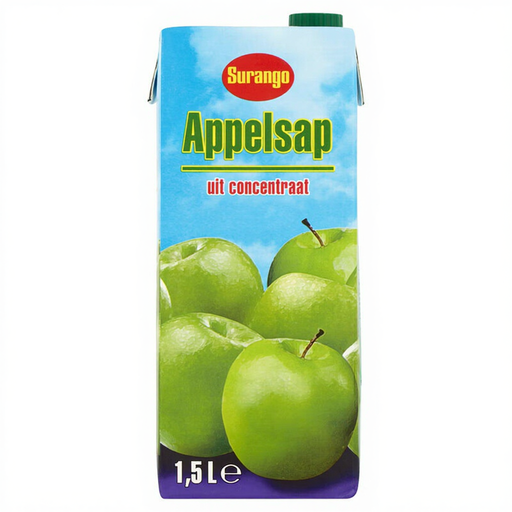
Why it suits this profile: The 1.5-litre pack is practical for families, several servings or using as a base for a mix.
The pack size is clearly stated as 1.5 litres, and the product details list apple juice from concentrate as an ingredient.
Large family-size pack; according to the product information, 88 kcal and 20.4 grams of sugar per 100 millilitres.
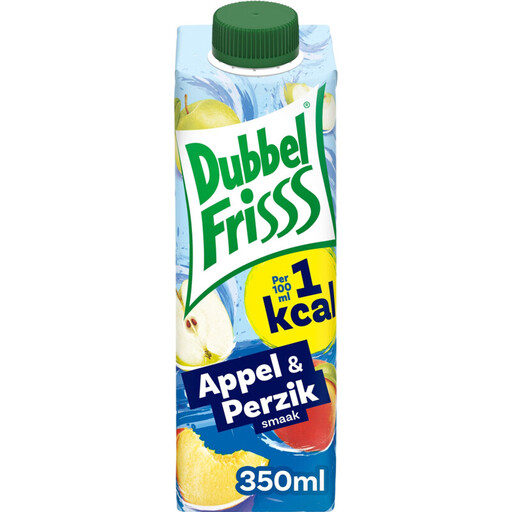
Why it suits this profile: The 350-millilitre single-serve pack is easy to take with you and contains around 1 kcal per 100 millilitres according to the product information.
The label states that it contains 2% fruit and includes a sweetener, making it clear that this is a fruit drink, not pure apple juice.
Handy size; apple and peach flavour; low energy value according to the nutrition information provided.
We’ve put together a full, up-to-date list of products that meet these strict selection criteria and the applicable European safety regulations.
No. “No added sugar” means that no extra sugar has been added to the product. The natural sugars from apples are still present. So compare the “of which sugars” value per 100 millilitres.
It varies from product to product. Once opened, apple juice should generally be kept chilled, and you should follow the timeframe on the pack. Close the bottle securely and don’t use the product if the packaging was damaged or the juice smells or tastes unusual.
It depends on how much you drink and the price per litre. A 1.5-litre pack may be practical for a family, while a 1-litre pack may help reduce waste in a smaller household. As well as comparing the price per litre, consider how much you’ll use within the storage period.
