
Vandaag of morgen in huis

Kwaliteit gegarandeerd

Welkomstaanbiedingen ontgrendelen: GRATIS bezorging | Tot 80% korting | Gratis 30 dagen JoyPlus-proefperiode
Download de app
Stainless steel food storage containers are popular with households, meal preppers, students and commuters who want to store leftovers, snacks or lunch without disposable plastic. However, a shiny metal exterior says little about everyday use. A lid may be difficult to close, a silicone ring can quickly lose its shape and a container that appears suitable for hot soup may be awkward to carry.
Pay particular attention to these common pitfalls:
With stainless steel food storage containers, you will often come across 304 and 316 steel. According to the product descriptions of the models mentioned, 304 stainless steel is food-grade stainless steel for everyday storage. 316 or 316L is described in the product information as a type of steel with greater corrosion resistance.
That does not mean a 316 model is necessary for every user. For lunch, leftovers and meal prep, 304 stainless steel may be perfectly practical. If you often cook outdoors, carry salty dishes or want an especially robust design, consider 316 or 316L. Also check the quality of the lid: a glass lid, plastic lid or silicone seal all contribute to ease of use.
For leak-free food containers, a well-fitting lid and flexible silicone ring are more important than the container material alone. Look for:
The product information for the COOKER KING models mentions a silicone air valve. For hot soup or other warm food, the information states that any built-up steam pressure must first be released before opening the lid. Do not leave hot contents sealed while cooling for extended periods without following the usage instructions.
For a small snack, 600 ml may be enough. A serving of lunch or salad is more likely to fit in approximately 1,000 to 1,100 ml. For larger quantities, sizes of 1,800, 2,200 or 3,000 ml are available. A set with several sizes is useful if you want to store breakfast, snacks and dinner.
Dishwasher-safe storage containers save time, but bear in mind that this may apply only to the metal container. COOKER KING states that its containers are dishwasher-safe, while the lids and silicone seals are best washed on the top rack or by hand. An insulated lunch bag must not be put in the dishwasher.
If you are looking for freezer-safe food containers, check whether both the container and the lid are suitable. Leave room around liquids, as the contents expand when frozen. Stackable storage boxes are practical in a Dutch fridge, where every centimetre counts.
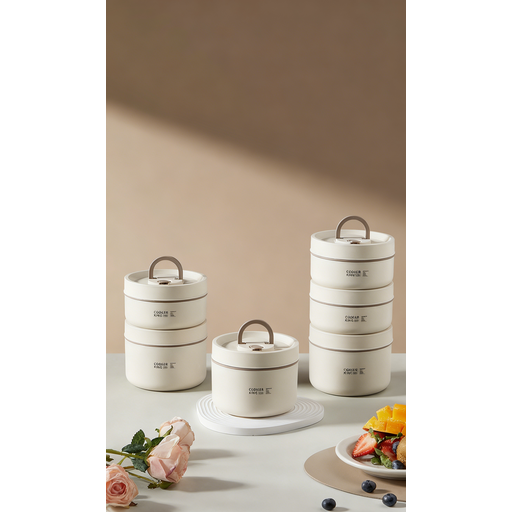
Why it suits this profile: A four-piece set is an easy starting point for lunch, leftovers and snacks, without having to buy several separate sizes straight away.
The product information mentions a silicone valve for releasing pressure from hot dishes and dishwasher-safe containers. Check the instructions for the lids and seals separately.
304 stainless steel; set of four; containers described as dishwasher-safe in the product information.

Why it suits this profile: Four rectangular 1,600 ml containers are ideal for households that regularly meal prep or store larger quantities.
The listing mentions a well-fitting lid seal, freezer use and dishwasher cleaning. Do not use the container in a microwave and avoid naked flames.
316L stainless steel; four identical 1,600 ml containers; described in the product information as suitable for the dishwasher and freezer.

Why it suits this profile: A wide opening and vacuum insulation are useful for commuters, athletes, campers and anyone taking soup or a hot meal with them.
The product description mentions a leak-proof closure and a wide opening. The stated hot- and cold-retention period of 4–6 hours is a brand specification; the actual duration depends on the quantity, starting temperature and surroundings.
316 stainless steel; 1.5-litre capacity; vacuum insulation; wide opening for filling and cleaning.
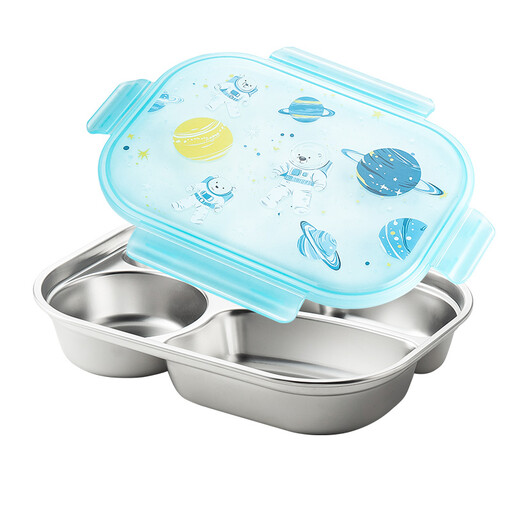
Why it suits this profile: Four compartments keep bread, fruit, snacks and side dishes separate during school days, office hours or a picnic.
The compartments prevent different foods from mixing together. Before buying, check the closure and the model’s dimensions to make sure they fit your bag.
316 stainless steel; four compartments; portable size for lunch and picnics.
We have put together a complete, up-to-date list of products that fully meet these strict selection criteria and the applicable European safety regulations.
A stainless steel lunch box or food container requires little maintenance, but the seal deserves extra attention.
A bento lunch box with several compartments is suitable for dry or semi-dry foods. For soup, sauce or a meal that needs to stay hot for several hours, an insulated food thermos is a better choice. An ordinary stainless steel storage container does not retain temperature in the same way as a vacuum-insulated food jar.
No. Metal must not be used in a microwave. Even if a product has a glass lid, the metal container itself remains unsuitable for microwave use. Use a microwave-safe dish for reheating, then store the food in the stainless steel container.
That depends on the specific model. According to the product information, some Maxcook sets are described as freezer-safe. When storing liquid food, leave enough room for expansion and avoid exposing glass lids to significant temperature changes.
According to the product description of various Maxcook models, food stays hot or cold for approximately 4–6 hours. This is a claim made by the brand and is not a fixed guarantee for every situation. Preheating with hot water, filling the pot properly and closing the lid immediately can help retain the temperature. The outside temperature and the starting temperature of the food also have an impact.
