
Vandaag of morgen in huis

Kwaliteit gegarandeerd

Welkomstaanbiedingen ontgrendelen: GRATIS bezorging | Tot 80% korting | Gratis 30 dagen JoyPlus-proefperiode
Download de app
A thermos flask seems simple: fill it, screw the lid on, and take it with you. In practice, most problems arise from choosing the wrong capacity, a closure that doesn't suit how you'll use it, or an insulation rating that doesn't match your expectations. A flask that works perfectly for water on a walk isn't automatically suitable for coffee in a work bag.
As a Joybuy Product Recommendation Officer, I focus on the verifiable features: capacity, material, closure, cleaning and the stated usage duration. That way, you avoid paying for functions you don't actually need.
Brands often claim that a flask can keep drinks hot or cold for dozens of hours. According to Stanley's own information, the Classic Bottle XL can keep contents hot or cold for up to 45 hours. According to Mepal's own information, drinks in the Ellipse flask stay hot for up to 12 hours and cold for up to 24 hours.
These figures are product claims from the brands, not a guarantee for every situation. The actual temperature is affected by the starting temperature, how often you open the flask, the amount of contents and the ambient temperature. For a train journey or a day at work, you probably don't need a model rated for several days.
A leak-proof thermos flask stands or falls with the lid, sealing ring and correct closure. So check whether the manufacturer explicitly mentions a leak-proof or airtight closure. Also look out for warnings: some models must not be turned upside down or tilted, while others have a safety lock.
A drinking spout with one-handed operation is handy on a bike or on the go, but a screw cap with a wide opening is more practical for cleaning and adding ice cubes. So consider the situation in which you'll use the flask, not just the word "leak-proof".
A 1-litre thermos flask or larger is suitable for long days, families or sharing with others. However, this comes with more weight and larger dimensions. A 500 ml flask usually fits more easily in a rucksack or cup holder. For soup, pasta or a complete meal, a thermos food container is often more logical than a regular drinks bottle.
Choose the capacity based on your daily routine:
Alongside the capacity, check the diameter and height. A 1.2-litre flask can be over 31 cm tall and therefore won't fit in every bag.
A stainless steel thermos flask typically has a double-walled vacuum construction. Stainless steel 304 and 18/8 are widely used for drinks bottles and food containers. Some Maxcook models are described as being made from stainless steel 304; another model uses stainless steel 316. That material is stated in the specifications, but on its own it doesn't tell you how long a flask stays hot or how well the lid works.
Pay particular attention to:
An insulated flask is not intended for the microwave, freezer or hob. When handling hot liquids, open it carefully because built-up pressure and steam can cause burns.
A wide opening makes filling, eating and cleaning easier. This is especially relevant for a soup thermos or thermos food jar. For drinks, a narrow opening is often more pleasant for drinking, while a lid that doubles as a cup can be useful when camping or travelling.
Also check whether the model is suitable for carbonated drinks. Product information varies by model: a Mepal Ellipse is described as suitable for sparkling water, while another model is recommended for cold liquids only. Always follow the specific instructions from the manufacturer.
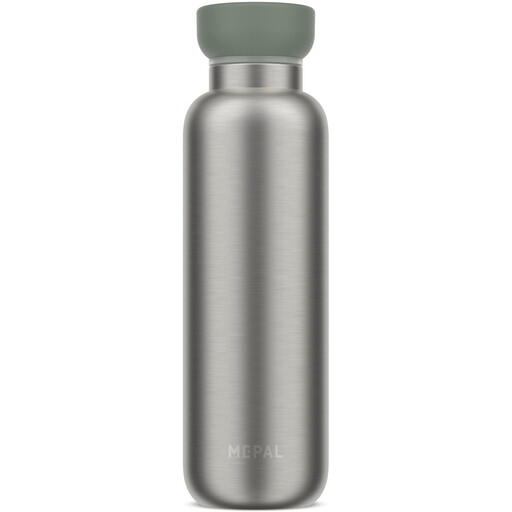
Why this fits the profile: The compact capacity and 7 cm diameter are practical for daily commuting, school, or a short walk.
The specifications state 500 ml, double-walled insulation, and an airtight construction. The limited capacity prevents unnecessary extra weight.
According to Mepal, drinks stay hot for up to 12 hours and cold for up to 24 hours. The manufacturer recommends hand washing for the coloured flask.
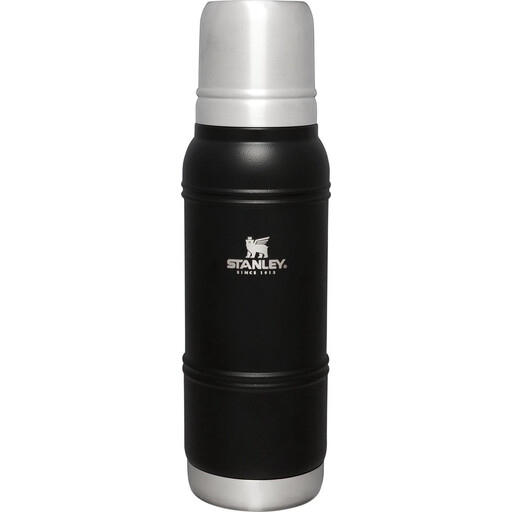
Why this fits the profile: The 1-litre capacity is suitable for long days, travel, and outdoor activities where refilling isn't straightforward.
The product information states a leak-proof closure and dishwasher compatibility. This makes transport and maintenance clearly defined.
According to Stanley, this model keeps drinks hot or cold for up to 38 hours. The flask is made from 18/8 stainless steel and weighs approximately 843 grams.
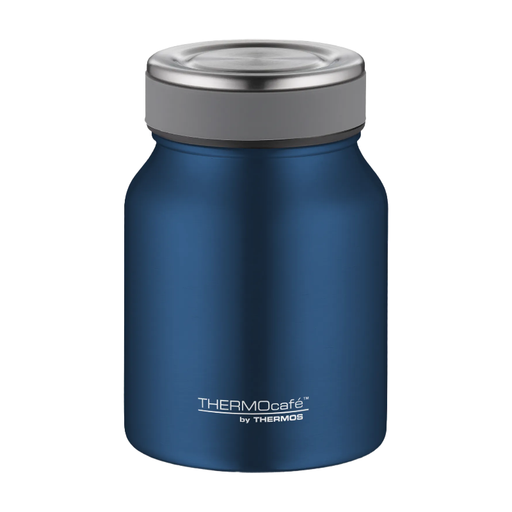
Why this fits the profile: This thermos food jar is designed for meals, soups, and cold dishes for work, travel, or outdoor use.
The wide 6.5 cm opening makes filling, eating, and cleaning more practical than with a narrow drinks bottle. The screw cap has a silicone sealing ring.
According to THERMOS, the container keeps food hot for up to 9 hours and cold for up to 14 hours. The capacity is 500 ml and the model is described as dishwasher safe.
We've put together a full, up-to-date list of products that fully meet these strict selection criteria and comply with current European safety regulations.
Rinse a thermos flask as soon as possible after use and allow both the flask and lid to dry completely. For a model with a sealing ring, it's a good idea to remove the ring regularly and clean it separately. Odours often develop because moisture gets trapped behind the ring or inside the lid.
Do not use abrasive scouring agents and follow the maintenance instructions for each product. Some models are dishwasher safe, while others must be washed by hand. A stainless steel flask can withstand daily use, but a drop can damage the closure, insulation layer, or screw thread.
That varies by model and usage. Manufacturers often state a range from a few hours to dozens of hours. For commuting, the most important thing is to preheat the flask with hot water beforehand, fill it completely, and open it as little as possible. The stated insulation time remains a product specification from the manufacturer, not a fixed result for every user.
A regular drinks bottle isn't always practical for soup. Choose a soup thermos or a wide thermos food container with an opening large enough to fill and eat from directly. Check whether the closure is suitable for hot food and open it carefully because of hot steam.
Do not fill the flask above the stated maximum capacity, check the sealing ring, and screw the lid on fully. Clean the screw thread and closure regularly. If a product is described as not fully leak-proof or not suitable for being turned upside down, transport it upright rather than loose in a bag.
