
Same-day & Next-day Delivery

Quality Guaranteed

Unlock Your Welcome Offers: FREE Delivery | Up to 80% OFF | Free 30-day JoyPlus trial
Download the APP
A Thermos food container is ideal for soup during your lunch break, pasta at school, porridge on the go or a cold meal during a walk. Yet some models disappoint in everyday use. The issue is often not the insulation technology itself, but choosing the wrong capacity, dealing with a fiddly lid or unclear care instructions.
The three most common pitfalls:
For one meal, 470 to 500 ml is often a practical size. This is suitable for a normal portion of soup, couscous, pasta or yoghurt with granola. A 710 ml Thermos lunch pot offers more room for a substantial meal or an extra side dish. For families, longer camping trips or several people eating together, 1.4 to 1.5-litre models make more sense.
As well as the millilitre capacity, consider the dimensions and weight. A 500 ml stainless steel food container can weigh approximately 376 to 710 grams, depending on its wall construction and lid. You will notice that difference in a work bag or rucksack.
Double-wall vacuum insulation helps limit heat transfer. Some models also use an additional copper layer or a specific insulation technology. According to the manufacturer’s product description, the THERMOS THERMOcaf Food Jar keeps food hot for up to 9 hours and cold for up to 14 hours. The product description for the 710 ml THERMOS Stainless King food jar states that it keeps food hot for 6 to 8 hours.
According to the product description, the 0.94-litre Stanley Classic Legendary Food Jar keeps food hot for up to 20 hours and cold for up to 24 hours. Treat these figures as guidelines under certain conditions, rather than guaranteed temperatures. Preheat the container with hot water for a few minutes before filling it. For cold dishes, use cold water to cool the inner wall beforehand.
A leak-proof food container should have a well-fitting screw-top lid and an intact sealing ring. Check that the lid closes firmly and that there are no parts that are difficult to reach. A wide opening is important for soup, stew and pasta: it makes the container easier to fill, eat from directly and clean inside.
Also check the cleaning instructions. Specifications vary from one model to another:
A stainless steel interior generally absorbs smells less readily than plastic, but rinse a soup Thermos immediately after use. Allow the lid and sealing ring to dry completely before storing them.
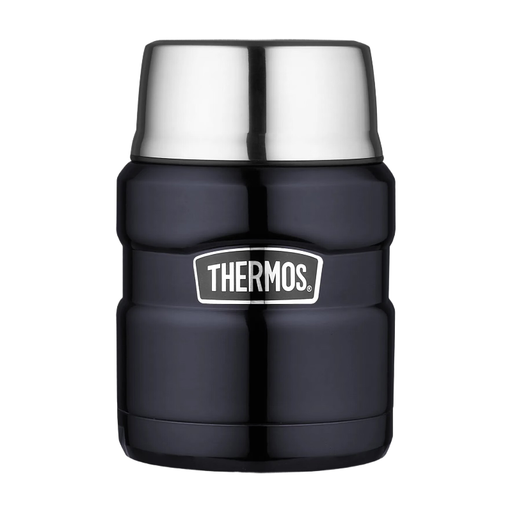
Why it suits this profile: The 470 ml capacity is designed for one portion, while the weight of 376 grams makes this food jar suitable for commuting, school and short trips.
The compact size prevents you from carrying unnecessary bulk for a single lunch. The screw-top lid has a simple integrated seal.
470 ml capacity, stainless steel construction and a weight of 376 grams according to the product specifications.
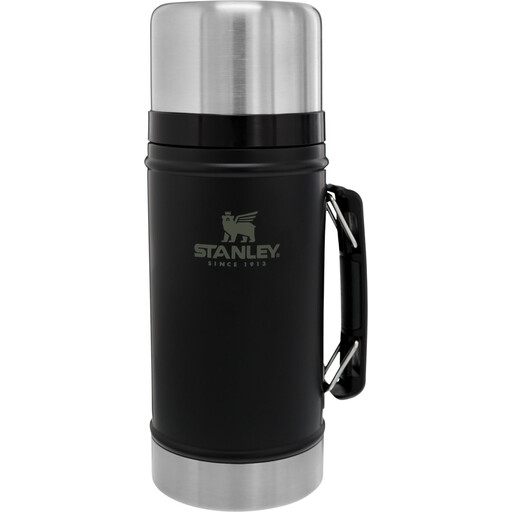
Why it suits this profile: The 0.94-litre capacity is suitable for large portions, long working days, camping and meals shared with several people.
The wide opening makes filling and cleaning easier. A handle makes the larger food jar easier to carry, but check beforehand that it fits in your bag.
According to the product description, keeps food hot for up to 20 hours and cold for up to 24 hours; dishwasher-safe according to the stated product specifications.
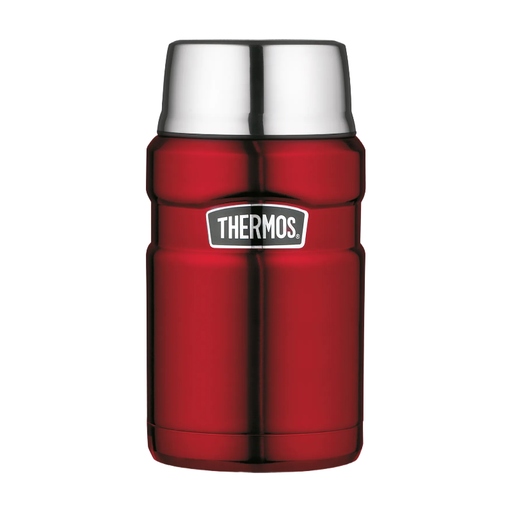
Why it suits this profile: The 710 ml capacity provides room for soup, pasta or stew during a long working day or outdoor activity, while the specified weight is 390 grams.
The wide opening makes eating and cleaning easier. The manufacturer specifies hand washing, so you should not assume that it is dishwasher-safe without checking.
18/10 stainless steel, screw-top lid and a stated heat-retention time of 6 to 8 hours according to the product description.

Why it suits this profile: The 1.5-litre capacity is designed for large quantities of food, for example for a family, picnic or longer camping trip.
The wide opening makes filling and sharing easier. Because of its large size, this model is less suitable for everyday carrying in a small bag; it is a deliberate choice when you need more capacity.
316 stainless steel, vacuum insulation and hand-wash advice; according to the product description, it keeps food warm for 4 to 6 hours.
We have put together a complete, up-to-date list of products that fully meet these strict selection criteria and the applicable European safety regulations.
Do not fill an insulated food container right to the brim. Leave some room and tighten the lid firmly, but do not force it unnecessarily. Very hot contents can create pressure. Open the jar carefully, and do not allow children to eat unsupervised from a container holding hot soup.
A food container for taking meals on the go is not suitable for use in a microwave or freezer. Heat the food first in a suitable pan or microwave-safe dish, then transfer it to the food jar. Do not use carbonated drinks if the manufacturer advises against it.
Check the silicone ring regularly. A damaged or stretched ring can cause leaks, even if the container originally sealed properly. Clean the lid separately and dry all parts before closing the container.
This varies from one model and use case to another. The supplied product specifications state times ranging from 4 to 6 hours for Maxcook to 6 to 8 hours for the 710 ml THERMOS SK Food Jar. According to the product description, Stanley states up to 20 hours for the Classic Legendary Food Jar. Preheating the container and filling it fully help reduce heat loss.
For a single lunch, 470 or 500 ml is usually enough. Choose 710 ml if you want to take a large portion or an extra side dish with you. A 1.4 or 1.5-litre model is mainly practical for several diners and less suitable as a compact everyday lunch pot.
Not always. Check the product specifications for each model. Some THERMOS and Stanley models are described as dishwasher-safe, while others specify hand washing. Where the information conflicts, follow the current manual or product page. Also consider the sealing ring: it often needs extra care, even on dishwasher-safe models.
