
Vandaag of morgen in huis

Kwaliteit gegarandeerd

Welkomstaanbiedingen ontgrendelen: GRATIS bezorging | Tot 80% korting | Gratis 30 dagen JoyPlus-proefperiode
Download de app
Buying a metal container seems straightforward, until the lid stops closing properly after a few weeks, a food flask turns out to be difficult to clean or a lunch box does not fit in your bag. For families, students, commuters and campers, the choice is therefore about more than appearance. Material, closure, capacity and maintenance determine whether a product remains convenient for everyday use.
Words such as “leak-proof” only mean something when it is clear how the closure works. Check whether the product has a silicone seal, screw-top lid, clips or a pressure valve. A wide food container may be well suited to soup, for example, but can still leak if the lid is not secured firmly enough.
Also pay attention to usage restrictions. According to the product information for various models, you are advised not to transport an insulated food container upside down or tilted. Hot soup can also create pressure. A tightly sealed lid is therefore not a reason to put a filled container loose in a rucksack.
A 1.4 or 1.5-litre stainless steel food container is useful for several portions, but less practical for a single lunch. For an individual meal, 350 to 500 ml may be enough. A container that is too large takes up space and can be heavier than expected.
For meal prep, several food storage containers with the same dimensions are often more convenient than one very large model. This lets you divide portions and keep the fridge organised.
Not every stainless steel product is suitable for the dishwasher. With some containers, the metal parts may go in the dishwasher, while the lid and silicone ring must be washed by hand. Other models are intended to be washed entirely by hand.
Also always check whether a product is suitable for use in the microwave or oven. Stainless steel must not be used in the microwave. If a container has a plastic lid, you must also remove the lid before heating the container, unless the product information states otherwise.
304 stainless steel is widely used for food containers, cooking pans and lunch boxes. 18/8 refers to a commonly used stainless steel composition containing approximately 18 per cent chromium and 8 per cent nickel. 316 or 316L stainless steel is often associated with greater corrosion resistance in product information. This does not automatically mean that every 316 model is better suited to your situation: capacity, lid design and ease of cleaning are just as important.
So look at the full product specifications rather than focusing only on the material name. A sturdy stainless steel lunch box with a poorly fitting seal is still impractical.
Use these guidelines as a starting point:
A bento lunch box with dividers prevents dry and moist ingredients from mixing. Do check whether the compartments actually seal separately. In many models, an internal divider keeps food separate, but the box as a whole is not automatically suitable for liquid dishes.
A food flask usually uses a double-walled vacuum construction. According to Maxcook’s product information, the insulated food jars help keep hot and cold contents at temperature for several hours; the stated retention time is 4 to 6 hours. The actual duration depends on factors including the starting temperature, the amount of food and how often you open the lid.
Similar considerations apply to an insulated cup or flask. According to the product specifications, the THERMOS TC Drinking Mug is rated for up to 8 hours of heat retention and 16 hours of cold retention. Treat such times as the manufacturer’s product specifications, not as a guarantee for every usage situation.
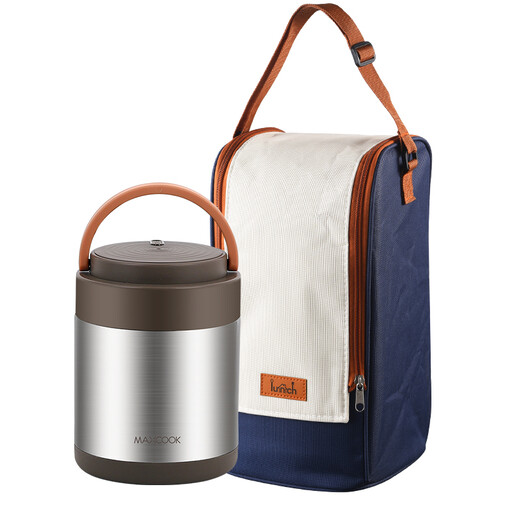
Why it suits this profile: The 1.4-litre capacity is suitable for several portions of soup, pasta or stew. The wide opening makes filling and cleaning easier.
The product information specifies 304 stainless steel, a wide opening and a leak-proof lid. It also states that the jar should not be transported upside down or tilted.
1.4-litre capacity, vacuum insulation and a wide opening. According to the manufacturer, temperature retention is approximately 4–6 hours.

Why it suits this profile: This 1.5-litre food container is ideal for anyone looking for a robust material and generous capacity for work, travel or outdoor use.
The specifications list 316 stainless steel, vacuum insulation, a wide opening and a tightly closing lid. The instruction to transport it upright still applies.
1.5-litre capacity, wide opening and 316 stainless steel. The manufacturer states approximately 4–6 hours of temperature retention.
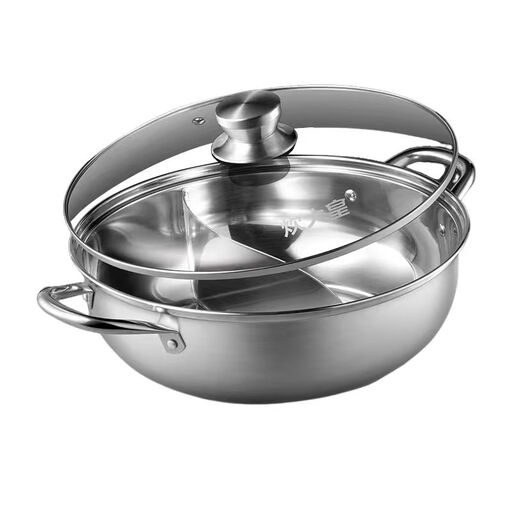
Why it suits this profile: The 30 cm hot pot with divider is designed for cooking at the table, family meals and fans of enjoying two broths at once.
The divider is built into the pan, allowing two dishes to be prepared in one pan. The product specifications state that it is suitable for induction, gas, electric and ceramic hobs.
304 stainless steel, a diameter of 30 cm and a built-in divider for two flavours.
We have compiled a complete, up-to-date list of products that fully meet these strict selection criteria and the applicable European safety regulations.
Rinse a new container with warm water and mild washing-up liquid before using it for the first time. According to the product information, cooking pans may still contain manufacturing residue, so cleaning them according to the enclosed instructions is important.
Also bear the following points in mind:
Yes, models with a wide opening and a tightly closing lid are practical for this. According to the product specifications, an insulated food container can keep soup hot for several hours, but transport the jar upright and open hot contents carefully.
That depends on the product. Some metal containers are dishwasher-safe, while the lid and silicone seal may only be suitable for the top rack or hand washing. Always check the care instructions for the specific model.
The service life depends on the quality of the closure, how the container is used and how well it is maintained. The metal body can last for a long time, but silicone seals may wear out sooner. Replace a ring or lid when it has become misshapen, retains odours or no longer seals properly.
