
Vandaag of morgen in huis

Kwaliteit gegarandeerd

Welkomstaanbiedingen ontgrendelen: GRATIS bezorging | Tot 80% korting | Gratis 30 dagen JoyPlus-proefperiode
Download de app
A quality stainless steel food container is a smart investment. You might want to keep your lunch fresh, bring a hot meal, or simply avoid plastics. But the market is saturated with options making big promises. Before you decide, it's crucial to know what to look for to prevent buyer's remorse.
Let's examine the most common pitfalls and how you can navigate around them.
Many containers look robust at first glance, but in practice, the reality can be quite different. These are the problems buyers frequently encounter.
1. The "Leak-Proof" Myth One of the biggest frustrations is a lid that doesn't seal properly. A leak-proof lunch box that still leaks in your bag is worthless. This is almost always caused by a weak seal. A thin silicone ring or a locking mechanism that loosens after just a few uses is a recipe for disaster. The "leak-proof" claim is only reliable if the lid design and the quality of the seal are robust.
2. Not All Stainless Steel Is Created Equal The term "stainless steel" is used for everything, but there are significant quality differences. The two most common types for food containers are 304 stainless steel and 316 stainless steel. 304 is the standard "food-grade" quality and is perfectly fine for most meals like salads and sandwiches. However, 316 stainless steel contains molybdenum, which makes it significantly more resistant to corrosion from salt and acids. Think tomato soup, pasta sauce, or meals with citrus fruits. A container made from 304 stainless steel can be corroded by these types of food over time.
3. Unrealistic Insulation Claims An thermos food container that promises to keep your meal "hot for 8 hours" sounds amazing. The reality is more nuanced. According to manufacturers, these times are often achieved under ideal conditions. This usually means the container was preheated with boiling water and filled to the brim. In a cold environment, a half-filled insulated food container will not meet the promised time. A realistic expectation for most insulated containers is 4 to 6 hours, which is sufficient for a standard lunch break.
To avoid the pitfalls, focus on a few key specifications. These will determine whether a stainless steel food container is right for your needs.
As mentioned earlier, this is a critical distinction.
meal prep containers where you store salads, rice, snacks, or sandwiches. It's durable and doesn't absorb odours or flavours.Your search begins by defining the primary purpose.
thermos food container.stainless steel bento box or metal food canisters.The lid is just as important as the container itself. A screw-on lid, like on an insulated food jar, typically offers the best protection against leaks. For rectangular stainless steel lunch box models, lids with sturdy clips and a thick, well-fitting silicone ring are essential. Check if the seal is removable so you can clean it thoroughly.
Based on these criteria, we have selected a few products that suit different users.
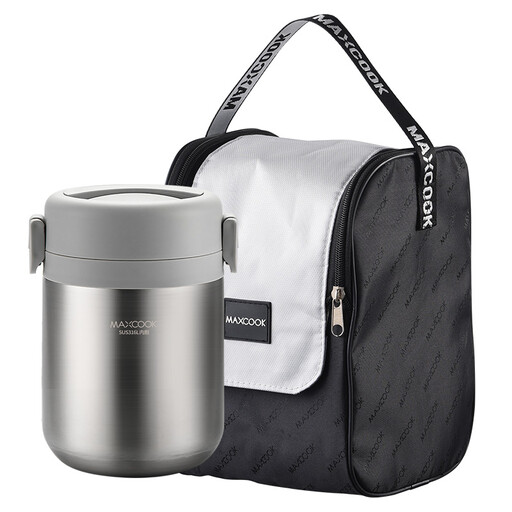
Why This Fits Their Persona: Ideal for those who take a hot soup, stew, or last night's leftovers to work or school daily. The included bag makes transport easy and discreet.
The 316 stainless steel material is resistant to acidic meals, which avoids the corrosion pitfall. The robust screw-on lid tackles the "leak-proof" myth.
Complete set with an insulated carrying bag. The wide opening makes filling and eating easy. According to the manufacturer, the vacuum insulation keeps food hot for 4-6 hours.
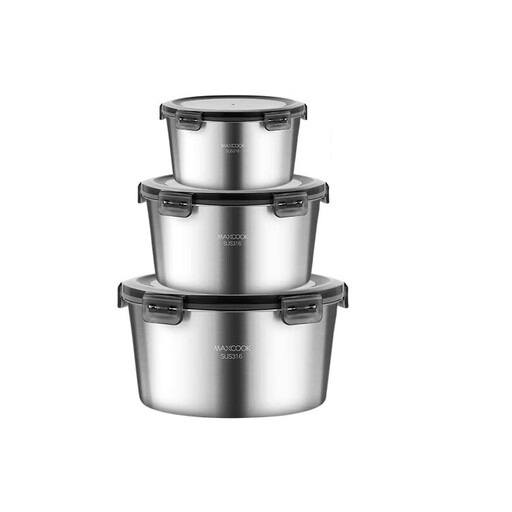
Why This Fits Their Persona: For those who prepare meals for the entire week. This set with three different sizes (600ml, 1100ml, 2200ml) is perfect for portion control and storing ingredients or complete meals.
This set focuses on secure storage, not insulation, thus avoiding unrealistic claims. The use of 316 stainless steel ensures the containers are suitable for all kinds of meals, without risk of corrosion.
Versatile set with three sizes. The containers are stackable for efficient storage and, according to the manufacturer, are freezer and dishwasher safe.
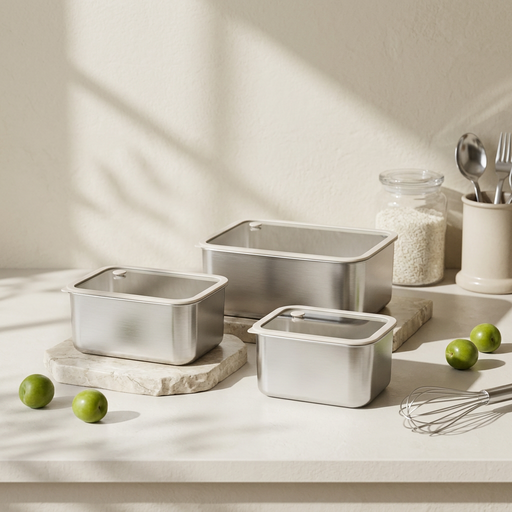
Why This Fits Their Persona: Perfect for storing dinner leftovers, large salads, or meals for a picnic. The set includes an extra-large 3000ml container, which is a rare find.
The combination of a 304 stainless steel container with a borosilicate glass lid and a silicone seal provides a robust and visible closure. You can see immediately if the lid is on correctly, which counters the "leak-proof" myth.
Very large capacity (1000ml, 1800ml, 3000ml). Thanks to the glass lids, you can see the contents without having to open the container. The containers are stackable.
We have compiled a complete, up-to-date list of products that fully meet these strict selection criteria and current regulations.
No, metal should never be put in a microwave. This can cause arcing (sparks), which is dangerous for both the appliance and the user. To heat food, transfer it to a microwave-safe plate. Some stainless steel containers are oven-safe (without the lid), but always check the manufacturer's specifications.
Although many stainless steel containers are dishwasher-safe, handwashing is often better for the longevity of the lids and silicone seals. High temperatures in the dishwasher can warp the plastic and silicone over time. Dry the containers and lids thoroughly after washing to prevent water spots and mineral buildup.
For most daily meals, like a sandwich or a cold salad, 304 stainless steel (food-grade) is more than sufficient. It is safe, strong, and durable. 316 stainless steel offers an extra layer of protection against corrosion and is the better choice if you plan to frequently use the container for acidic or salty dishes, such as tomato soup or meals with a lot of dressing. It's a trade-off between price and specific use.
