
Vandaag of morgen in huis

Kwaliteit gegarandeerd

Welkomstaanbiedingen ontgrendelen: GRATIS bezorging | Tot 80% korting | Gratis 30 dagen JoyPlus-proefperiode
Download de app
Would you like to buy a hotpot, but are you unsure whether to choose an electric hotpot, an induction-compatible hotpot pan or a self-heating meal? The options vary considerably in size, material and use. A small pan can be handy for one person, while a 5- or 6-litre model is better suited to a family meal.
As a Joybuy Product Recommendation Officer, I focus primarily on verifiable features: capacity, power, hob compatibility, materials, cleaning and safety information. This helps you avoid paying mainly for an eye-catching product claim.
A family-sized hotpot may sound practical, but a 6- or 7-litre pan takes up space on the table and in the cupboard. For one or two people, a 1- to 2.4-litre mini hotpot is often sufficient. On the other hand, a pan that is too small for a group means frequent refilling and uneven cooking.
So pay attention to:
A hotpot pan may be suitable for gas, electric and ceramic cooking, but that does not automatically mean it will work on induction. Check the product description for a composite base or explicit induction compatibility. This is particularly important in Dutch homes, where induction hobs are becoming increasingly common.
A standalone stainless-steel hotpot without a suitable magnetic base may heat insufficiently or not at all on an induction hob.
A self-heating hotpot is a ready-made meal with a heating pouch. You do not need a hob, but the product is intended for single use. An electric hotpot or multifunctional cooking pan, on the other hand, is a reusable appliance.
According to the product information, Shoo Loong Kan states that the heating pouch is activated in around 15 seconds after water is added and heats the meal for approximately 15 minutes. The packaging states a maximum heating temperature of at least 80 °C. Do not open or eat the heating pouch, and beware of hot steam.
The power rating partly determines how quickly water and stock reach the right temperature. For a compact pan, 300 to 600 watts is suitable for noodles, soup and small portions. Models rated at 1,000 to 1,500 watts are better suited to larger capacities or faster cooking.
A higher wattage does mean greater electricity consumption while heating. For an electric hotpot with two settings, a low setting is useful for keeping stock warm, while a higher setting helps you cook more quickly.
A stainless-steel hotpot has no non-stick coating and is suitable for stock, boiling and simmering. According to their product information, the MAXCOOK and COOKER KING models in the range use 304 or 316 steel. Also check the care instructions: some models are dishwasher-safe, while others are designed to be hand-washed.
An electric hotpot with a non-stick coating is often easy to clean. If so, do not use metal spoons or abrasive sponges, as these can damage the coating. Claims such as “food-safe” or “scratch-resistant” should be understood as information provided by the brand, rather than a general guarantee for every use case.
A hotpot with a divider allows you to prepare, for example, a mild and a spicy stock at the same time. This is useful when people at the table have different tastes. Check whether the divider is a fixed part of the pan and whether both sections offer enough space.
For an electric model, the following are also important:
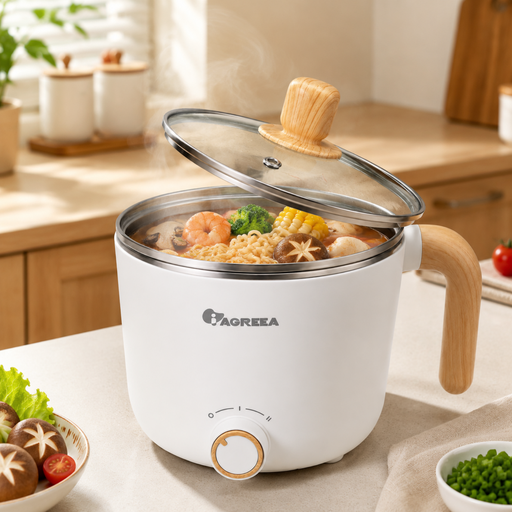
Why it suits this profile: The 1-litre capacity is designed for one or two people. With 300/600 watts and functions for noodles, soup, rice and a small hotpot, this is a compact choice for a student room, office or small kitchen.
The small capacity prevents you from buying a large pan that takes up space without being used. The two power settings make the appliance suitable for both gentle simmering and faster cooking.
1.0-litre capacity; stainless-steel inner pot; 300/600 watts; glass lid according to the product description.
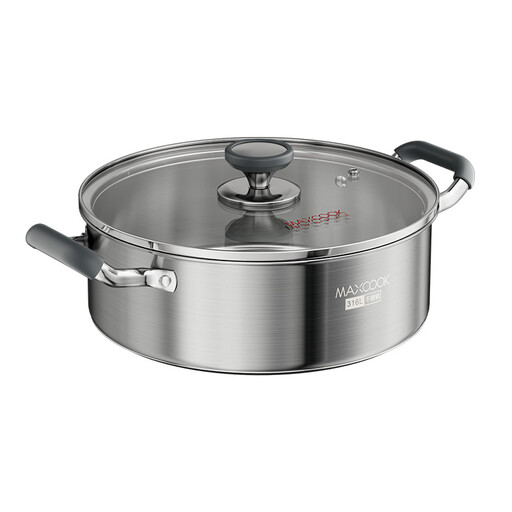
Why it suits this profile: This pan is aimed at shoppers looking for a spacious hotpot pan for repeated use. According to the product description, the composite base works on gas, induction, electric, ceramic and halogen hobs.
The stated hob compatibility reduces the risk of making the wrong purchase. The material and care instructions are clearly described in advance.
6.5-litre capacity; 316L stainless steel according to the product information; glass lid; silicone handles.
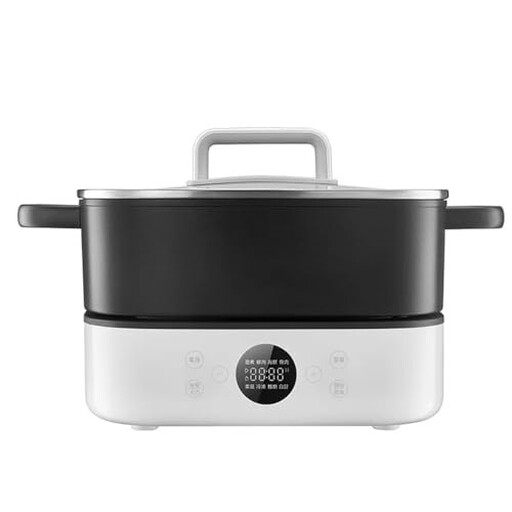
Why it suits this profile: The 6-litre capacity and 1,500-watt power rating are well suited to shared meals. The product information lists hotpot, steaming and cooking as available modes.
The generous capacity means you do not have to prepare lots of small portions for a group. Before buying, however, check the available table space and the connection.
6-litre capacity; 1,500 watts; multiple cooking modes according to the product description; EU version.
We have put together a complete, up-to-date list of products that fully meet these strict selection criteria and the applicable European safety regulations.
For a quick meal without using a hob, you can choose a self-heating option. Shoo Loong Kan offers flavours including spicy sesame oil, sweet-and-sour tomato and spicy, sour golden soup. The portion weighs 312 grams. If you have allergies, check the label: the varieties may contain ingredients such as soya and sulphites.
If you are looking for a meal with a malatang flavour, take a look at the TOWORD Spicy Hot Pot (Malatang) 380g. According to the product information, this meal contains vegetables, tofu and plant-based ingredients, among other things. The packaging lists allergens such as soya, sesame, wheat and peanuts. The meal must be stored frozen at a maximum of -18 °C.
Another option is Li Hailong Spicy Hotpot Mildly Spicy 410g. According to the label, this meal contains wheat and soya and is prepared with noodles, soup base, a vegetable pack and additional seasoning sachets. Always check the current packaging, best-before date and preparation instructions.
Choose a pan that explicitly states it is suitable for induction. A thick or composite base can help with heat transfer, but the product description must clearly confirm compatibility. An electric hotpot has its own heating element and does not work via the induction hob.
For one person, 1 to 1.2 litres is often enough. For two people, 2 to 2.4 litres is practical. A hotpot for a family or group usually starts at around 5 litres. Do not fill the pan to the brim, as stock can foam and splash.
Consumption depends on the power rating and how long the appliance is used. A 1,000-watt appliance running at full power for one hour theoretically uses 1 kWh. In practice, a pan may switch to a lower setting or be used for a shorter period. Multiply the consumption by your current electricity tariff to calculate the cost per meal.
