
Vandaag of morgen in huis

Kwaliteit gegarandeerd

Welkomstaanbiedingen ontgrendelen: GRATIS bezorging | Tot 80% korting | Gratis 30 dagen JoyPlus-proefperiode
Download de app
A Santoku knife is designed for many everyday cutting tasks: chopping vegetables, finely slicing herbs, and portioning fish, fruit or meat. However, not every model is automatically suitable for your kitchen. A low price, a claim such as “extra sharp” or a striking handle says little by itself about how easy the knife will be to use over the long term.
The following pitfalls are common:
For most UK households, a 17 cm Santoku knife is a practical size. The blade provides enough cutting surface for a courgette, pepper or piece of meat, without being so long that it becomes awkward on a compact kitchen worktop.
When comparing knives, pay attention to the difference between:
A Japanese kitchen knife often has a relatively straight cutting edge and a broad blade shape. This makes it well suited to an up-and-down cutting motion. Do not use it as a chopping axe for bones; a specialist chopping or boning knife is more suitable for that.
A stainless steel kitchen knife is easy to use every day because the steel is less susceptible to rust than non-stainless varieties. That does not mean you should leave the knife wet. Drying it after washing is still advisable.
A forged kitchen knife is formed from a single piece of steel. This can contribute to a sturdy construction and a well-balanced feel, but “forged” is not, on its own, a guarantee of better cutting performance. Also consider the type of steel, the blade finish and the connection between the handle and the knife.
According to the brand’s own product information, the Wüsthof Classic Ikon Santoku knife uses X50CrMoV15 high-carbon stainless steel. The description also mentions laser-controlled sharpening, manual honing and a 14-degree double bevel. Treat this as the brand’s product specification, not as a universal guarantee of performance.
An ergonomic handle should feel comfortable in your hand without requiring you to grip it tightly. In particular, check:
Hand-washing with warm water and mild washing-up liquid is usually the safest choice for a sharp Santoku knife. Even when a product is described as dishwasher-safe, heat, moisture and contact with other cutlery can put greater strain on the edge and handle. Preferably use a wooden or plastic chopping board and store the knife in a knife block, protective sheath or magnetic holder.
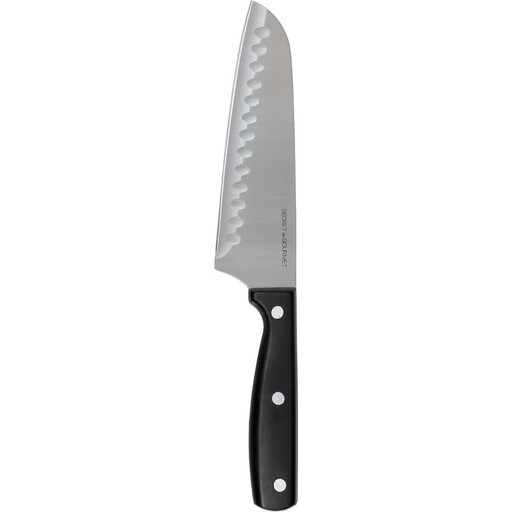
Why it suits this profile: The stated total length is 29 cm, with a 17 cm blade. This makes the size easy to compare for everyday cooking.
The product details state both the total length and the blade length. This helps ensure you do not accidentally buy a knife that is larger than expected.
Stainless steel blade, ABS handle and a stated weight of 140 grams.

Why it suits this profile: According to the product information, this model combines a 17 cm blade with X50CrMoV15 steel, a synthetic POM handle and a one-piece construction.
The description provides specific information about the steel, sharpening angle and manual finishing instead of making only a general claim about sharpness.
14° double bevel according to the product information; ergonomic handle and balance for prolonged cutting.
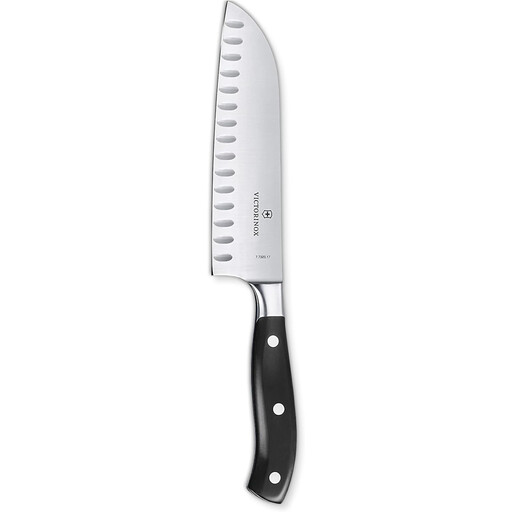
Why it suits this profile: The 17 cm size is suitable for vegetables, herbs, fish and meat. The ergonomic handle and indentations are designed for regular use.
The product description lists the material, handle and function of the small indentations separately. This makes the choice easier to verify.
Stainless steel, ergonomic plastic handle and dimples that, according to the product description, can help reduce meat and fish sticking to the blade.
We have compiled a complete, up-to-date list of products that fully meet these strict selection criteria and the applicable European safety regulations.
Yes, a Santoku knife is a multifunctional kitchen knife for many soft and moderately firm ingredients. It is suitable for vegetables, fruit, herbs, fish and boneless meat. For bones, frozen foods or hard pumpkin skins, it is better to use a knife designed for those tasks.
The lifespan of the edge depends on the steel, sharpening angle, chopping board, amount of force used and maintenance. A sharp Santoku knife will generally remain pleasant to use for longer when you wash it by hand, dry it immediately and do not use it on glass, stone or ceramic. Sharpen the knife when cutting noticeably requires more force.
For most everyday tasks, yes. A 17 cm Santoku knife offers a good balance between control and cutting capacity. If you often prepare large vegetables, sizeable pieces of meat or large quantities of food, you may find a longer model more comfortable. Always check whether the stated length refers to the blade or the entire knife.
This varies by range and model. According to the product information provided, the Wüsthof Classic Ikon model has an X50CrMoV15 blade, a 14° double bevel according to the brand’s description and a POM handle. The Victorinox Grand Maitre model has a 17 cm stainless steel blade, an ergonomic plastic handle and small indentations. So compare the specific specifications with your intended use, rather than looking at the brand name alone.
