
Vandaag of morgen in huis

Kwaliteit gegarandeerd

Welkomstaanbiedingen ontgrendelen: GRATIS bezorging | Tot 80% korting | Gratis 30 dagen JoyPlus-proefperiode
Download de app
A good knife is half the battle in the kitchen. But the search for the perfect knife can be overwhelming. So many brands, materials, and shapes. If you're looking for a true all-rounder, you've likely come across the santoku knife. This type of Japanese chef's knife is renowned for its versatility.
My name is Joy, and as a Product Recommendation Officer at Joybuy, I'm here to help you make informed choices. In this article, we'll explore what makes a santoku knife so practical and highlight some popular options to help you find a knife that suits your cooking style.
Before we dive into specific models, here are a few key points to consider that will help you make your choice.
The blade material largely determines the cutting experience and the required maintenance.
A knife should feel comfortable in your hand. An ergonomic handle prevents fatigue during prolonged cutting. Balance is also crucial: a knife that is too heavy at the front (blade) or back (handle) will feel less comfortable and precise. A good professional kitchen knife should feel like an extension of your hand.
Santoku knives come in various lengths, but a 17 cm santoku knife is a common and popular size. This length offers a great balance between agility for finer tasks (like mincing garlic) and enough surface area for larger jobs (like chopping a head of lettuce or slicing a piece of meat).
Based on specifications and usability, we've selected a few interesting models for you.
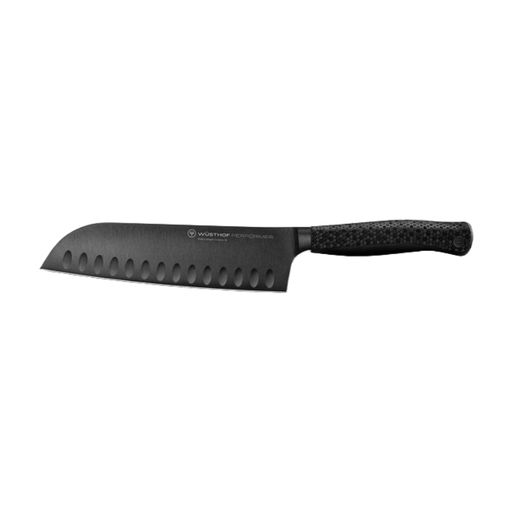
Why It Stands Out This knife combines the performance of a Damascus steel knife with a modern, functional design. The black Damascus steel gives it a unique look, while the ergonomic synthetic handle is designed for comfort and control.
Pros
Who Is It For? For the cooking enthusiast who values both aesthetics and performance. This knife is a showstopper in the kitchen, aimed at users who are willing to hand-wash it to keep the material in top condition.
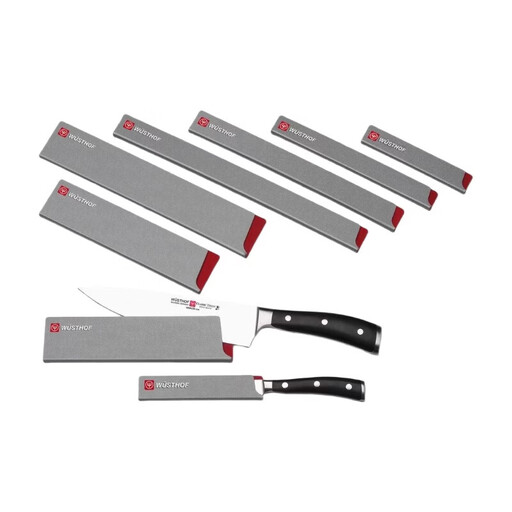
Why It Stands Out This Wüsthof chef's knife is forged from a single piece of proprietary X50CrMoV15 high-carbon steel. According to Wüsthof, their laser-guided sharpening technology creates a blade that is 20% sharper than standard knives. The seamless transition from blade to handle enhances hygiene and ease of use.
Pros
Who Is It For? For the serious home cook or (semi-)professional chef looking for a reliable, razor-sharp, and perfectly balanced workhorse. This knife is built for performance and durability.
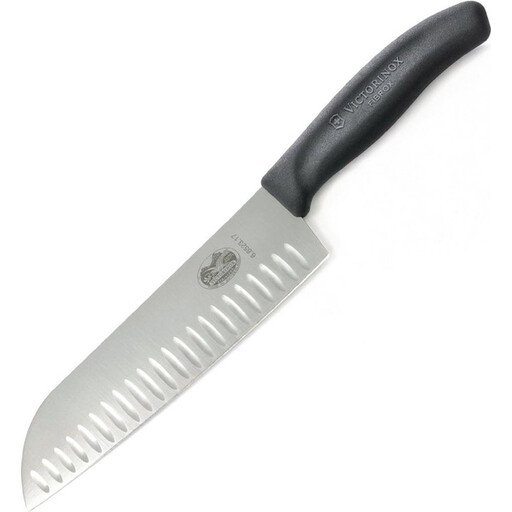
Why It Stands Out This Victorinox kitchen knife focuses on functionality and ease of use. It's lightweight, sharp, and, unlike many other santoku knives, dishwasher-safe. The dimples on the blade help prevent food from sticking during slicing.
Pros
Who Is It For? Ideal for the home cook seeking a no-frills, reliable, and affordable santoku knife for everyday use. If you prioritise convenience and functionality above all else, this is a very strong contender.
A santoku knife is a fantastic all-rounder, but perhaps you're looking for a different type of knife with specific features. Every chef has their own preferences.
For a broader overview of kitchen knives, from chef's knives to filleting knives, you can browse our full collection.
? Explore more options for steel knives here
The main difference lies in the blade shape and cutting technique. A European chef's knife has a more curved belly, making it ideal for a "rocking" cutting motion. A santoku knife has a straighter blade and a rounded tip (the 'sheep's foot'). This makes it more suitable for a chopping, up-and-down motion.
The name "santoku" means "three virtues" or "three uses," which refers to the three tasks it excels at: slicing, dicing, and mincing. It's a truly multipurpose knife, ideal for vegetables, fish, and boneless meat.
For most high-quality knives, and especially for a Damascus steel knife, hand-washing is the recommended method. Wash the knife immediately after use with warm water and mild soap, and dry it right away. Store the knife in a knife block, on a magnetic strip, or in a blade guard to keep the edge sharp and undamaged.
