
Vandaag of morgen in huis

Kwaliteit gegarandeerd

Welkomstaanbiedingen ontgrendelen: GRATIS bezorging | Tot 80% korting | Gratis 30 dagen JoyPlus-proefperiode
Download de app
A good knife is the foundation of any kitchen. But the search for the perfect one can be overwhelming. With so many types, materials, and brands, it's hard to determine which knife truly suits your cooking style. If you're looking for a versatile all-rounder, you'll likely end up considering a santoku knife.
This article is designed as a practical guide. We're skipping the marketing jargon and focusing on the specifications that truly matter. This will help you make an informed decision on a Japanese chef's knife that will last for years, whether you're a home cook or a professional chef.
Before we dive into specific models, it's helpful to understand a few key features. These determine how the knife performs, feels, and how you should maintain it.
The blade is the heart of the knife. The two most common materials are stainless steel and Damascus steel.
A professional kitchen knife should feel like an extension of your hand. Pay attention to the following points:
Santoku knives come in various lengths, but a 17 cm santoku knife is often considered the ideal sweet spot. It's long enough for cutting larger vegetables or pieces of meat, yet compact enough for finer tasks like mincing herbs. This length offers an excellent balance between versatility and maneuverability.
Based on product specifications, materials, and design, we've compiled a list of popular choices for you.

Why it stands out: This Wüsthof santoku knife is forged from a single piece of high-quality X50CrMoV15 stainless steel. The design focuses on balance and ergonomics, with a handle made of durable polyoxymethylene that seamlessly connects to the blade. According to Wüsthof, thanks to a laser-guided sharpening technique, the knife is 20% sharper than standard knives and has a 14-degree cutting angle. The hollow edge (kullenschliff) helps prevent food from sticking.
Pros:
Who is it for? For the serious home or professional cook looking for a reliable, durable, and perfectly balanced knife for intensive daily use.
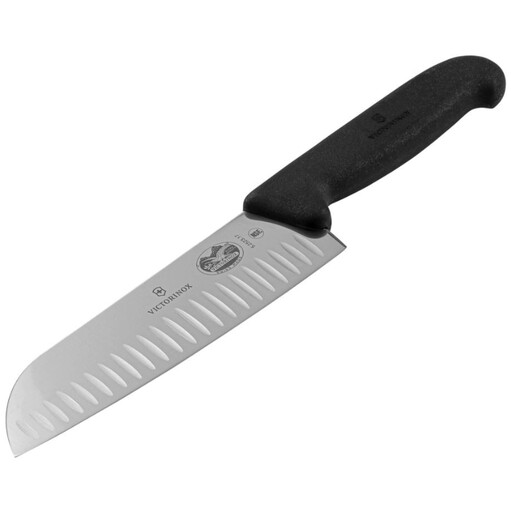
Why it stands out: The Victorinox Fibrox knife is known for its functionality and no-nonsense approach. The knife features a stainless steel blade and a synthetic handle designed for a firm grip, even with wet hands. This knife focuses purely on performance and is a popular workhorse in both professional and home kitchens. It is lightweight, functional, and designed for efficiency.
Pros:
Who is it for? For the pragmatic cook who needs a reliable and low-maintenance professional kitchen knife without the frills. Ideal for those who prioritise functionality over aesthetics.
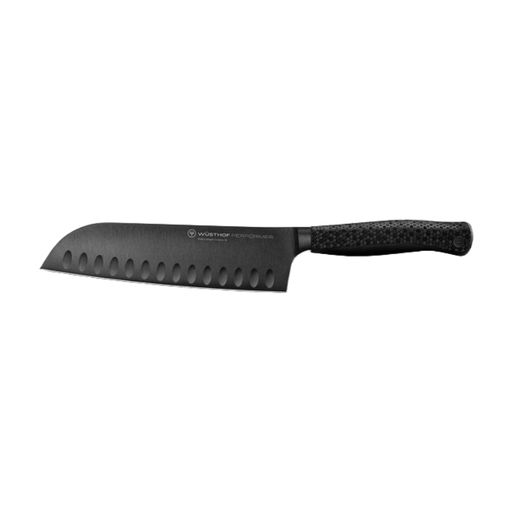
Why it stands out: This knife from Wüsthof's Performer series combines a striking appearance with high performance. The blade is made of black Damascus steel, which provides a unique look and durability. The ergonomic synthetic handle is designed for comfort during prolonged use. This knife is a real statement piece in the kitchen and, like other santoku knives, is suitable for cutting vegetables, meat, and fish.
Pros:
Who is it for? For the design enthusiast and cook who wants to make a statement in the kitchen. If you want to buy a Damascus knife that is both visually impressive and performs exceptionally well, this is an interesting option.
Choosing a knife is a very personal decision. You might be looking for a different length, handle type, or brand. Every cook has their own preferences.
Check out our full range of santoku kitchen knives and find the knife that's a perfect match for you and your kitchen.
The name "santoku" means "three virtues" or "three uses," which refers to the three tasks the knife excels at: slicing, dicing, and mincing. It is an all-round Japanese chef's knife that is ideal for processing vegetables, fish, and boneless meat.
The main differences lie in the shape and cutting technique. A santoku knife has a straighter cutting edge and a blunter tip (a 'sheep's foot'). This makes it more suitable for a chopping, up-and-down cutting motion. A European chef's knife has a more curved belly, making it ideal for the 'rocking' cutting technique. Santoku knives are also often slightly shorter and lighter.
Proper maintenance is crucial for the longevity of your knife.
