
Same-day & Next-day Delivery

Quality Guaranteed

Unlock Your Welcome Offers: FREE Delivery | Up to 80% OFF | Free 30-day JoyPlus trial
Download the APP
A good chef's knife is the cornerstone of any kitchen. Whether you're a professional chef or a serious home cook, you know that the right tool makes all the difference. The search for a reliable, sharp, and durable professional chef's knife often leads to one name: Wüsthof. But which Wüsthof chef's knife is right for you? The choice between a 20 cm Classic, a more compact 16 cm model, or a santoku knife can be overwhelming.
As a Joybuy Product Recommendation Officer, I'll help you navigate the specifications. This article isn't a test report, but a practical guide based on product information to help you buy the kitchen knife that matches your cooking style.
Before we look at specific models, here are a few key points to help you make an informed decision.
The choice between a traditional European chef's knife and a Japanese santoku knife depends on your cutting technique.
The length of the blade affects balance and ease of use.
Wüsthof knives are made in Solingen, Germany, a city renowned worldwide for its high-quality knife production. An authentic German chef's knife from this region is characterized by:
Wüsthof Classic series, are forged from a single piece of steel. This ensures superior balance and sturdiness, from the tip to the end of the handle.Below is a selection of popular Wüsthof models, each with its own unique features.
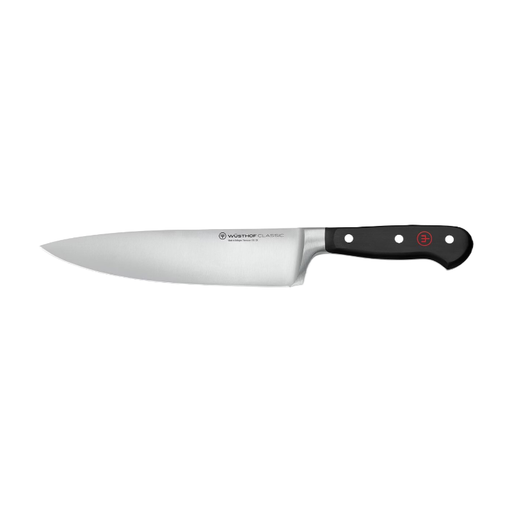
Why it stands out: This is the archetypal all-rounder. The 20 cm length makes the knife suitable for virtually any cutting task, from chopping an onion to carving a piece of meat.
Pros:
Who is it for? For the serious home cook or professional looking for one reliable and versatile knife that can handle most tasks in the kitchen.
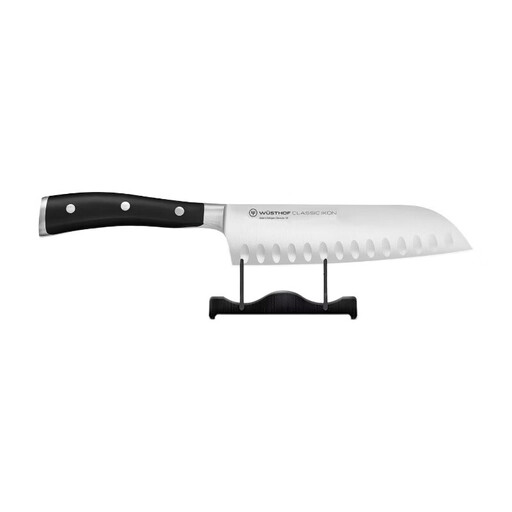
Why it stands out: This knife offers the same quality and design as its larger sibling, but in a more compact and agile format. The half bolster (thickening between the blade and handle) makes sharpening the entire blade easier.
Pros:
Who is it for? Ideal for cooks with smaller hands or for those who prefer a lighter, more precise knife for finely chopping vegetables, herbs, and fruit.
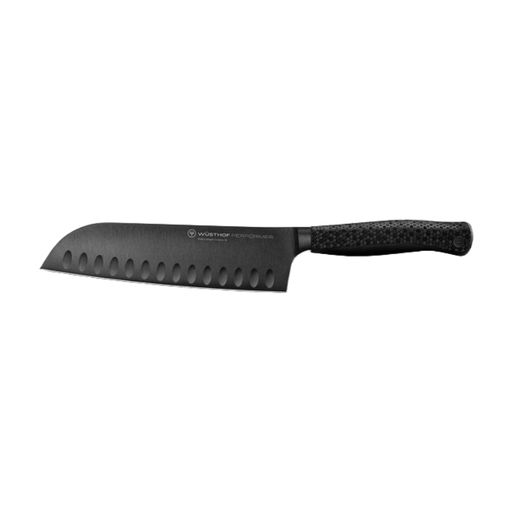
Why it stands out: This knife combines the Japanese santoku shape with German precision. The Damascus steel blade is not only functional but also gives the knife a unique appearance.
Pros:
Who is it for? For the cook who prefers the chopping technique of a santoku and values both performance and a distinctive design.
While a Wüsthof chef's knife is a fantastic foundation, we understand that every cook has unique preferences. Perhaps you're looking for a different type of knife, a specific handle, or an addition to your knife set.
Discover more stylish and functional kitchen accessories in our Black Accessories collection and find the tools that perfectly suit your kitchen.
A Wüsthof knife is an investment in quality and durability. Thanks to the use of high-quality steel and the forging process, these knives can last a lifetime with proper care. The sharpness, balance, and ergonomics lead to greater efficiency and enjoyment in the kitchen, which justifies the investment for many serious cooks.
The Wüsthof Classic series is the most traditional and extensive line, characterized by its classic three-rivet design. Other series, such as the Performer, may differ in materials (like Damascus steel), handle design, and overall aesthetics, and are often aimed at specific preferences or cooking styles.
Proper maintenance is essential to keep your knife in top condition. The most important rules are:
