
Vandaag of morgen in huis

Kwaliteit gegarandeerd

Welkomstaanbiedingen ontgrendelen: GRATIS bezorging | Tot 80% korting | Gratis 30 dagen JoyPlus-proefperiode
Download de app
A good knife makes everyday cooking easier, but attractive packaging or a striking pattern does not automatically mean it is practical. When buying kitchen knives, many shoppers focus mainly on sharpness and the brand name. As a result, important details such as care requirements, blade length and grip can sometimes be overlooked.
The most common pitfalls:
The shape of a knife determines what it is suitable for:
A larger knife is therefore not automatically more practical. Consider the ingredients you usually work with, the space available and how long you tend to cook at a time.
A stainless steel kitchen knife is resistant to corrosion, but it is not completely maintenance-free. Dry the knife after washing and do not leave it submerged in water for long periods. Some models use high-carbon steel. This may offer different levels of sharpness and hardness, but it generally requires more care when it comes to drying and storage.
The sharpening angle can help you compare specifications. According to the product information for certain Wüsthof models, a knife with an edge of 14 degrees per side is finely sharpened. Manufacturer claims about sharpness, such as “20% sharper”, are based on Wüsthof’s own product information and should not be interpreted as a universal comparison between all kitchen knives.
Also look out for:
These properties affect control, balance and maintenance, but they do not determine on their own how comfortable a knife will feel in your hand.
An ergonomic handle should feel secure without requiring you to grip it tightly. Plastic, synthetic materials, wood and glass-fibre-reinforced materials each have different properties. Wood can have a warm appearance, but it often requires more care. A plastic handle is usually easy to clean.
Always check the cleaning instructions. According to their product information, Wüsthof Classic Ikon models and WMF Grand Gourmet bread knives are preferably washed by hand. Other models are described as dishwasher-safe, but hand washing may still be the wiser choice for preserving the edge and handle over the long term.
Store knives in a knife block, protective sheath or drawer insert. If left loose in a cutlery drawer, the blades may knock against one another. You should also use a wooden or plastic chopping board; glass, stone and metal can damage the edge more quickly.
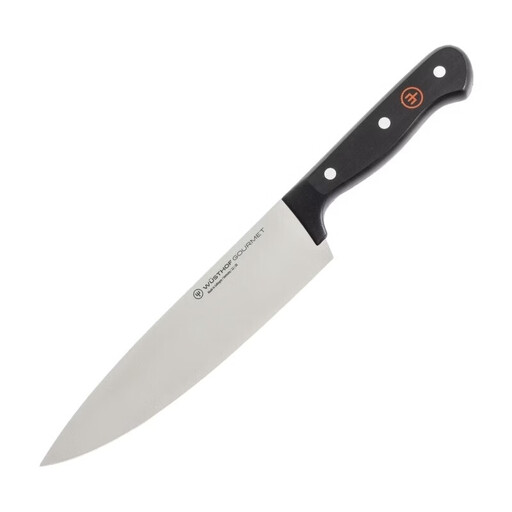
Why it suits this profile: A versatile 20 cm chef’s knife for slicing, dicing and chopping. The product information states that it has a plastic handle, weighs 184 grams and is dishwasher-safe.
The clearly stated size and weight make it easier to compare the knife with your own workspace before buying.
20 cm blade; suitable for a range of everyday cutting tasks; hand washing recommended for a longer lifespan.

Why it suits this profile: For keen home cooks who prepare plenty of vegetables, herbs, fish and meat and are looking for a compact 17 cm santoku knife.
The product description specifies X50CrMoV15 steel, the blade length and hand-washing advice. This allows you to look beyond appearance alone.
High-carbon stainless steel; 17 cm blade; polyoxymethylene handle; suitable for both left- and right-handed use.
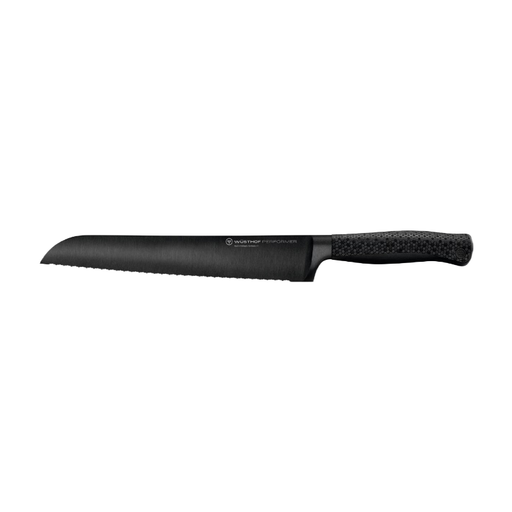
Why it suits this profile: For bakers and households that regularly slice sourdough, hard crusts, cake or soft bread.
The serrated bread-knife design is suited to crusts and prevents you from using a smooth-edged chef’s knife for the wrong task.
23 cm blade; Damascus steel according to the product information; non-slip honeycomb texture on the handle; listed as dishwasher-safe.
We have put together a complete, up-to-date list of products that fully meet these strict selection criteria and the applicable European safety regulations.
Always check the full product page before placing your order. Pay attention to the difference between blade length and total length, especially when using a knife block or magnetic strip. Also check whether the product includes one knife or a set. For example, the Victorinox Swiss Modern set contains two steak knives; that is different from a complete set of kitchen knives.
For professional use, grip, balance and maintenance time are more important than eye-catching design alone. A knife described as dishwasher-safe in the product information may be practical in a busy kitchen, while hand washing generally gives you more control over wear and tear. Also check the statutory warranty: according to the product information, the products mentioned come with at least two years’ statutory warranty under EU consumer law.
Their lifespan depends on the steel, how they are used, the chopping board and maintenance. Wash the knife according to the instructions, dry it immediately and store it safely. Sharpen the knife, or have it sharpened, in good time when cutting starts to require more force.
A 16 to 20 cm chef’s knife is a practical choice for many everyday tasks. If you mainly cut vegetables, herbs and fish, you may also want to consider a santoku knife. A separate bread knife with a serrated blade is more suitable for bread.
No. Damascus steel may have a decorative pattern and specific material properties, but hand washing, drying immediately and safe storage remain important. Always check the care instructions for the specific model.
