
Vandaag of morgen in huis

Kwaliteit gegarandeerd

Welkomstaanbiedingen ontgrendelen: GRATIS bezorging | Tot 80% korting | Gratis 30 dagen JoyPlus-proefperiode
Download de app
Rice noodles are a handy base for Asian dishes, but not every variety behaves the same way in the pan. A thin rice vermicelli can quickly turn soft in broth, whereas wide rice sticks are better suited to a stir-fry. If you only pay attention to the brand, packaging or the term “authentic”, you might end up buying a product that doesn’t suit the dish you have in mind.
As Joybuy Product Recommendation Officer, I filter the most important product specifications from the available information. This way, you can compare rice noodles practically, without letting marketing claims sway your decision.
A difference of just a few millimetres affects preparation and texture. Rice noodles of 1 mm are thin and typically need a short preparation time. Rice sticks of 3 mm are more versatile for pad thai and stir-fries. Varieties of 5 mm or 10 mm give a firmer bite and usually require a longer cooking time.
A product labelled “rice noodles” on the front could still be unsuitable for your recipe if the thickness isn’t clearly stated.
Many rice noodles are made from rice flour, water and sometimes tapioca or other starches. That doesn’t automatically mean every product is gluten-free. Always check the ingredients list and allergen information on the packaging. With composite meals, such as instant noodles with seasoning sachets, wheat, soya or other allergens may be added.
According to the available product information, none of the products in this guide list any of the 14 main EU allergens, except for the Luosifen variety from Luobawang. That one includes wheat, molluscs, soya and peanuts, among others. Check the current packaging before using the product.
Some varieties need to be soaked, others briefly boiled. Soaking or cooking for too long can make the texture limp, especially with thin rice vermicelli. So always follow the instructions on the packaging first, and rinse the noodles with cold water if indicated. That helps to stop the cooking process before you add them to a salad, soup or stir-fry.
Use this classification as a practical starting point:
Alongside thickness, also pay attention to the shape. Straight rice sticks behave differently during preparation compared to thin, curved vermicelli.
A short ingredients list makes comparison easier. The range includes the following compositions, among others:
A higher percentage of rice doesn’t automatically guarantee a particular texture. The production thickness, pre-treatment and cooking method also play a role. So look at the combination of ingredients, millimetre size and cooking advice.
A 400 g pack of rice noodles is practical for multiple portions or meal prep. Just check whether it’s dried noodles or a ready-to-eat product. With dried varieties, the weight increases after soaking or cooking. Store opened packs in a cool, dry place, well sealed and away from moisture. Always check the best-before date and full usage instructions on the packaging.
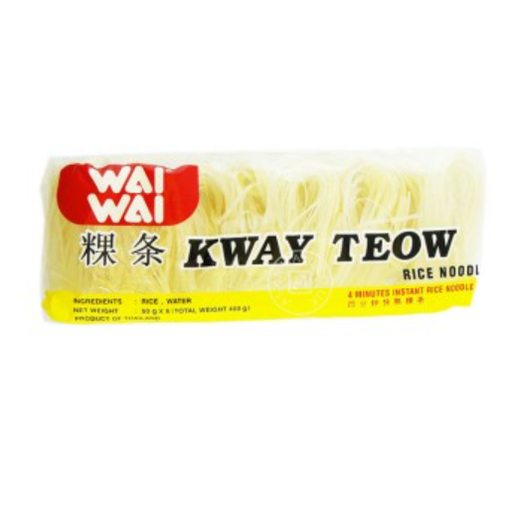
Why this fits the profile: This 400 g pack is a straightforward choice if you want to try different Asian dishes without buying several types at once. The product information states 90% rice and 10% water.
The product name states the type kway teow and the net weight. Before buying, still check the exact preparation method and thickness on the label.
400 g pack; ingredients listed as 90% rice and 10% water; suitable for various preparations according to the product information.
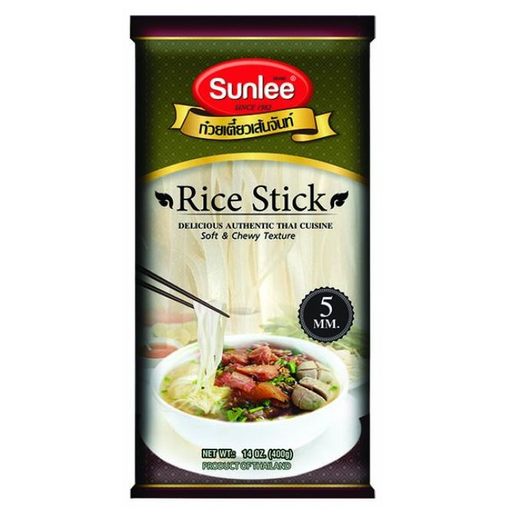
Why this fits the profile: The stated thickness of 5 mm gives a clear starting point if you’re looking for a firmer rice stick for pad thai, pho or a stir-fry.
The size indication prevents you from choosing a thin vermicelli for a dish that calls for wider noodles. The product information mentions 6 to 8 minutes of cooking.
5 mm wide; 400 g pack; according to the product description, made with 90% rice flour and 10% water.
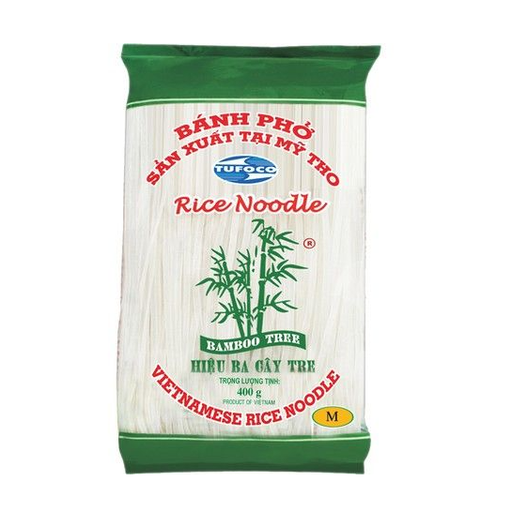
Why this fits the profile: The medium size of 3 mm is useful for multiple dishes. According to the product information, this variety consists of 72% Vietnamese rice, tapioca and water.
The explicit 3 mm marking makes comparison easier than with a pack that only says “rice noodles”.
3 mm wide; 400 g pack; ingredients list with rice, tapioca and water.
We’ve put together a full, up-to-date list of products that fully meet these strict selection criteria and comply with current European safety regulations.
Not always. Products containing only rice, water and tapioca may, according to their product information, contain none of the 14 main EU allergens. However, you should still check the current label, especially with instant varieties that include sauce, broth or seasonings.
Store dried rice noodles in a cool, dry place, well sealed. The exact shelf life is stated on the packaging. Do not use the product if the packaging is damaged or if the noodles have become damp.
That depends on the thickness and the brand. Some rice vermicelli is soaked for 3 to 5 minutes, whereas thicker rice sticks are boiled for a few minutes. Follow the preparation instructions on the packaging and only rinse the noodles when indicated or when the recipe calls for it.
