
Vandaag of morgen in huis

Kwaliteit gegarandeerd

Welkomstaanbiedingen ontgrendelen: GRATIS bezorging | Tot 80% korting | Gratis 30 dagen JoyPlus-proefperiode
Download de app
Rice noodles might seem straightforward to pick, but the packaging doesn’t always tell you straight away which variety suits which dish. A thin noodle can turn soft too quickly in a hot broth, whereas a wide rice noodle works much better in a stir-fry. Terms like authentic, premium and gluten-free are sometimes used without making it clear what product specifications lie behind them.
With this buying guide, you can compare rice noodles by thickness, ingredients, preparation method and packaging. That way, you’ll avoid a disappointing purchase and choose a product that suits your dish and cooking routine.
Not every rice stick is suitable for Pad Thai, and not every rice vermicelli works in pho. Thin rice noodles around 1 mm are ideal for light salads, bun dishes and some soups. Rice sticks of 3 to 5 mm are more versatile for stir-frying and noodle soups. For Pad Thai, wide rice noodles of around 10 mm are often used.
A packet labelled simply “rice noodles” doesn’t give you enough information. Always check the stated millimetres and the recommended preparation method.
Rice flour is naturally gluten-free, but the full ingredients list still matters. Some instant products, for example, contain soya, wheat, shellfish or celery in the seasonings. Dried rice noodles may have tapioca starch, potato starch, water or thickeners added alongside the rice.
If you have an allergy or intolerance, always check the packaging and the allergen information. Product details on a web shop can change; the label on the packet is what counts.
A noodle that needs soaking requires a different approach from an instant rice noodle that only needs boiling water. Boiling or soaking for too long can make the texture limp. Too short a preparation, on the other hand, leaves you with hard centres or noodles that don’t cook properly during stir-frying.
So pay attention to the difference between:
The thickness determines how the noodle feels and how well it holds onto sauce or broth.
Also consider the shape. Round rice sticks behave differently in a wok compared with wide, flat noodles. If you’re specifically looking for pho noodles, look for varieties labelled banh pho or phở tươi.
A short ingredients list makes comparing easier. Farmer Brand Rice Stick Noodle 3mm, for example, lists rice flour as an ingredient and states that the product contains none of the 14 main EU allergens. Several Bamboo Tree and Sunlee varieties are also based on rice, water and sometimes tapioca.
Always check:
With instant rice noodles, the salt content can be significantly higher because of the broth. The Acecook Instant Rice Noodles Nam Vang Oh Ricey contains, per 71 g portion, a seasoning mix and a nutritional value of 1,808.3 mg sodium according to the product information provided. That makes it suitable mainly for anyone looking for a quick meal with flavourings, not for those who want only neutral noodles.
A 400 g or 500 g pack is practical for several meals, while a single-serving pack of 71 g to 150 g is handy for one quick meal. Dried rice noodles can usually be stored easily in the cupboard. Keep them cool, dry and out of direct sunlight. Seal an opened pack well and check the best-before date on the label.
Fresh bun tuoi needs extra attention. Sunlee Vietnamese Rice Stick Noodles Bun Tuoi (908 g), for example, has a limited shelf life of 21 days. This type of product is better suited to a planned dish than to long-term storage.
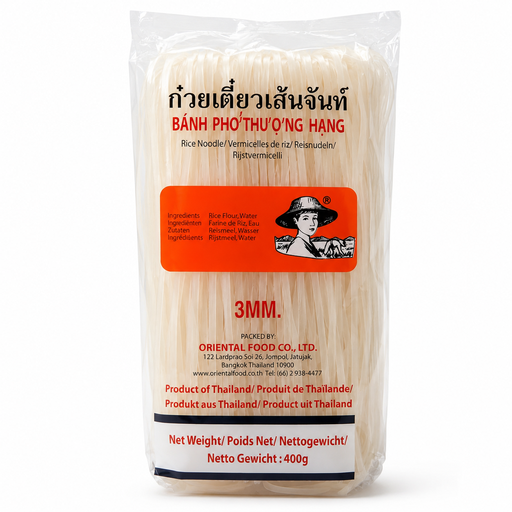
Why this fits the profile: The 400 g pack is suitable for several meals. The 3 mm width offers a practical starting point for stir-fries, soups and simple Asian recipes.
The exact thickness is stated, so you don’t have to rely on a general product name alone. According to the product information, the noodles are made from rice flour.
400 g pack; 3 mm rice stick; according to the product information, contains none of the 14 main EU allergens.
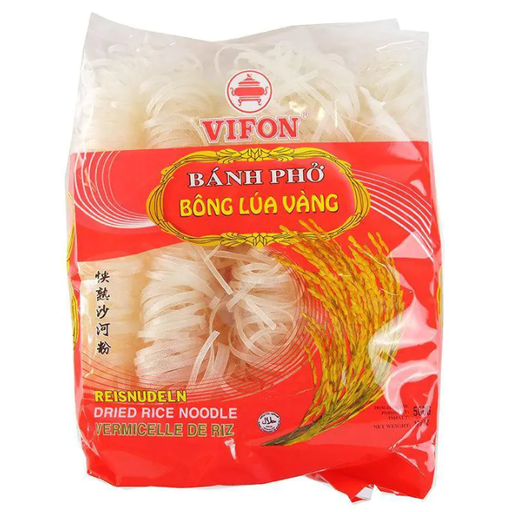
Why this fits the profile: These Vietnamese rice noodles are 5 mm wide and are linked in the product information to pho, bun, salads and stir-fries.
The diameter and weight are clearly specified. The preparation method mentions soaking and a brief boil; always follow the instructions on the packet.
500 g pack; 5 mm diameter; suitable for soup, salad and stir-frying.
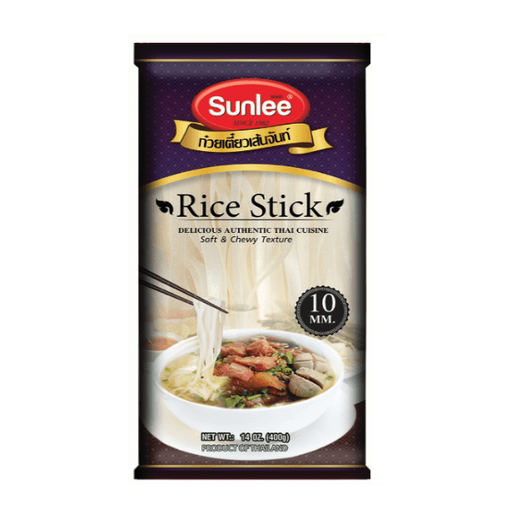
Why this fits the profile: The extra-wide 10 mm shape is aimed at dishes where the noodle needs to stay visible and firm, such as Pad Thai and stir-fries.
The width can be checked in advance. That means you won’t buy thin rice vermicelli when you actually need wide rice noodles for Pad Thai.
10 mm wide; 400 g pack; according to the product description, suitable for Pad Thai, soups and salads.
We’ve put together a full, up-to-date list of products that fully meet these strict selection criteria and comply with current European safety regulations.
Use plenty of water and prepare the noodles according to the packet instructions. After cooking, rinse them briefly with cold water if you’re using them in a salad or stir-fry. For Pad Thai, it’s a good idea not to cook the noodles until completely soft: they’ll continue to cook in the wok with the sauce and vegetables.
With thin bun tuoi or rice vermicelli, a short soak may be enough. With instant rice noodles, add the seasonings as directed. Always taste before adding extra salt or soy sauce, especially if a broth or sauce sachet is included.
Rice itself contains no gluten. However, not every composite rice noodle product is automatically suitable for a gluten-free diet. Check the ingredients list, allergen information and any warnings on the packaging. Instant varieties, for example, may contain wheat or soya in the seasoning.
For Pad Thai, flat rice noodles around 5 to 10 mm are usually used. A 10 mm rice stick gives a wide, firm bite. If you prefer a less wide variety, you can choose a 3 mm or 5 mm rice stick. The preparation time and soaking instructions vary by brand.
Store dried rice noodles, both unopened and opened, in a cool, dry place away from moisture and sunlight. The exact best-before date is on the packaging. Fresh bun tuoi often has a shorter shelf life and should be used according to the date and storage advice on the label.
