
Vandaag of morgen in huis

Kwaliteit gegarandeerd

Welkomstaanbiedingen ontgrendelen: GRATIS bezorging | Tot 80% korting | Gratis 30 dagen JoyPlus-proefperiode
Download de app
Reusable cleaning cloths might seem straightforward to choose, but the material, size and care instructions determine how useful they’ll be in everyday life. A cloth that works well on glass isn’t necessarily right for a greasy worktop. And a soft cotton cloth for a baby needs different attention than a floor cloth.
Pay particular attention to these common pitfalls:
Microfibre cloths have a fine structure that, according to the product description, can pick up dust, dirt and grease. They’re practical for glass, stainless steel, screens, car interiors and desks. A cloth of 260 g/m² is more clearly specified than one that simply says “extra absorbent”.
Cotton cloths feel soft and are well suited to baby care, hands and bath time. The and LEBONSOIR cloths in this selection are described as 100% cotton with a six-layer construction. These are verifiable product details; the softness and absorbency may vary in practice from user to user and after washing.
Cellulose and viscose cloths are often thinner and more flexible. They’re suitable for dishcloths and light cleaning tasks, but always check whether they’re machine washable and how many times they can be used according to the packaging.
For a sink or desk, 30 × 30 cm is handy. A larger size, such as 50 × 70 cm, makes more sense for floors. Baby cloths of 30 × 50 cm are easy to take along in a nappy bag, while a bath towel of 70 × 140 cm is intended for drying after the bath.
Also look at the number of cloths. A set of three may be enough for one room, but households with young children usually benefit from several cloths per zone. This way you can keep the kitchen, bathroom and baby care separate.
For streak-free cleaning, use a clean cloth that isn’t too wet. When cleaning glass and mirrors, use little product and turn the cloth regularly. Microfibre cloths from this selection can be washed at up to 60 °C according to the product information. Do not use fabric softener and preferably let them air dry.
The cotton baby cloths should be washed at 40 °C according to the specified information. Bleaching, dry cleaning and tumble drying are not recommended to minimise shrinkage. Always check the temperature of the water and cloth before use on a baby’s skin. Product information is not a medical assessment; if skin problems occur, advice from a healthcare professional is appropriate.
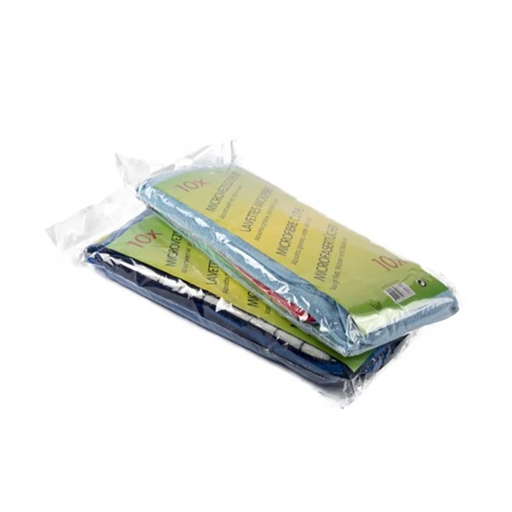
Why this fits the profile: A set of 10 microfibre cloths gives you plenty to allocate by colour or room. The cloths are intended for dry and wet use in the kitchen, bathroom, on glass and electronics, among other areas.
The quantity, material and size of 30 × 30 cm are clearly stated. This means you don’t have to rely solely on general terms like “extra strong”.
10 pieces; microfibre; reusable; suitable for dry and wet cleaning.

Why this fits the profile: This cloth has a concretely stated weight of 260 g/m² and is designed for delicate surfaces such as glass, screens and stainless steel.
The product details mention the material, density, dimensions and washing temperature. This makes comparison easier than with an unspecified cloth.
30 × 30 cm; 260 g/m²; machine washable up to 60 °C according to the product information; designed for lint-free cleaning.
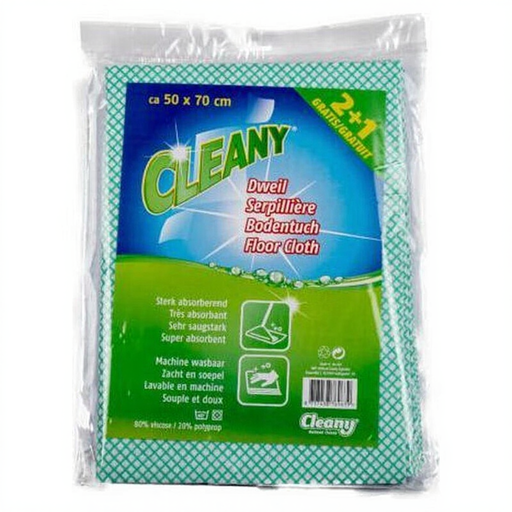
Why this fits the profile: The large size and set of three are ideal for regular mopping of larger surfaces around the home.
The size is suitable for floors and prevents you from using a small kitchen or microfibre cloth for a heavy mopping task.
50 × 70 cm; three pieces; absorbent and machine washable according to the product description.
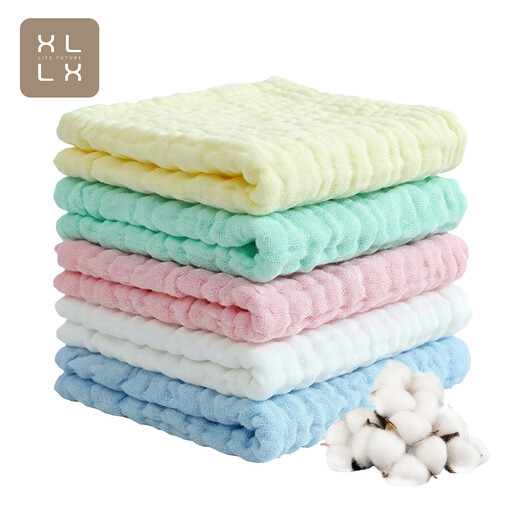
Why this fits the profile: The five cloths measuring 30 × 50 cm are practical for nappy changes, burping, drying and taking along in a nappy bag.
It’s a separate set for baby use, so you don’t have to share these cloths with kitchen or cleaning tasks.
100% cotton according to the product information; six layers; five pieces; washable at 40 °C according to the specified instructions.
We’ve put together a full, up-to-date list of products that fully meet these strict selection criteria and comply with current European safety regulations.
Wash a cloth after use when it’s visibly dirty, feels greasy or has an odour. Use separate cloths for the kitchen, toilet, bathroom and baby care. Always follow the care label. Microfibre cloths can be washed at up to 60 °C according to some product descriptions; cotton baby cloths in this selection are specified at 40 °C.
They can be suitable for this, especially on glass, screens and stainless steel, provided the cloth is clean and lint-free. Don’t use too much cleaning product and rinse the cloth thoroughly. The result also depends on the surface, the amount of moisture and the cleaning method.
That depends on the purchase price, lifespan, washing costs and frequency of use. A washable cloth can mean fewer disposable cloths are used with regular use, but it does require water, detergent and drying time. So don’t just compare the price per pack, but also the number of pieces, the care required and the suitability for your cleaning tasks.
