
Vandaag of morgen in huis

Kwaliteit gegarandeerd

Welkomstaanbiedingen ontgrendelen: GRATIS bezorging | Tot 80% korting | Gratis 30 dagen JoyPlus-proefperiode
Download de app
A set of microfibre cloths may seem like a simple purchase. Yet there are clear differences in size, material, density and care requirements. A cheap set may be awkwardly small, start shedding fluff quickly or prove unsuitable for glass and screens. On the other hand, you may sometimes pay extra for claims that are not supported by specific product details.
With this practical buying guide, you can compare cleaning cloths, dishcloths and reusable cleaning cloths based on the features that really matter at home.
A ten-piece pack may look like good value, but the number of cloths tells you nothing about their size or how long they will last. Always check the dimensions. Cloths measuring 30 x 30 cm are suitable for everyday wiping, while larger dishcloths can cover more surface in one go.
Also check what is included in the set. A cleaning cloth set with different colours makes it easier to assign cloths to different rooms, such as the kitchen, bathroom and furniture.
The term streak-free cleaning cloths sounds appealing, but the result also depends on the surface, the amount of moisture and how the cloth is cared for. A cloth described as suitable for glass may still leave streaks if it is dirty or too wet.
For windows and mirrors, use a clean cloth, work with very little moisture and turn the cloth regularly. For screens and lenses, a soft, low-lint cloth is important. Always check the care instructions provided by the surface manufacturer as well.
Washable cloths are reusable, but they are not indestructible. Washing instructions vary from one product to another. Fabric softener can affect the properties of microfibre, while bleach may damage the fibres or colours. A cloth that is washed incorrectly may absorb less moisture or start leaving fluff behind more quickly.
Microfibre usually consists of very fine synthetic fibres, often polyester and polyamide. According to the product description, these fibres can absorb or hold dust, dirt and grease. This makes microfibre cleaning cloths suitable for dry wiping and light damp cleaning.
However, not every cloth in this category is made from microfibre. Viscose cloths, sponge cloths, cellulose and bamboo fibres have different properties. They may be well suited to wet cleaning or washing up, but should not be compared directly with microfibre cloths designed for glass or electronics.
A size of 30 x 30 cm is practical for everyday tasks: a cloth fits comfortably in your hand and can be folded to create several clean surfaces. Larger models, such as 32 x 38 cm or 35 x 38 cm, are useful for kitchen worktops, tables and washing up.
Some products state their density in g/m². A microfibre cloth weighing 260 g/m² has a specific material specification indicating the amount of fibre material per square metre. This is not an automatic guarantee of a particular cleaning result, but it is a useful point of comparison when assessing several models side by side.
Check the following before buying:
For example, the Cleany Micro Cloths can be used dry or wet and are machine washable, according to the product information. The care advice recommends rinsing them thoroughly, allowing them to air-dry and not using fabric softener. Always follow the label on the packaging if it differs.
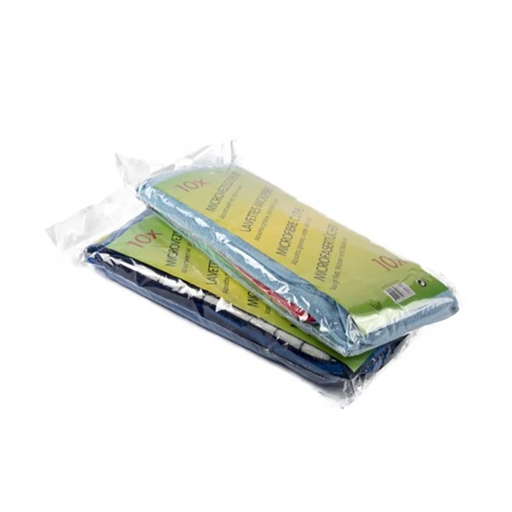
Why it suits this profile: A pack of ten reusable microfibre cloths makes it easy to assign a separate cloth to several rooms. According to the product information, the cloths are suitable for household surfaces, kitchens, bathrooms, glass and electronics.
The quantity and reusability are clearly stated. This means you can compare the price per cloth instead of looking only at marketing claims.
10 pieces; suitable for dry and wet use; washable and reusable according to the description.

Why it suits this profile: This single cloth is ideal for anyone who pays close attention to density and care requirements. Its size is well suited to everyday use at home, in the car or in the office.
The 260 g/m² specification makes the material density easy to verify. Washing instructions up to 60 °C are also provided; do not use fabric softener.
260 g/m²; 30 x 30 cm; machine washable up to 60 °C according to the product information.
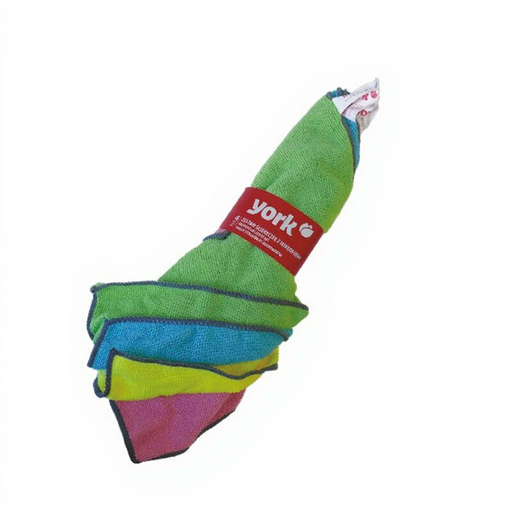
Why it suits this profile: This set is practical for households that want to use separate cloths for windows, mirrors, screens or other surfaces.
The size and quantity are clearly stated in advance. The product description mentions dry and wet use, machine washing and quick drying.
4 cloths measuring 30 x 30 cm; suitable for windows, mirrors, LCD screens and lenses according to the product information.
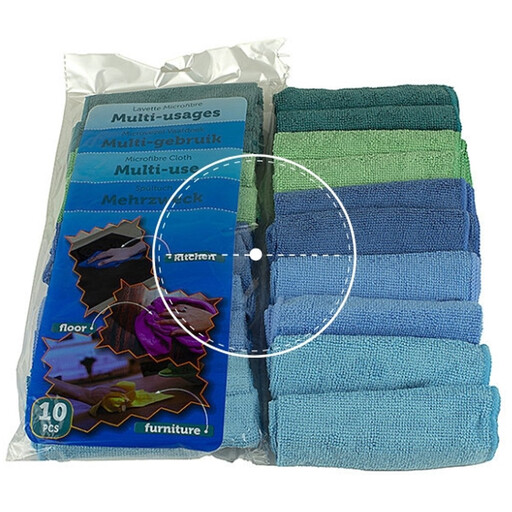
Why it suits this profile: The different colours make it easier to keep the kitchen, bathroom, floors and furniture separate from one another.
You do not have to rely solely on general claims about hygiene or performance: the quantity, colour coding, material and size are all described clearly.
Set of 10; microfibre; 30 x 30 cm; washable and reusable according to the product information.
We have put together a complete, up-to-date list of products that fully meet these strict selection criteria and the applicable European safety regulations.
For a practical system at home, you can assign the cloths to different tasks:
A small amount of cleaning product may be needed for greasy surfaces. First check that the product is suitable for the surface. Do not use an abrasive cloth on delicate lacquer, coatings or screens.
This depends on how they are used. Wash cloths used in the kitchen, bathroom or on visible dirt after every cleaning session. A cloth that has only collected dry dust can sometimes be shaken out or rinsed first. Always follow the washing instructions on the packaging.
They can be, provided the product information states this and the cloth is clean and low-lint. Use very little moisture and do not apply strong pressure. For screens, it is best not to spray liquid directly onto the device.
Their lifespan is affected by the quality of the fibres, how often they are washed and whether cleaning products are used. Replace a cloth when it starts to fray, continues to smell unpleasant, absorbs less moisture or spreads dirt instead of collecting it.
