
Vandaag of morgen in huis

Kwaliteit gegarandeerd

Welkomstaanbiedingen ontgrendelen: GRATIS bezorging | Tot 80% korting | Gratis 30 dagen JoyPlus-proefperiode
Download de app
Dirty windows, grease in the kitchen or dust on furniture: microfibre cloths can be useful for all kinds of cleaning tasks. However, cleaning cloths vary considerably in size, material, density and washing instructions. As a result, a budget set may be less suitable for glass, while a large window cloth can be impractical for smaller surfaces.
As a Joybuy Product Recommendation Officer, I filter the most important product information down to practical points. This helps you see which features matter and which marketing claims are worth checking before you order.
A cleaning cloth set containing ten pieces may seem like good value, but the quantity is not everything. Also check the size, fibre density and material. Ten small 30 x 30 cm cloths are suitable for everyday tasks, but less practical for large windows or floors.
Brands and sellers regularly use terms such as “streak-free”, “lint-free” or “suitable for all surfaces”. According to the product description, a cloth may be designed for this purpose, but the result also depends on the surface, the amount of water and how the cloth is washed. On glass, grease, limescale and detergent residue can still cause streaks, for example.
Reusable cleaning cloths do not automatically continue to perform well. Fabric softener can coat the fibres, affecting their absorbency and cleaning performance. Several products therefore advise washing without fabric softener. Also check whether the cloth can be washed at 40 or 60 °C.
Microfibre cloths generally consist of very fine fibres that can retain dust and moisture. The exact composition varies from one product to another. For example, the product information for the 5five set lists polyester and polyamide, while the Dunlop cloth for glass is described as 100% viscose. These materials are not identical.
When choosing, look for:
For delicate surfaces, always use a clean cloth and remove any visible sand or hard particles first. This reduces the risk of scratches.
The right size depends on the task:
A small microfibre cloth is easier to rinse and replace while cleaning. A large window cloth works faster across a broad surface, but requires more space to wash and dry.
Check the maximum washing temperature and care instructions. According to their product information, the products in this selection can be washed at a maximum of 40 or 60 °C. With microfibre, generally avoid fabric softener and bleach unless the label states otherwise.
A practical routine:
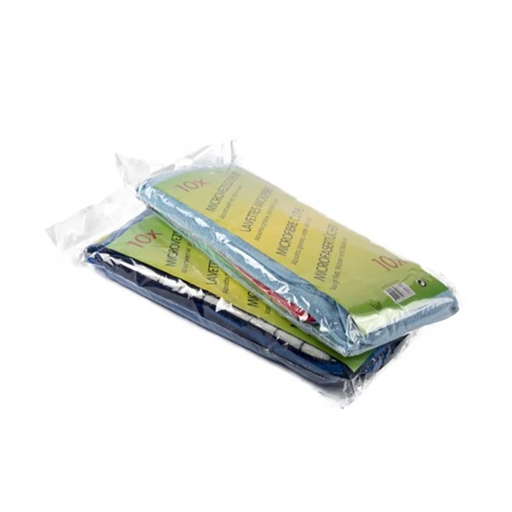
Why it suits this profile: This set contains 10 reusable microfibre cloths for the kitchen, bathroom, glass, electronics and other household surfaces. This makes it easy to allocate a dedicated cloth to different rooms.
You are not buying based solely on a single cloth or an unclear size: the product information clearly states that this is a set of 10 reusable cloths. Wash according to the instructions without fabric softener.
10 pieces, microfibre material and, according to the product description, suitable for wet and dry use on multiple surfaces.

Why it suits this profile: According to the product details, this cloth has a density of 260 g/m² and measures 30 x 30 cm. It is a good fit for anyone looking for a compact cloth for glass, screens, stainless steel, the car and the office.
The relevant specifications are clearly stated: material, dimensions, density and washability up to 60 °C. For delicate surfaces, still test the cloth on an inconspicuous area first.
260 g/m², 30 x 30 cm, suitable for wet or dry use and machine washable up to 60 °C according to the product information.
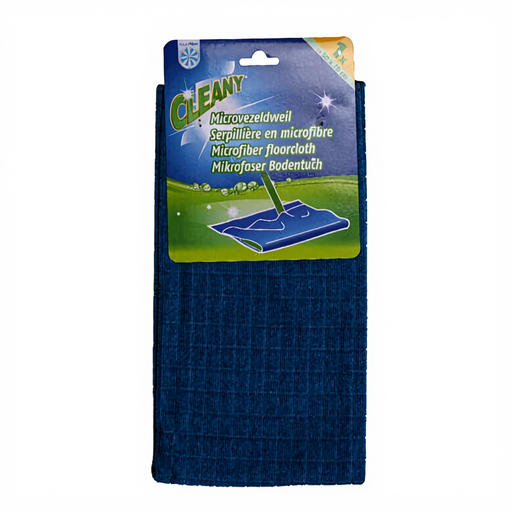
Why it suits this profile: The large 50 x 70 cm cloth is designed for windows, tiles, wooden floors and other smooth surfaces. The Velcro fastening is intended to keep the mop securely in place during use.
The size and stated density of 380 g/m² are included in the product description, so you can assess in advance whether the cloth is suitable for larger surfaces. Washable and disinfectable up to 60 °C according to the listed instructions.
50 x 70 cm, 380 g/m², Velcro design and suitable for use with little or no liquid cleaning product according to the product information.
We have put together a complete, up-to-date list of products that fully meet these strict selection criteria and the applicable European safety regulations.
For windows, mirrors and glass, following a consistent method helps:
A glass cloth for the car, such as the Dunlop Microfiber Cloth for Glass - Blue, 35 x 35 cm, is intended for car windows and glass according to the product description. The cloth can be cleaned with warm or cold water. Take a look at the Dunlop glass cloth if you are mainly looking for a compact cloth for car glass.
This works for many applications. According to various product descriptions, these cloths can be used dry or damp, sometimes without cleaning product. Grease, limescale or stubborn dirt may still require a suitable cleaning product. Always follow the instructions for both the surface and the product.
Their lifespan depends on how they are used, the washing programme and how they are cared for. Wash without fabric softener when advised, avoid high temperatures beyond the stated limit and do not use a cloth containing hard dirt particles on delicate surfaces. Replace a cloth when the fibres start to come loose, the edges become damaged or the cloth continues to leave dirt behind.
Not always. A dishcloth is usually designed for kitchen tasks and absorbing moisture. A microfibre cloth is often chosen for dust, grease, glass and smooth surfaces. Always check the material and recommended uses. For good hygiene, preferably use separate cleaning cloths for the kitchen, bathroom and toilet.
