
Vandaag of morgen in huis

Kwaliteit gegarandeerd

Welkomstaanbiedingen ontgrendelen: GRATIS bezorging | Tot 80% korting | Gratis 30 dagen JoyPlus-proefperiode
Download de app
Buying an oven sounds simple, until you have to choose between a built-in oven, freestanding oven, electric oven, mini oven or multifunction oven. Marketing terms such as “professional baking results”, “self-cleaning” and “energy-efficient” sound appealing, but they do not always tell you what the appliance will actually offer in everyday use.
Pay particular attention to the capacity, connected load, installation dimensions and the functions you will genuinely use. This helps you avoid paying for options that go unused, or finding that your new oven does not fit your kitchen properly.
An oven that is 60 cm wide will not automatically fit every kitchen unit. For many built-in models, the installation dimensions are approximately 60 cm high, 56 cm wide and 55 cm deep, but small differences can cause problems. Always check the technical drawing for the model you have chosen and measure the existing aperture.
Also check the ventilation space, the position of the socket and the direction in which the door opens. A 45 cm-high oven, such as some combination ovens, requires a different aperture from a standard model.
An oven with a fan-assisted function is useful for baking on several trays at once. An oven with an air-fryer function may be appealing for chips and vegetables, but check whether a suitable baking tray is included. Steam, microwave, automatic programmes and a pizza setting increase versatility, but they can also make the appliance more expensive and more complicated to operate.
According to Bosch’s own information, the Auto Pilot function determines the cooking method, temperature and time based on the selected programme and weight. Treat this as a helpful aid, rather than a guarantee of the same results for every dish.
Pyrolysis heats residue to a high temperature, after which you can remove the remaining ash. This can reduce the need for manual cleaning, but baking trays, racks and the oven door usually still need to be cleaned separately. Hydrolysis or AquaClean uses steam to loosen dirt; you will still need to wipe the oven afterwards.
Also check the energy consumption of a cleaning programme and whether the oven can be ventilated sufficiently during pyrolysis.
For one or two people, a mini oven of around 30 to 45 litres may be sufficient. A 65-litre freestanding oven offers more room for an oven dish or pizza, while an oven with a 71-litre capacity may be suitable for families and regular baking on several levels.
Do not look only at the number of litres. Check the internal dimensions, the number of shelf positions and the size of the baking tray too. A large capacity is less useful if your favourite oven dish does not fit.
An electric oven with conventional top and bottom heat is suitable for classic recipes. The fan-assisted function circulates warm air with a fan and can be useful when baking on several levels. Also check the maximum power rating. Models of approximately 3,000 to 3,600 watts may require a separate, correctly earthed connection.
Have a built-in oven connected in accordance with the installation instructions. Do not use unsuitable extension leads or shared extension blocks. A freestanding mini oven requires a stable, heat-resistant surface with sufficient ventilation.
An energy class such as A, A+ or A++ must be compared within the scale stated for the product. Also look at the consumption per cycle in conventional mode and fan-assisted mode. For everyday use, preheating, cooking time, door insulation and the selected temperature also make a difference.
An energy-efficient oven is therefore not just a matter of the label. Choosing a suitable capacity also prevents you from unnecessarily heating an oven that is too large.

Why it suits this profile: This freestanding oven offers a 65-litre capacity without requiring built-in installation. That is practical for a temporary kitchen, rented property or when expanding your existing cooking space.
The product specifications list six functions, a turbo fan, five shelf positions and a mechanical timer. You therefore get practical information rather than just general descriptions of the functions.
65-litre capacity, 2,000 watts of power, fan-assisted function and an enamelled interior.
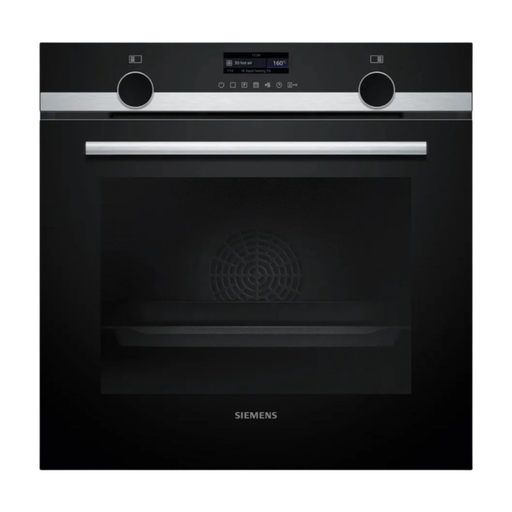
Why it suits this profile: This built-in black oven combines a 71-litre capacity with multiple heating settings and cleaning programmes for intensive everyday use.
The listed specifications distinguish between hydrolysis and pyrolysis. Before buying, check which cleaning function is available in the current version.
71 litres, up to 275 °C, rapid preheating, fan-assisted cooking, grill and five shelf positions.
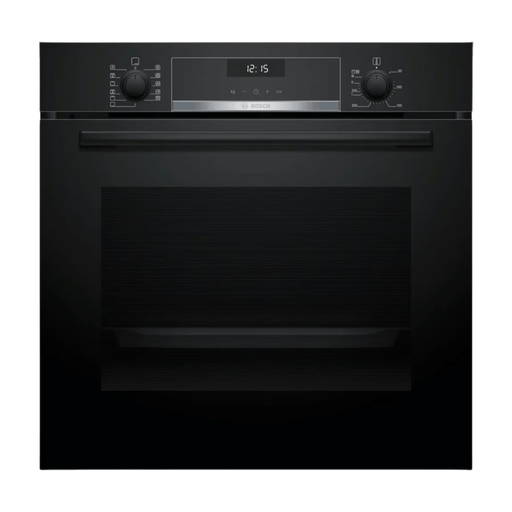
Why it suits this profile: This model is designed for users who regularly bake and grill, and want to combine several cooking methods in a standard aperture.
The air-fryer function is paired with an Air Fry tray supplied with the oven. This makes it clear which accessory is intended for this purpose.
71 litres, eight heating systems, Air Fry, 3D fan-assisted cooking, EcoClean and a telescopic rail.
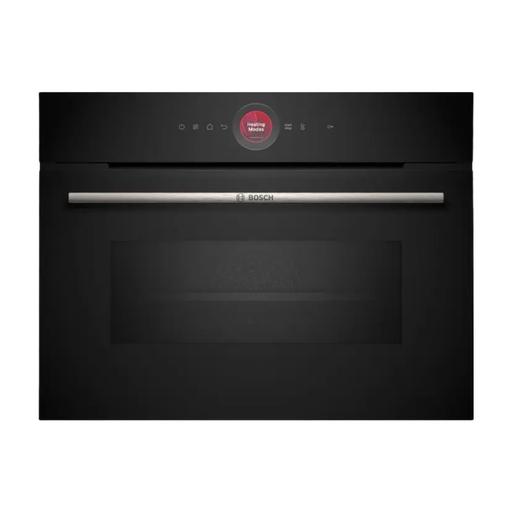
Why it suits this profile: The combination of oven, grill and microwave saves space when you do not want to place several appliances next to each other.
The capacity is 45 litres and the aperture is approximately 45.5 cm high. This prevents the mistake of treating a compact combination oven like a standard 60 cm oven.
45-litre capacity, 900 watts of microwave power, grill, fan-assisted cooking, touchscreen and child lock.
We have put together a complete, up-to-date list of products that fully meet these strict selection criteria and the applicable European safety regulations.
No. The external dimensions, installation dimensions and ventilation space can vary. Measure the height, width and depth of the aperture and compare them with the official installation data. Also take the connected load and cable position into account.
The lifespan depends on usage, installation, maintenance and the availability of replacement parts. Regular cleaning, avoiding using the door as a support and keeping ventilation openings clear can help to reduce wear. A statutory warranty of at least two years applies to the products mentioned; additional manufacturer’s warranty may vary by brand and model.
Not necessarily. Pyrolysis can reduce the need for manual cleaning, but it uses extra energy during the cleaning programme. Compare the energy consumption, how often you use the function and the price of the appliance. For light soiling, hydrolysis or manual cleaning may be more practical.
