
Vandaag of morgen in huis

Kwaliteit gegarandeerd

Welkomstaanbiedingen ontgrendelen: GRATIS bezorging | Tot 80% korting | Gratis 30 dagen JoyPlus-proefperiode
Download de app
Buying an oven seems straightforward, until you have to choose between a built-in oven, freestanding oven or compact mini oven. Then there are features such as fan cooking, grilling, steam cleaning, pyrolytic cleaning and air frying. Marketing copy often emphasises the number of programmes, but not every function is useful for every kitchen.
Pay particular attention to the space available, capacity in litres, connected load and how you want to clean the oven. Below, you can find out which specifications matter and which models suit different situations.
An oven with ten or more programmes sounds versatile, but check which ones you will actually use. Conventional heating, fan cooking and grilling are more important to many households than a long list of specialist settings. An oven with fan cooking can be useful when you want to bake on several levels. An oven with a grill is practical for gratins, vegetables and browning dishes.
A 60 cm oven will not automatically fit every kitchen unit. As well as the external dimensions, check the niche height, niche width and niche depth. Many standard built-in ovens have a niche height of around 59 to 60 cm, but variations do occur. Also allow for ventilation space and check how the appliance needs to be connected to the electricity supply.
A self-cleaning oven does not always clean itself completely without any manual maintenance. With hydrolysis or AquaClean, water is heated to loosen dirt; you still need to wipe the interior afterwards. Pyrolytic cleaning heats residue to a high temperature, but baking trays and accessories are not always suitable for this programme. Always check the manual and the accessories supplied.
For a family, or anyone who regularly prepares large oven dishes, 65 to 76 litres is practical. An oven of around 70 litres provides room for larger baking trays and several levels. A mini oven of 10 to 35 litres takes up less space and is better suited to a student room, studio flat or small household. With a freestanding model, allow for clearance from walls and other heat-sensitive materials.
An electric oven with a higher connected load can heat up quickly, but it also requires careful attention to the electrical connection. The models in this selection have outputs of, for example, 1,800, 2,000, 3,000 or 3,400 watts. Check that the circuit, plug and installation are suitable. Have a built-in oven connected in accordance with the installation instructions.
An oven with fan cooking uses a fan to circulate warm air around the oven cavity. This can be useful when baking on several levels. Also check whether a turbo or fan-cooking function is included as standard or available as an optional extra, as is the case with some freestanding models.
Choose a cleaning system that suits the way you use your oven:
An oven with a steam function may be interesting for dishes where moisture is desirable. An oven with an air-frying function is generally supplied with a special rack or baking tray. Always check which accessories are actually included in the box.
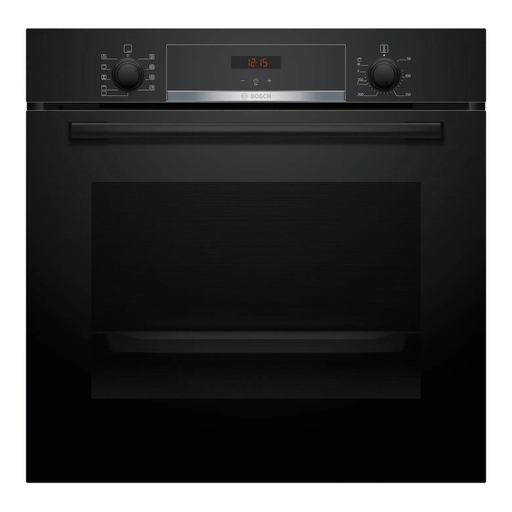
Why it suits this profile: This 60 cm built-in oven has a capacity of 71 litres, seven programmes and controls with a rotary dial and touch operation. It provides a straightforward foundation for everyday baking and roasting.
The key functions are clearly specified: convection, grilling and hydrolytic cleaning. However, check beforehand that the stated niche dimensions fit your kitchen.
71-litre capacity, maximum temperature of 275 °C, child lock and a power output of 3,400 watts.
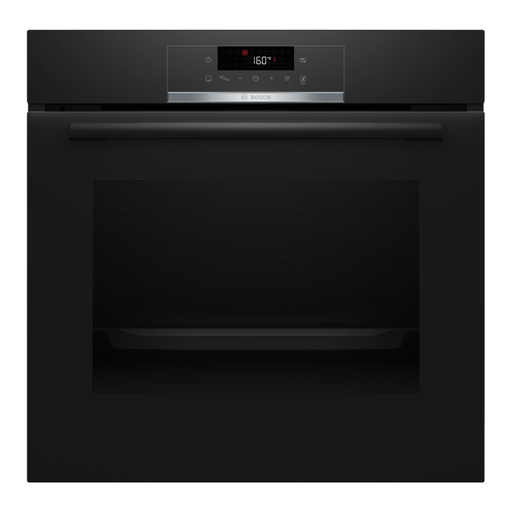
Why it suits this profile: This 71-litre built-in oven combines fan cooking, grilling, partial steam, air frying and pyrolytic cleaning. It is well suited to households that regularly use different cooking methods.
The product description specifies the required Air Fry baking tray and the particular cleaning method. Before use, check which accessories are suitable for pyrolytic cleaning.
Air-frying function, steam function, 3D fan cooking, telescopic rails and child lock.
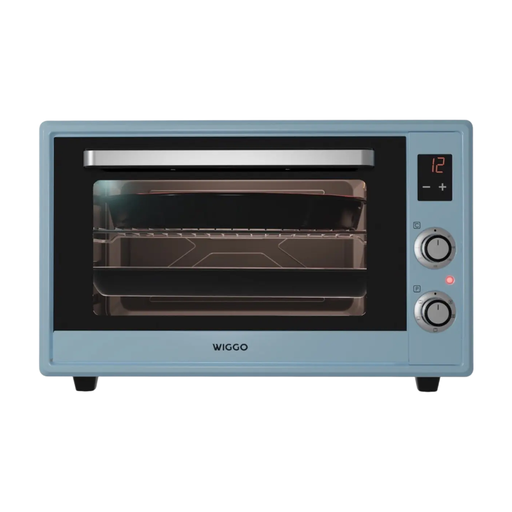
Why it suits this profile: This freestanding oven offers a 65-litre capacity without requiring built-in installation. It is suitable for anyone with a rented kitchen, anyone needing an extra oven or anyone who does not want to modify a niche.
The capacity and dimensions are clearly stated. However, the oven needs clear space around it and must be cleaned manually.
65-litre capacity, six functions, a 90-minute timer and an optional turbo fan according to the product description.

Why it suits this profile: With a 10-litre capacity and space for baking tins of up to 20 cm, this is a compact choice for toast, small pizzas, muffins and snacks.
The limited capacity makes it clear that this is not a replacement for a large family oven. This helps you buy the appliance for the right purpose.
10 litres, conventional heating, temperature range from 80 to 230 °C, double glazing and crumb tray.
We have put together a complete, up-to-date list of products that fully meet these strict selection criteria and the applicable European safety regulations.
Many standard built-in ovens have a product width of approximately 59.4 to 59.6 cm and are designed for a niche around 56 cm wide and 55 cm deep. Measure your existing niche carefully and compare these dimensions with the installation details for your chosen model.
That depends on the dish being prepared and how long the oven is used. A mini oven has a smaller cavity and can be practical for a small portion. For several dishes or large oven dishes, a built-in oven with a larger capacity is more suitable. Compare the stated consumption per cycle and check the energy class on the product label.
The lifespan depends on use, maintenance, installation and the quality of the components. Clean the oven according to the manual, keep ventilation openings clear and use suitable baking trays. In the Netherlands, consumers are entitled to at least the statutory guarantee under the applicable EU and national rules; additional manufacturer’s terms may vary by brand and model.
