
Vandaag of morgen in huis

Kwaliteit gegarandeerd

Welkomstaanbiedingen ontgrendelen: GRATIS bezorging | Tot 80% korting | Gratis 30 dagen JoyPlus-proefperiode
Download de app
Buying a new built-in oven seems straightforward, until you realise how many models use the same terms. A fan oven isn’t automatically suitable for baking on several trays at once. Self-cleaning ovens don’t all need the same amount of maintenance, and a 71-litre capacity is only a good fit if the niche dimensions are right too.
This buying guide will help you distinguish marketing claims from specifications you can check. That way, you can choose an electric built-in oven that suits your kitchen, cooking habits and budget.
A 71-litre oven sounds spacious, but usable space also depends on the shape of the oven cavity, the number of shelf positions and the trays supplied. So check more than just the capacity, and consider whether you want to bake on several levels at once.
A 60 cm-wide built-in oven won’t necessarily fit every 60 cm cabinet. Manufacturers generally list separate dimensions for the appliance and the installation niche. Measure the height, width and depth of the niche and compare them with the official installation details. Also check the ventilation clearance and how the oven needs to be connected to the electricity supply.
According to product descriptions, a pyrolytic oven heats residue to high temperatures, after which the ash can be wiped away. Hydrolysis or a steam function uses water to loosen residue. None of these systems removes the need to clean the door glass, seal, trays and exterior. Also check whether accessories need to be removed before starting a cleaning programme.
The most common choice for a kitchen is a 60 cm built-in oven. Many models have a capacity of around 66 to 72 litres. A 71-litre built-in oven is a good option for families, large oven dishes and batch cooking. If you only bake occasionally, a smaller model may be enough.
Check the following:
Models in this selection, for example, have connection ratings of around 2,500 to 3,600 watts. Make sure the electrical connection is installed in line with current regulations and the manufacturer’s instructions.
A fan oven uses a fan to circulate warm air around the oven cavity. This can be useful when baking on several levels, but the right temperature and tray position still matter.
A grill oven is suitable for browning, toasting and adding a crisp finish to dishes. If you use this function often, check the available grill area and power.
According to product descriptions, some brands’ ovens with a steam function can combine heat and moisture. The Bosch HQG572EB3, for example, is listed as having a partial steam function. This is different from a full steam oven, so check which steam programmes are actually available and how the water tank is filled.
An oven with an air fryer function usually comes with a perforated tray or a special baking tray. According to Bosch and Wiggo product descriptions, this function is designed for foods such as chips, vegetables and chicken. Cooking times and the amount of oil needed can vary by dish, so check the manual.
The energy ratings available range from A to A++. Compare the rating with your expected usage and the consumption figures on the energy label. A higher rating doesn’t automatically mean every use will cost less, as the temperature, programme and cooking time also make a difference.
Cleaning options include:
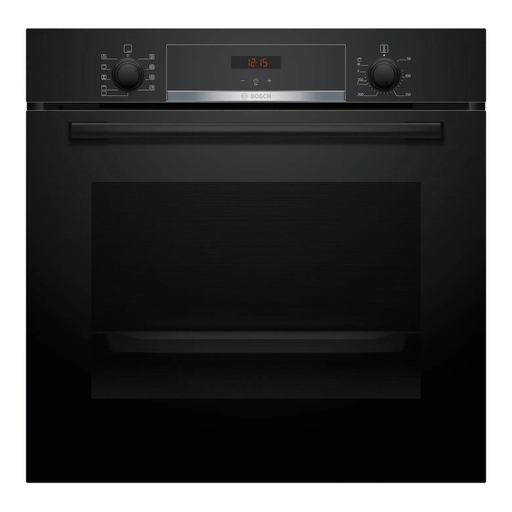
Why it suits this type of user: This electric built-in oven offers a 71-litre capacity, fan cooking, a grill and seven cooking programmes, without requiring you to pay for the most advanced features straight away.
The product details list the oven dimensions and niche dimensions separately. The hydrolytic cleaning function isn’t presented as eliminating all maintenance.
71-litre capacity, up to 275 °C, child lock and LED display with rotary and touch controls.
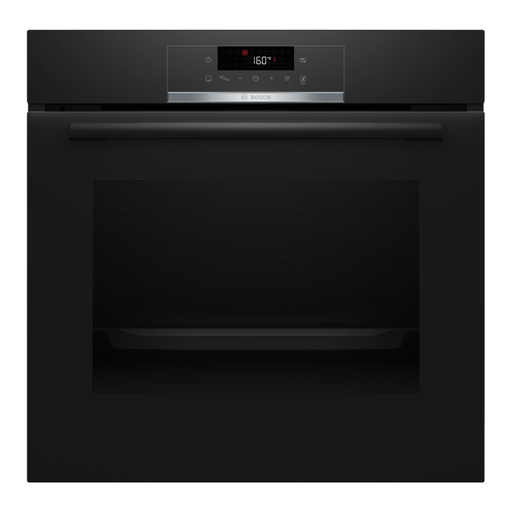
Why it suits this type of user: Ideal for households that want to combine different cooking methods, including 3D fan cooking, partial steam, air frying and automatic programmes.
The features are clearly specified: air frying with a baking tray, 10 automatic programmes and pyrolytic cleaning. Before buying, check that your electrical connection can support the required 3,600 watts.
71 litres, A+ energy rating, telescopic rails and a temperature range of 30 to 275 °C.
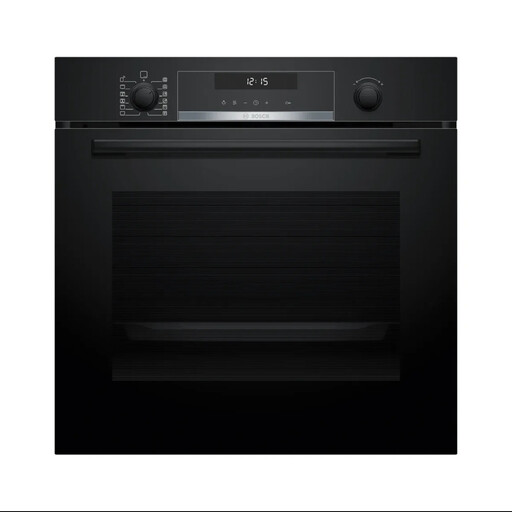
Why it suits this type of user: For those who cook often and want extra automation. The product description lists Air Fry, 30 automatic programmes, pyrolysis and Home Connect.
The cleaning method is pyrolytic, but you’ll still need to clean the door and exterior by hand. Also check that the connected features are compatible with your home network.
71 litres, A+ energy rating, telescopic rails and remote control, according to the product information.
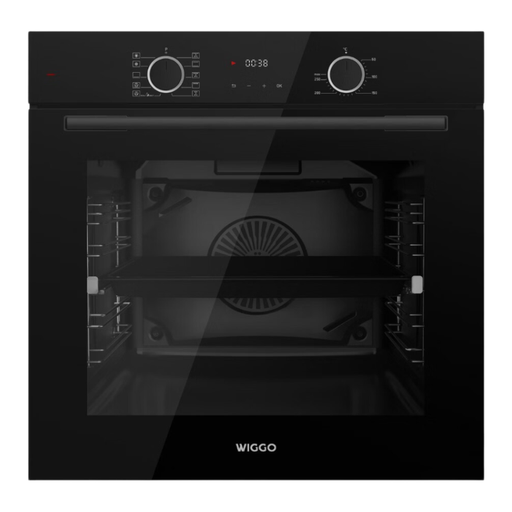
Why it suits this type of user: A practical built-in oven from Wiggo for anyone looking for a range of features and accessories, including a grill, fan cooking, defrosting and FryArt.
The oven is specified as a built-in model, and the product information lists four accessories. Before installation, check the stated niche depth, as it differs from many standard dimensions.
10 functions, A energy rating, up to 250 °C and an air fryer tray included.
We’ve put together a complete, up-to-date list of products that meet these strict selection criteria and current European safety regulations.
Not necessarily. The external width is often around 59.4 to 59.6 cm, while the required niche width is specified separately. Measure the cabinet and check the installation details for your chosen model.
Its lifespan depends on usage, installation, maintenance and parts. Regular cleaning, proper ventilation and following the manual can help prevent unnecessary wear. The legal guarantee in the European Union for the products mentioned is at least two years; any additional manufacturer’s guarantee may vary by brand and model.
An oven with a favourable energy rating may use less energy under comparable conditions, but actual consumption also depends on the temperature, programme, preheating and cooking time. So compare the energy label and consumption figures per cycle, rather than looking only at the energy rating letter.
