
Vandaag of morgen in huis

Kwaliteit gegarandeerd

Welkomstaanbiedingen ontgrendelen: GRATIS bezorging | Tot 80% korting | Gratis 30 dagen JoyPlus-proefperiode
Download de app
Buying a new built-in oven sounds simple until you compare the technical specifications. One electric built-in oven may have a capacity of 50 litres, while another offers 71 or even 76 litres of oven space. Terms such as fan-assisted cooking, multifunction, self-cleaning and energy-efficient do not always tell the full story either.
For Dutch households, three pitfalls are particularly important:
The term 60 cm oven usually refers to the standard external width of a wide built-in oven. Always check the exact niche dimensions. For various Bosch models, the niche height is around 59.5 cm, the niche width around 56.8 cm and the niche depth around 55 cm. An unusual size may cause installation problems.
The capacity determines how much you can prepare at once:
A larger oven is not automatically more energy-efficient. If you usually prepare small portions, a compact model may be a better fit.
A multifunction oven generally combines several heating methods. Focus on the functions that suit your cooking style:
According to Bosch’s own information, 3D Hot Air distributes heat across several levels. This is a verifiable product specification, but the final result still depends on the preparation method, baking tin and quantity.
With a pyrolytic oven, the oven cavity is cleaned at a high temperature according to the product description, after which residue can be wiped away. Remove accessories if instructed to do so in the manual. Pyrolytic cleaning also requires additional energy during the cleaning cycle.
A hydrolytic oven, or an oven with steam cleaning, uses water and heat to loosen dirt. The Samsung NQ50T8939BK, for example, has a self-cleaning steam function. Comfee describes AquaClean as a system in which water at the bottom of the oven is heated. In both cases, some manual wiping is usually still required.
When checking energy information, refer to the official energy label and the stated consumption values. The range includes models with energy ratings of A, A+ and, for the AEG OU5PB40SM, a stated A++ rating. Check the current label on the product page, as designations may vary by product page or measurement method.
An oven rated at approximately 2,500 to 3,400 watts must be connected correctly in accordance with the manual and local installation regulations. Have a fixed connection or modification to the electrical circuit carried out by a qualified installer. Do not use an unsuitable extension lead.

Why it suits this profile: This oven combines a 70-litre capacity with 10 functions, a grill, pizza function, LED display and timer. This gives you broad everyday functionality without immediately opting for a model with highly advanced controls.
The key functions are clearly stated. AquaClean uses water and steam, but it does not replace thorough manual cleaning; this helps prevent unrealistic expectations.
70 litres, 10 functions, fan-assisted cooking, grill, pizza function and ECO mode according to the product information.
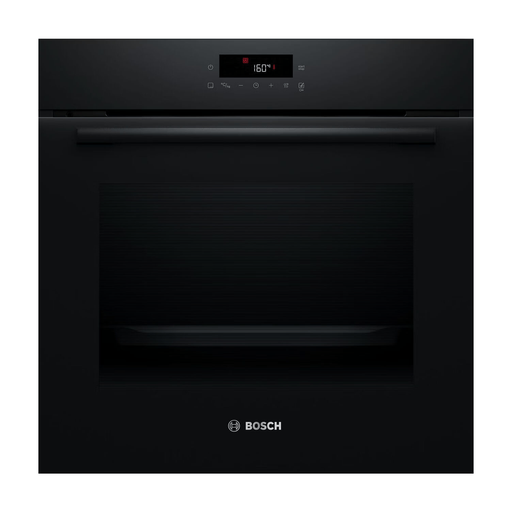
Why it suits this profile: This Bosch built-in oven is aimed at users who want to combine a spacious oven with automatic programmes and a more intensive cleaning function.
The product information states both the niche dimensions and the functions. Pyrolytic cleaning is included, but accessories and installation must be handled in accordance with the manual.
71 litres, A+ energy rating, 10 automatic programmes, 3D Hot Air and pyrolytic self-cleaning according to the product specifications.
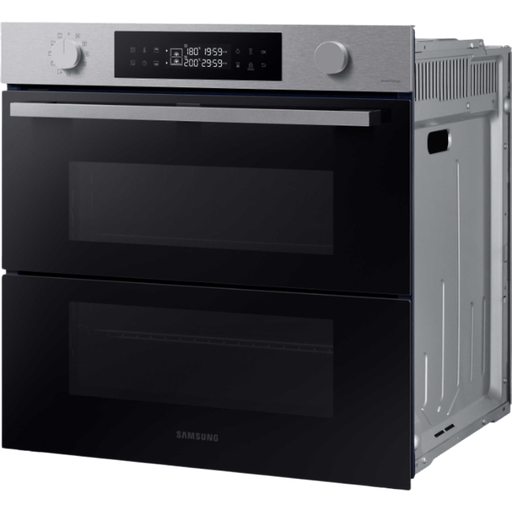
Why it suits this profile: The Dual Cook Flex configuration is designed for households that want to prepare different dishes in one oven. The oven has a capacity of 76 litres and can be controlled via SmartThings, according to the product description.
The choice is not based solely on the number of programmes: the two cooking zones and the capacity are well suited to frequent cooking. However, check that the controls and connection are suitable for your kitchen.
76 litres, grill function, Dual Cook Flex, touch controls and SmartThings compatibility according to the product details.
We have compiled a complete, up-to-date list of products that fully meet these strict selection criteria and the applicable European safety regulations.
No. The external width may be similar, while the niche height, width and depth can differ. Measure the existing niche and compare it with the official installation specifications. Also check the ventilation space and how the oven needs to be connected to the electricity supply.
Its lifespan depends on frequency of use, maintenance, installation and replacement parts. Regular cleaning, keeping the ventilation openings clear and avoiding unnecessarily long periods at maximum temperature can help keep the appliance in good condition. The statutory guarantee in the European Union for the products mentioned is at least two years; additional manufacturer warranties may vary by brand and model.
This depends on the power rating, programme duration, temperature and electricity tariff. Check the energy consumption per cycle on the energy label rather than looking only at the energy rating. A fan-assisted programme may be more efficient for certain preparations, but the actual cost varies according to the recipe and usage situation.
