
Vandaag of morgen in huis

Kwaliteit gegarandeerd

Welkomstaanbiedingen ontgrendelen: GRATIS bezorging | Tot 80% korting | Gratis 30 dagen JoyPlus-proefperiode
Download de app
A new built-in oven may seem straightforward to choose at first. But problems often only come to light after you’ve bought it: the oven doesn’t fit the cavity properly, the controls are awkward to use or a promising cleaning feature doesn’t work as expected. So if you’re renovating your kitchen or replacing an existing oven, it’s worth comparing the specifications with how you plan to use it.
An oven with a capacity of 71 or 76 litres sounds spacious, but how practical it is also depends on the interior layout, shelf positions and included accessories. Also check whether it’s a standard 60 cm built-in oven or a compact model with a cavity height of around 45 cm.
A self-cleaning oven won’t necessarily be completely maintenance-free. With hydrolytic cleaning, dirt is usually loosened with moisture, after which you still need to remove it from the oven and wipe it away. A pyrolytic oven heats residue to a high temperature, but requires extra attention to ventilation and energy use, and you’ll need to remove any accessories that aren’t suitable.
Also look out for conflicting product descriptions. Some models’ product information lists hydrolytic cleaning, catalytic cleaning and special coatings alongside one another. Always check the manual and the exact model before assuming that a particular cleaning programme is available.
A smart oven with app control can be useful for notifications, programmes or remote operation. However, it requires a stable Wi-Fi connection, correct installation and attention to account security. For everyday baking, temperature control, even heat distribution and clear, easy-to-use controls are more important than an app.
Before buying, measure the existing cavity at three points: height, width and depth. Don’t just look at the appliance’s external dimensions; check the required ventilation space and connection requirements too. A standard model may be around 59.5 cm wide, while compact models require a different cavity height.
Also check the connected load. According to the product information, the Bosch Serie 4 HBA534EB3 has a power rating of 3400 W. The Bosch CMG7241B1 combination oven is listed with a power rating of 3600 W and a microwave power of 900 W. If you’re unsure whether the existing circuit or wiring is suitable, ask a qualified installer to check the electrical connection.
An electric built-in oven with a capacity of 60 to 76 litres is generally better suited to families, large oven dishes and several baking trays. A fan oven circulates heat using a fan, which is useful when cooking on several levels. Check that the programme is suitable for your recipes, though: fan cooking may require a different temperature setting from conventional top and bottom heat.
A multifunction oven may also offer grilling, defrosting, keeping food warm or steaming. Choose functions to suit your cooking habits. A combination oven with a microwave can save space, but often has a smaller capacity than a full-size model. The Bosch CMG7241B1, for example, has a capacity of 45 litres.
The energy rating on the EU energy label ranges from A to G. Compare more than just the letter: check the energy consumption per cycle too, if it’s available. The Bosch HBA534EB3 is listed with energy rating C. The Samsung NV7B4540VAS and Siemens HS736G3B1 are listed with A+.
A higher energy rating can be beneficial if you use your oven regularly, but actual running costs also depend on the temperature, programme, preheating and how often you use it. An oven that heats up more quickly or has a suitably sized small compartment may be worth considering if you often cook small portions.
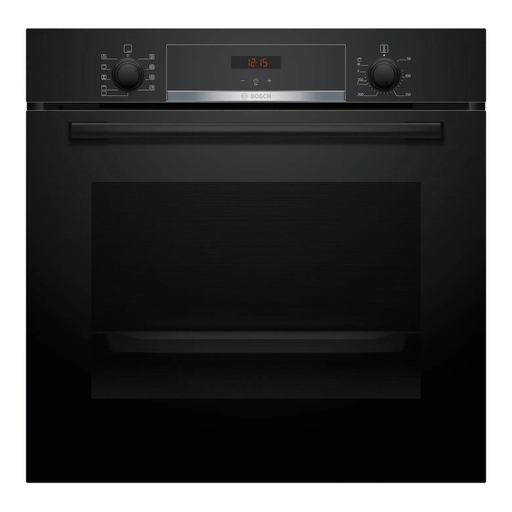
Why it suits this type of buyer: This model offers a generous 71-litre capacity, seven cooking programmes and rotary and touch controls, without a microwave combination or extensive app features.
The product information lists specific features and dimensions. Hydrolytic cleaning isn’t presented as completely maintenance-free.
71-litre capacity, grill and fan functions, child lock and a maximum temperature of 275 °C.
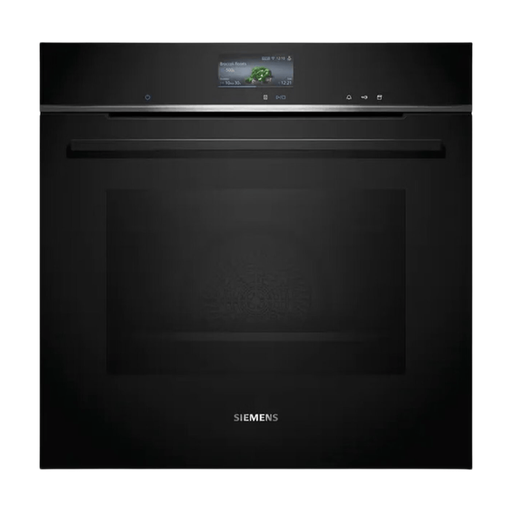
Why it suits this type of buyer: Its listed features focus on precise cooking, steam, 4D hot air and digital controls, making it a good choice for people who cook frequently.
The description specifies the cleaning method, temperature range and requirement for professional installation, so you can check these details in advance.
71 litres according to the technical specifications, A+ energy rating, Home Connect and a food thermometer function according to the product description.
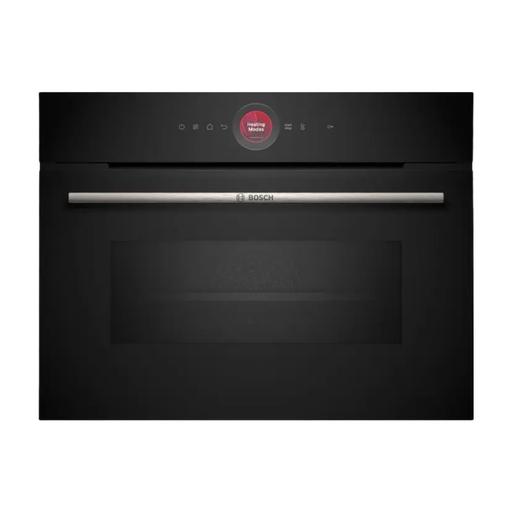
Why it suits this type of buyer: This compact model combines oven functions with microwave cooking, making it a good choice when saving space and cooking quickly are priorities.
Its 45-litre capacity is clearly stated, so you won’t end up buying a large 60 cm oven when what you really need is a compact appliance.
900 W microwave power, touchscreen, grill, fan cooking, keep-warm function and child lock.
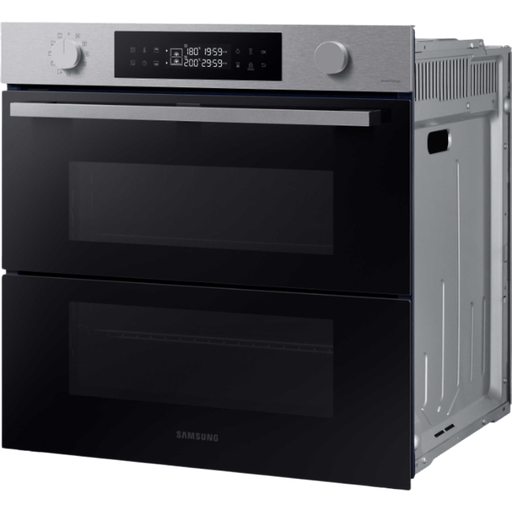
Why it suits this type of buyer: Its 76-litre capacity and Dual Cook Flex layout are designed for households that want to cook different dishes at the same time.
The product information specifies the capacity, temperature and features. Before buying, check that the cleaning method described matches the exact model.
76 litres, two cooking compartments according to the product description, app support and A+ energy rating.
We’ve put together a complete, up-to-date list of products that meet these strict selection criteria and the applicable European safety requirements.
Have your built-in oven connected in accordance with the installation manual and local regulations. Check that the door can open freely, that ventilation openings aren’t blocked and that the plug or fixed connection remains accessible for maintenance.
Use oven gloves when handling hot accessories, and keep children away from the door and control panel. Only clean the oven once it has cooled completely. For a steam oven or hydrolytic cleaning programme, use the specified amount of water. For pyrolytic cleaning, remove any accessories that aren’t suitable beforehand.
No. The width may be similar, but cavity height and depth can vary. Measure the cavity carefully and compare it with the official installation dimensions for the specific model.
Its lifespan depends on how it’s used and maintained, how it’s installed and the parts it contains. Regular cleaning, proper ventilation and following the manual can help reduce wear. Keep your proof of purchase and warranty details. In the EU, you’re entitled to at least the statutory guarantee of conformity, with additional rights depending on your circumstances.
Not necessarily. A combination oven mainly saves space and can be handy for small portions. Energy use depends on the programme, power rating, cooking time and quantity of food. So compare the energy label and technical specifications rather than looking only at the number of functions.
