
Vandaag of morgen in huis

Kwaliteit gegarandeerd

Welkomstaanbiedingen ontgrendelen: GRATIS bezorging | Tot 80% korting | Gratis 30 dagen JoyPlus-proefperiode
Download de app
Buying an oven may seem straightforward until you have to choose between a built-in oven, mini oven, freestanding oven or multifunctional model. Marketing copy often focuses on the number of programmes, a large capacity or a self-cleaning function. However, these features do not tell you everything about day-to-day use.
The most important question is: does the oven suit your kitchen, how much you cook and the electrical connection available to you? You should also check the technical specifications. This will help you avoid buying an oven that does not fit the housing unit, turns out to be too small for your baking dishes or is difficult to clean.
A 70-litre oven sounds spacious, but the internal space may be arranged differently from one model to another. So also check the number of shelf positions, the dimensions of the baking trays and the maximum diameter of a baking tin. This is particularly important with a compact oven. The Rommelsbacher BG 950, for example, has a capacity of 10 litres and is suitable for baking trays up to around 20 cm. That is fine for toast, small pizzas and muffins, but not for a large oven dish.
An oven with ten or more programmes is not automatically more convenient. For everyday cooking, top and bottom heat, fan-assisted cooking, grill and, if required, a pizza setting are often enough. Also check whether the controls are easy to understand. Dials are simple and immediate, while a touchscreen offers more settings but can sometimes require more steps.
Terms such as pyrolytic, catalytic, hydrolytic and EcoClean do not mean that you will never need to clean the oven again. With pyrolysis, residue is heated at high temperatures. Hydrolytic or steam cleaning loosens dirt and grease. You will usually still need to wipe the trays, door and corners yourself. So check which parts can be removed and what maintenance is recommended in the manual.
A standard 60 cm oven is usually around 59.5 cm high and 59.4 to 59.6 cm wide, but the required housing dimensions vary by model. Measure the height, width and depth of the housing unit before ordering. Also pay attention to ventilation space and the position of the mains cable.
A freestanding oven needs a stable, heat-resistant surface. For some models, manufacturers recommend leaving at least 10 cm of space around the appliance. Do not place a mini oven beneath heat-sensitive materials and do not block the ventilation openings.
For one or two people, a compact oven with a capacity of 10 to 35 litres may be sufficient. A model with a capacity of 45 to 65 litres offers more room for oven dishes, multiple portions and larger pizzas. A 70-litre oven is suitable for families or anyone who regularly prepares several dishes.
Power is measured in watts. A freestanding electric oven rated at 1,800 to 2,000 watts may be suitable for everyday baking and grilling. Built-in ovens often have a higher connected load, for example 2,500 to 3,400 watts. Check that the connection and installation in your kitchen are suitable for this. Have a built-in oven connected in accordance with the installation instructions.
A fan-assisted oven uses a fan to circulate warm air. This is useful for even cooking and baking on several levels, if permitted by the manual. An oven with a grill is handy for browning and making dishes au gratin. A multifunctional oven often combines fan-assisted cooking, top and bottom heat, grilling and specific programmes.
Compare the energy class and consumption per cycle on the energy label. An energy-efficient oven does not only use less electricity because of its class, but also because its capacity and use are appropriate. A large oven that is repeatedly used half-empty is not necessarily the most sensible choice for every kitchen.
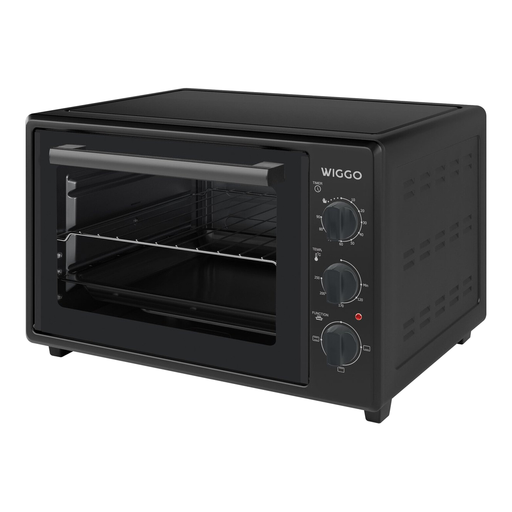
Why it suits this profile: This freestanding oven offers a 35-litre capacity and straightforward controls for baking, grilling and reheating, without requiring built-in installation.
The specifications state the capacity, 1,800 watts, three heating functions and a 90-minute timer. This makes it clear in advance what you will and will not get.
35-litre capacity, double-glazed door, baking tray and wire rack included.
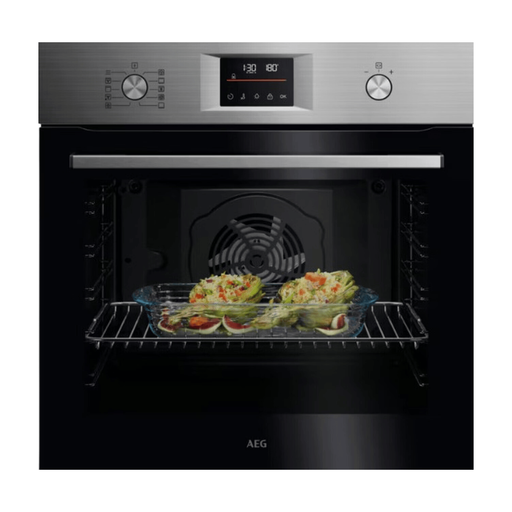
Why it suits this profile: Anyone looking for a spacious fixed oven gets a 72-litre capacity, multiple programmes and a pyrolytic cleaning function.
The housing dimensions, maximum power of 2,990 watts and temperature of up to 300 °C are specified. However, check these details against your own kitchen measurements.
72 litres, 45 cooking programmes, five shelf positions and, according to the product information, energy class A++.
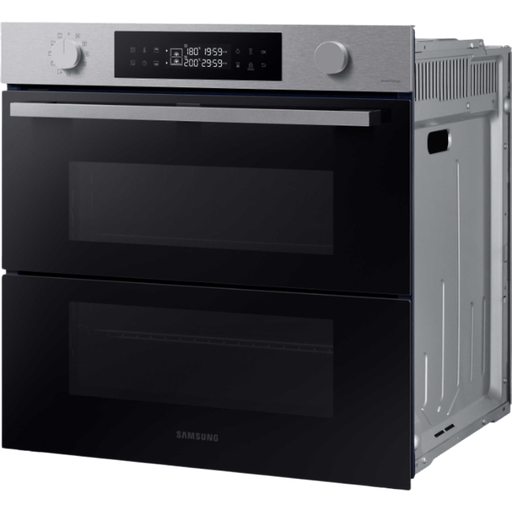
Why it suits this profile: The combination of a 76-litre capacity, Dual Cook Flex and multiple heating functions is ideal for families and anyone who regularly prepares different dishes at the same time.
The capacity, temperature range of 30 to 270 °C and the stated functions are clearly specified. According to the product information, the cleaning method should be regarded as catalytic rather than completely maintenance-free.
76 litres, two cooking compartments, grill, fan-assisted cooking and app support according to the product description.

Why it suits this profile: This 22-litre mini oven takes up less space while still offering several heating settings and a rotisserie.
The suitability for baking tins up to 25 cm, five heating settings and the included accessories make the practical capacity clearer than the litre figure alone.
22 litres, 60-minute timer, fan-assisted settings, rotisserie and crumb tray.
We have compiled a complete, up-to-date list of products that fully meet these strict selection criteria and the applicable European safety regulations.
Not necessarily. Consumption depends on the energy class, capacity, temperature, cooking time and selected function. Compare the energy consumption per cycle on the energy label. A compact oven can be practical for small portions, while a large built-in oven offers more space for cooking several dishes.
A mini oven or freestanding oven is often practical when you do not have a standard housing unit. Measure the available space and allow for ventilation. For small portions, 10 to 35 litres may be sufficient. If you also want to prepare large oven dishes or several pizzas, it is better to look for 45 litres or more.
Its lifespan depends on use, installation, cleaning and maintenance. Have a built-in oven installed correctly, use suitable baking trays and remove spilled grease as soon as the appliance has cooled down. The statutory guarantee stated in the product information for the models mentioned is at least two years, but a guarantee is not the same as a fixed lifespan.
