
Vandaag of morgen in huis

Kwaliteit gegarandeerd

Welkomstaanbiedingen ontgrendelen: GRATIS bezorging | Tot 80% korting | Gratis 30 dagen JoyPlus-proefperiode
Download de app
A robot vacuum with a mopping function can take a lot of daily chores off your hands, especially in homes with pets, children, carpets and hard floors. But a high suction power rating or a glossy product photo doesn’t tell you everything. The position of the charging station, how the robot navigates and the maintenance it needs all play an equally important part in whether it’s a practical purchase.
According to the product information, the Lubluelu S1000 robot vacuum and mop combines LiDAR navigation, app control, mopping and an automatic emptying station. Before you order, though, it’s worth checking for three common pitfalls.
A figure such as 10000 Pa robot vacuum sounds clear-cut, but it doesn’t tell you everything about cleaning performance. The main brush, side brushes, suction setting, flooring and airflow all matter too. What’s more, the maximum figure may only be available on the highest setting, which can mean more noise and potentially higher energy use.
So, treat suction power as just one part of your comparison. Check whether the robot automatically increases its power on carpet, and whether hair can get tangled around the brush.
Many models use a water tank and a damp mop pad. This is designed for light everyday cleaning, not for sucking up spills or wet dirt. The Lubluelu S1000’s product information explicitly says that it must not be used to vacuum liquids, wet dust, burning items or sharp objects.
After mopping, remove the pad and leave it to dry, following the product instructions. This helps prevent the pad from staying damp for too long. Also check whether the robot detects carpet and lifts the mop. This feature is mentioned in the S1000’s description.
A robot vacuum with an automatic emptying station needs more space than the robot alone. For the Lubluelu S1000, it’s recommended that you place the station against a wall, with around 0.5 metres of clear space on either side and 1.5 metres in front.
Measure the space beforehand. Also look out for thresholds, loose cables, low furniture, and dark or reflective surfaces. Even a LiDAR robot vacuum needs a clear route to work efficiently.
A LiDAR robot vacuum uses laser scanning to create a floor plan of your home. This helps it follow systematic cleaning routes and enables features such as room selection, no-go zones and scheduled cleaning. With the Lubluelu S1000, you set up the initial map using the Lubluelu app.
Before buying, check:
For a robot vacuum for pet owners, hair, crumbs and fine dust are important considerations. Don’t just look at the maximum suction power: check the brush design and maintenance requirements too. Long hair can wrap around a roller brush, so regular cleaning may still be needed.
The Lubluelu S1000 is listed with maximum suction power of up to 10000 Pa and automatic carpet detection. According to the product description, it can automatically lift the mop when it detects carpet. This makes it suitable for homes with a mix of hard floors and carpet, as long as thresholds and carpet pile height are within its capabilities.
A quiet robot vacuum is especially handy if you work from home, are sleeping or leave the robot to clean during the day. The S1000 is listed as having a noise level of 55 dB. Bear in mind that actual noise levels can vary depending on the suction setting, and the emptying station will make extra noise for a short time.
An automatic emptying station means you won’t need to empty the small dust container every day. However, you’ll still need to check and clean the dust bag, filters, brushes, sensors and mop pad in line with the instructions.
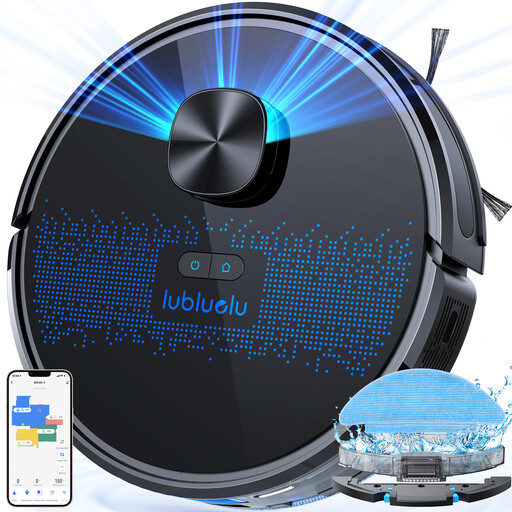
Why it suits this profile: An accessible model for anyone who wants to try automatic vacuuming and light mopping without committing to a more advanced station straight away.
The product information mentions laser navigation, app settings and maximum suction power of 4000 Pa, so you don’t have to rely on a marketing term alone.
4000 Pa suction power, LiDAR navigation, app control, and support for vacuuming and mopping.

Why it suits this profile: Designed for households that want to combine several automatic maintenance tasks in one station.
The specifications mention automatic dust emptying, mop washing with water at 75 °C and hot-air drying. Be sure to check that you have room for the station and can keep up with its maintenance.
20,000 Pa according to the product listing, dual rotating mops, carpet detection and control via the ECOVACS Home app.
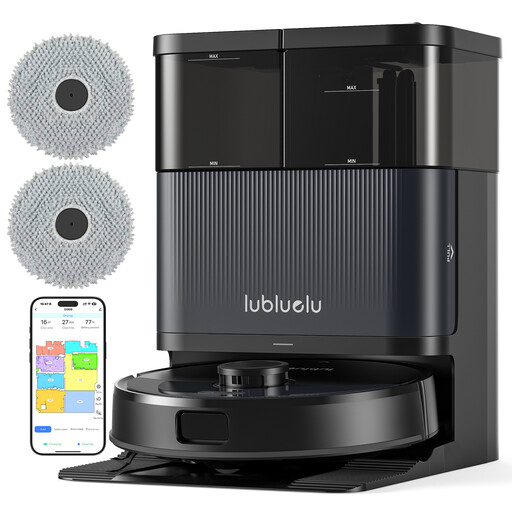
Why it suits this profile: A practical choice for homes with pets and different floor types, where app control and automatic emptying are priorities.
The listing mentions more than just up to 10000 Pa: it also includes LiDAR mapping, carpet detection, automatic mop lifting and a dust-emptying station.
Up to 10000 Pa according to the product information, a listed noise level of 55 dB, app scheduling and automatic return to the station.
We’ve put together a full, up-to-date list of products that meet these strict selection criteria and comply with the applicable European safety regulations.
According to the product listing, the S1000 is designed for homes with pets, carpets and hard floors. Its stated suction power can help with everyday dust and hair, but you’ll still need to check the brush and filter regularly. No robot can replace manual cleaning in hard-to-reach places.
According to the description, the S1000 supports vacuuming, mopping or both at once. Only use the mopping module with suitable clean water, and remove the mop pad after use so it can dry. Don’t use the robot to vacuum spills, wet dust or other liquids.
An emptying station means you won’t need to empty the robot’s dust container every day, but it doesn’t eliminate maintenance altogether. Replace the dust bag when needed, clean the dust container and brush, wash the mop pad, and wipe the sensors and charging contacts with a dry cloth. This helps keep the robot’s navigation and performance predictable.
