If you only juice citrus fruit, a citrus juicer is the right choice. For quick juice from ingredients such as apples or carrots, a centrifugal juicer is a practical option, while a slow juicer is suitable if you also want to process leafy greens. The Consumers’ Association describes centrifugal juicers as faster than slow juicers, which often require more preparation and cost more. For fresh orange juice, the Netherlands Nutrition Centre recommends keeping it in the fridge for 1–2 days. So, plan how you’ll chill and transport it separately from your choice of juicer.
Which option is right for you?
If you want to make juice quickly in the morning
You want to make juice before heading out, without lots of chopping, and you’re also thinking about cleaning. The Consumers’ Association describes centrifugal juicers as a quick option; Philips and Bosch highlight model-specific features for filling and cleaning.
If you drink juice during your lunch break
You juice at breakfast and want to keep it chilled or take it with you until your break. The Netherlands Nutrition Centre provides storage advice for fresh orange juice and general tips on chilling food and drink.
If you want to juice a variety of ingredients
You want to use ingredients such as apples, carrots or leafy greens as well as citrus fruit. The Consumers’ Association discusses the differences between centrifugal and slow juicers, while Braun Household Netherlands explains that citrus juicers are designed for citrus fruit.
What should you consider when choosing?
Citrus juicer
A good choice if: you mainly juice oranges or other citrus fruit.
Bear in mind: you need to halve the fruit, and this type of appliance isn’t designed for apples, carrots or leafy greens. Braun Household Netherlands describes citrus juicers as appliances for citrus fruit.
Centrifugal juicer
A good choice if: speed and less chopping matter when juicing ingredients such as hard fruit or vegetables.
Bear in mind: centrifugal juicers can be noisier and are less suitable for leafy greens. Check the feed chute, sieve and cleaning instructions for each model; the Consumers’ Association outlines the general differences.
Slow juicer
A good choice if: you also want to juice leafy greens and a wider range of ingredients matters more than the quickest preparation.
Bear in mind: according to the Consumers’ Association, juicing usually takes longer, and a slow juicer often costs more than a centrifugal juicer.
No juicer
A good choice if: you’d rather eat fruit and vegetables than make clear juice.
Bear in mind: you won’t be making pressed juice. The Netherlands Nutrition Centre recommends eating fruit and vegetables rather than drinking them.
| What to consider |
What should you check? |
Who is this most important for? |
| Morning routine and cleaning |
Check the feed chute and how to clean the sieve and pulp container. |
If I want to make juice quickly before heading out, I consider both preparation and cleaning; around 36% of consumers prioritise saving time in the morning. |
| Keeping juice until the afternoon |
Plan where the juice will be chilled and how you’ll keep it cool while travelling. |
If I’m not drinking the juice until my break, keeping it chilled needs to be part of my plan; around 29% of consumers prioritise keeping juice until their break. |
| Range of ingredients |
Check the manual to see which types of fruit and vegetables the model can process. |
If I want to juice ingredients such as apples, carrots or leafy greens as well as citrus fruit, I choose a model that can handle them; around 21% of consumers prioritise a variety of ingredients. |
| Citrus only |
Check that the model is designed for citrus fruit and find out how to prepare the fruit. |
If I only want to juice citrus fruit, I don’t need an appliance that handles a wider range of ingredients; around 14% of consumers mainly choose a juicer for its simplicity with citrus. |
Common pitfalls
-
Assuming slow-pressed juice keeps for longer outside the fridge
The storage time given by the Netherlands Nutrition Centre for fresh orange juice applies to refrigerated storage, not to carrying it unrefrigerated.
Plan how to keep the juice chilled from breakfast until your break, regardless of the juicing method you choose. The Netherlands Nutrition Centre recommends keeping fresh orange juice in the fridge for 1–2 days and setting your fridge to 4 °C.
If you’re drinking the juice later, you’ll also need to plan how to keep it chilled or take it with you.
-
Choosing a citrus juicer for recipes with apples, carrots or leafy greens
A citrus juicer is designed for citrus fruit. For other ingredients, check what a centrifugal or slow juicer can handle.
Make a list of the ingredients you plan to use regularly, then check the manual for the exact model.
-
Confusing nutritional claims with the choice of juicing method
The Netherlands Nutrition Centre recommends eating fruit and vegetables rather than drinking them. The Consumers’ Association points out that juicers leave a lot of fibre in the pulp.
Choose based on ingredients, preparation and cleaning; don’t assume that the juicing method itself guarantees a health benefit.
Brands to consider
Philips
The Viva HR1832/00 is a centrifugal juicer for anyone who wants to make juice quickly and values an easy-to-clean sieve.
- Philips lists a QuickClean sieve, direct juicing into a glass up to 12 cm tall and up to 1.5 litres of juice without having to empty the pulp container.
- The one-minute cleaning claim comes from Philips. This model isn’t a slow juicer for anyone who mainly wants to process leafy greens.
Bosch
The VitaJuice 4 MES4000 is a centrifugal juicer for anyone who wants to process ingredients such as hard fruit and is looking for a large collection jug.
- Bosch specifies 1000 W, two speed settings and a 1500 ml juice container for the MES4000. The ceramic blade and large feed chute are model-specific features.
- Consider the size and cleaning requirements separately; the features of this model don’t automatically apply to other centrifugal juicers.
Hurom
The H310A is a compact slow juicer for anyone who values being able to process a variety of ingredients more than having the quickest preparation time.
- Hurom lists a Multi-Auger, three parts to wash, dimensions of 16 × 17,2 × 39,5 cm and 230–240 V for the H310A.
- These are manufacturer specifications for the range, not independent measurements of juice yield or cleaning time. Hurom notes that the design and parts may vary by model and production date.
Braun
Braun offers both a citrus juicer and centrifugal juicers; the CJ3050WH and J 500 BK are different types of appliance.
- For the CitrusQuick 3 CJ3050WH, Braun lists 60 W, operation by pressing the fruit down and direct pouring into a glass. For the J 500 BK, Braun lists 900 W and a large feed chute.
- The speed claim for the J 500 BK comes from the manufacturer. Choose the CJ3050WH for citrus fruit and assess the J 500 BK as a centrifugal juicer.
Kenwood
The PureJuice One JMP400WH is a compact slow juicer in the PureJuice range.
- Kenwood describes the JMP400WH as the smallest model in the PureJuice range and specifies 140 W.
- Compare the JMP400WH and PureJuice Pro as separate models, as their features may differ.
Juicers at Joybuy
This selection at Joybuy includes citrus juicers, a slow juicer and a centrifugal juicer. Choose based on the ingredients you want to juice; keeping the juice chilled until your afternoon break is a separate step.
 No image available
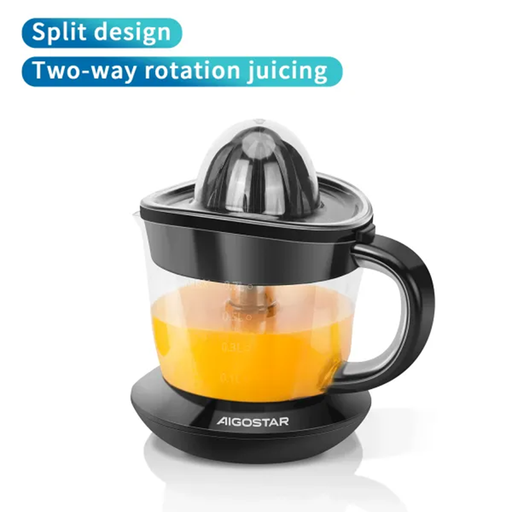
Aigostar citrus juicer, 40 W, 0,7 l
Suitable if you want to juice citrus fruit and are looking for a simple way to do it.
The product information lists two juicing cones, a 700 ml capacity and automatic start when you press the fruit down. According to the description, the removable parts are easy to take off.
Designed for citrus fruit only, not harder fruit.
View at Joybuy
 No image available
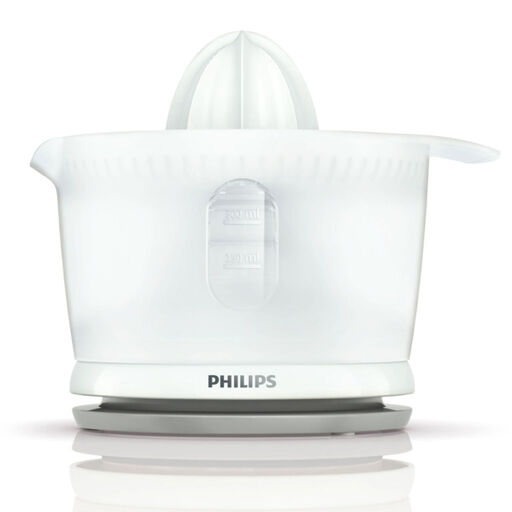
Philips Daily Collection Citrus Press HR2738/00
A good option for juicing citrus fruit and collecting the juice in the jug provided.
The product information lists a 500 ml jug, 25 W and a drip-free spout. The removable parts are described as dishwasher-safe.
Cut citrus fruit in half before juicing.
View at Joybuy
 No image available
WOOX MX0289 slow juicer
A slow juicer to consider if you’re looking for this type of appliance to make fruit and vegetable juice.
The product information lists 150 W, a 600 ml juice cup and a 130 mm feed opening. It also gives the dimensions as 189 × 170 × 395 mm and the weight as 2,3 kg.
Don’t use it for frozen fruit or ice. The instructions say to use it for no more than 10 minutes at a time, followed by a 20-minute rest.
View at Joybuy
 No image available
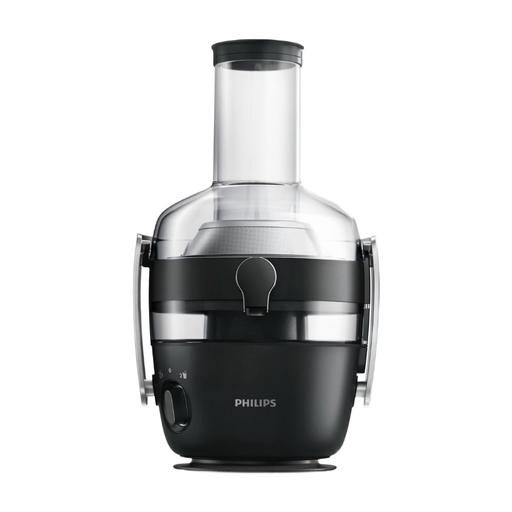
Philips Avance Collection Juicer HR1919/70
A centrifugal juicer to consider if you want to make fruit or vegetable juice with less chopping.
The product information lists 1000 W, an 8 cm XXL feed tube and a QuickClean pre-clean function. FiberBoost is listed as a feature that lets you choose your preferred juice texture.
View at Joybuy
Frequently asked questions
Can I drink freshly squeezed orange juice in the afternoon if I made it in the morning?
Yes, as long as you keep it properly chilled while storing and transporting it. The Netherlands Nutrition Centre recommends keeping fresh orange juice in the fridge for 1–2 days and setting your fridge to 4 °C; this doesn’t mean you should leave juice unrefrigerated all morning.
Which juicer is right for citrus fruit, apples, carrots or leafy greens?
A citrus juicer is designed for citrus fruit. A centrifugal juicer is a good fit if you want to process ingredients such as hard fruit quickly, while a slow juicer is an option if you also want to juice leafy greens. Always check the manual for the exact model and the ingredients you plan to use.
How do I clean a slow juicer or centrifugal juicer?
Follow the instructions for assembling and cleaning your chosen model. The Consumers’ Association says slow juicers generally involve more preparation and cleaning; wash raw fruit and vegetables under running water, as recommended by the Netherlands Nutrition Centre.
Is CE marking compulsory for an electric juicer in the Netherlands?
The Netherlands Food and Consumer Product Safety Authority states that CE marking is compulsory for electrical appliances marketed in the Netherlands as electrical consumer products. According to this information, the same requirement doesn’t apply on the same basis to a manual citrus juicer. Check the marking on the specific electric product.
Does fresh juice replace a portion of fruit, or is a slow juicer automatically healthier?
No, choosing a slow juicer doesn’t automatically make this the case. The Netherlands Nutrition Centre recommends eating fruit and vegetables rather than drinking them; the Consumers’ Association points out that juicers leave a lot of fibre in the pulp. Choose your juicing method based on your ingredients and how you’ll use it, rather than an assumed general health benefit.


