
Vandaag of morgen in huis

Kwaliteit gegarandeerd

Welkomstaanbiedingen ontgrendelen: GRATIS bezorging | Tot 80% korting | Gratis 30 dagen JoyPlus-proefperiode
Download de app
An electric citrus juicer can make juicing oranges, lemons and limes much easier. However, not everyone buys the right type. A compact electric citrus juicer is ideal for making a glass of orange juice, but less suitable for apples, carrots or leafy greens. Conversely, a centrifugal juicer often takes up more space than necessary if you only want to juice citrus fruit.
The most important question, therefore, is not which appliance has the most functions, but which type best suits your household.
Higher power sounds appealing, but on its own it does not tell you how much juice you can extract from an orange. An electric citrus juicer works differently from a centrifugal juicer or slow juicer. With citrus fruit, the key factors are the reamer, pressure control, rotation and pulp filter.
A 30 or 40-watt model may be perfectly adequate for everyday use with oranges and lemons. A juicer for fruit and vegetables generally needs a more powerful motor to process hard ingredients. So first check which ingredients the appliance can handle, and only then look at the wattage.
A lemon or orange juicer is designed for citrus fruit. Some models can also process grapefruit or lime, but they are not automatically suitable for apples, cucumbers or carrots. A centrifugal juicer uses a rotating sieve and is designed for a wide range of fruit and vegetables. A slow juicer presses ingredients using a different mechanism and often requires more preparation and cleaning.
If you mainly want to make orange and lemon juice, a large appliance with multiple speed settings is usually unnecessary. If you want to combine different types of fruit and vegetables, it is better to consider an electric fruit juicer or a juicer for fruit and vegetables.
Pulp, seeds and fruit flesh can quickly collect in a filter. Parts that are difficult to take apart may result in the citrus juicer being left in the cupboard after just a few uses. Check whether the reamer, collection bowl and pulp filter can be removed. “Dishwasher-safe” usually applies only to the removable parts, not the motor base.
A citrus juicer with an anti-drip feature helps to reduce dripping on your worktop. It does not eliminate the need to clean the appliance, but it does make it tidier to use.
There are two common designs:
A lever model can be convenient when making several glasses in succession. However, pay attention to stability: non-slip feet and a sturdy base prevent the appliance from moving while you juice.
Not everyone likes their juice prepared in the same way. A citrus juicer with a pulp filter keeps out seeds and some of the fruit flesh. An adjustable filter or several pulp settings give you more control over the texture. Check how many settings are actually specified. The Bear CZJ-A04B1, for example, lists five pulp settings, which is more specific than a general claim of “adjustable pulp”.
Completely smooth juice is not guaranteed with every appliance. The amount of pulp also depends on the fruit, how it is cut and how often you empty the filter.
For one or two glasses, a reservoir of around 0.7 to 1 litre can be practical. Families may benefit more from a collection bowl with a capacity of 1.4 or 1.5 litres. Also check the dimensions. An appliance that is 40 centimetres tall will not always fit beneath wall cupboards.
Also check:
A CE mark is relevant for compliance within the European market, but it does not indicate how quietly, quickly or efficiently an appliance juices. Compare the technical product specifications for that information.
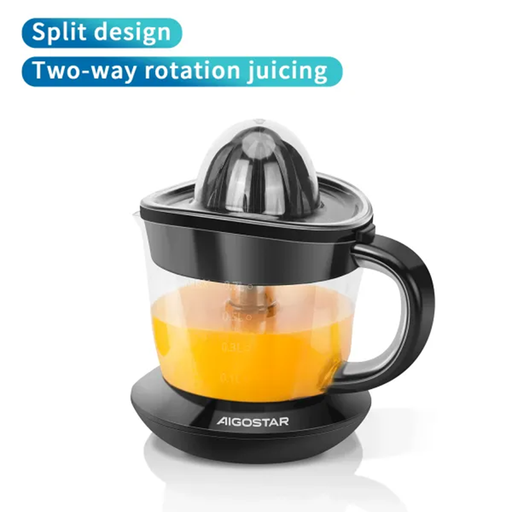
Why it suits this profile: This compact model has a 0.7-litre reservoir, two reamers and a power output of 40 watts. It is well suited to users who juice citrus fruit occasionally and have limited storage space.
The product information explicitly states that the appliance is intended for citrus fruit and not hard fruit. This helps avoid unrealistic expectations about what it can do.
Two-way rotation, two reamers, an adjustable filter and operation that starts with light pressure.
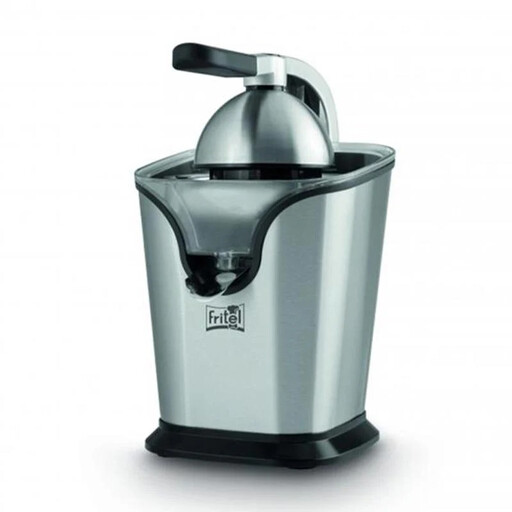
Why it suits this profile: The combination of 100 watts, lever operation, two reamers and a stainless-steel housing is designed for regular citrus juicing without taking up the space of a large centrifugal juicer.
The model specifies a drip stop, pulp filter and removable dishwasher-safe parts. This means its practical features can be checked in advance.
Two reamer sizes, anti-drip spout, non-slip feet and dimensions of 270 × 185 × 165 mm.
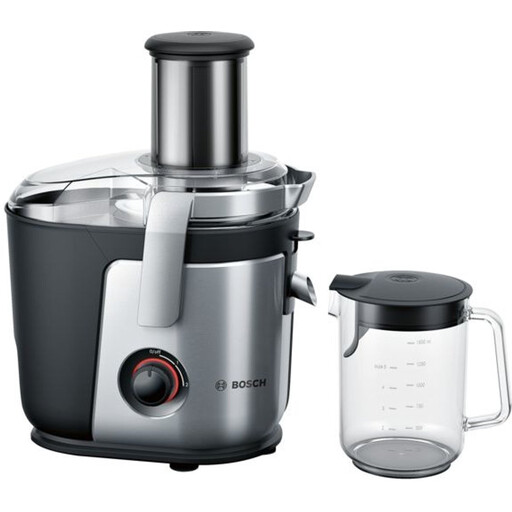
Why it suits this profile: This is a centrifugal juicer for users who want to process hard vegetables and other fruit as well as citrus. Its collection capacity is designed for making several glasses.
The product details make it clear that this is a universal juicer with two speed settings, rather than a simple lemon press.
1000 watts, 1.5-litre juice jug, 3-litre pulp container, 84 mm feed chute and removable dishwasher-safe parts.

Why it suits this profile: The five pulp settings allow you to adjust the texture of your juice. The 110 mm feed chute reduces the amount of cutting needed for some citrus fruit.
Pulp control is specified as five settings rather than being described only as a general marketing feature. The parts can be removed for cleaning.
110 mm feed chute, one-button operation, pulp and juice separation, non-slip feet and BPA-free food-contact materials according to the product information.
We have put together a complete, up-to-date list of products that fully meet these strict selection criteria and the applicable European safety regulations.
A citrus juicer rated at 30 to 100 watts uses relatively little electricity per juicing session. A 1000-watt centrifugal juicer consumes more power while in use, but the total cost mainly depends on how long it runs. A short juicing session does not automatically mean high energy costs.
Clean the appliance immediately after use. Do not rinse pulp down the drain for long periods, as fibres can build up. Allow all removable parts to dry completely before storing them. Models with a sharp blade or rotating sieve require extra care: always unplug the appliance first and never touch the cutting parts with your bare hands.
Yes. An electric citrus juicer is specifically designed for citrus fruit such as oranges, lemons, limes and often grapefruit. Check the product description for the permitted fruits and the reamers supplied.
A citrus juicer extracts juice directly from halved citrus fruit. A slow juicer processes cut pieces of fruit and vegetables using a different pressing mechanism. For apples, carrots and leafy greens, a slow juicer or another juicer for fruit and vegetables is generally more suitable. When using a slow juicer, peel citrus fruit in accordance with the instructions.
Its lifespan depends on how often it is used, how well it is cleaned and whether you follow the maximum operating time stated in the instructions. Do not overload the motor, use only suitable ingredients and regularly check the cable, plug and moving parts. In the EU, statutory consumer protection also applies; any additional manufacturer's warranty varies by brand and model.
