
Vandaag of morgen in huis

Kwaliteit gegarandeerd

Welkomstaanbiedingen ontgrendelen: GRATIS bezorging | Tot 80% korting | Gratis 30 dagen JoyPlus-proefperiode
Download de app
A juicer can be useful if you regularly want to make juice at home from apples, carrots, cucumber or leafy greens. Yet some appliances end up unused in a kitchen cupboard after just a few weeks. Often, this is not because of the juice itself, but because of the wrong choice: a small feed chute, components that are difficult to clean or an appliance that is not suited to the type of fruit you use.
So do not focus only on wattage or terms such as “maximum juice yield”. Pay particular attention to the design, capacity and day-to-day operation. Below, you will find the key points to consider, along with several models suited to different uses.
An electric juicer rated at 1,000 watts sounds powerful, but wattage is not the only factor that determines performance. The type of filter, feed chute, speed settings and pulp removal system are important too. Even a powerful appliance with a small feed chute may require a lot of preparation.
Therefore, check whether the power rating is combined with features you will actually use. For hard vegetables and fruit, an appliance with two speeds can be practical. If you only juice oranges or lemons, a citrus press rated at 20 to 100 watts is often sufficient.
Juice residue dries quickly in a filter or narrow corners. So check:
Cleaning a juicer easily is mainly a matter of rinsing the components immediately after use. The motor unit must not be immersed in water.
A citrus press or citrus juicer is designed for oranges, lemons, limes and grapefruits. You cut the fruit in half and press it onto a cone. A standard juicer can also process hard fruit and vegetables, depending on the product instructions.
So if you are looking for a juicer for oranges and vegetables, you need a different appliance from someone who only makes fresh orange juice. Also bear in mind that, with many centrifugal models, citrus fruit must be peeled first.
A juicer with a wide feed chute saves time when chopping ingredients. The product specifications state the diameter in millimetres or centimetres. For example, the Philips HR1919/70 has an 8 cm feed tube, while the Bosch MES4000 lists an opening of 84 mm. A wide opening does not mean that every piece of fruit can be inserted whole: always check the manual and remove hard stones and unsuitable parts.
A small juice jug may be enough for one person. Families will benefit more from a model with a larger collection container. Look at:
A larger container means fewer interruptions, but it also often makes the appliance taller or wider. Measure your available space before ordering.
A centrifugal juicer generally works quickly using a rotating filter. This suits households that want to make juice in a short time. A slow juicer presses more slowly and often has a different feeding and cleaning routine. According to the WOOX MX0289 product information, the noise level is below 72 dB; check whether this level is suitable for your kitchen, as the actual experience may vary depending on the ingredients and surface.
A citrus juicer uses a pressing cone and is simpler when you only process citrus fruit. Models with two cones are suitable for different fruit sizes.
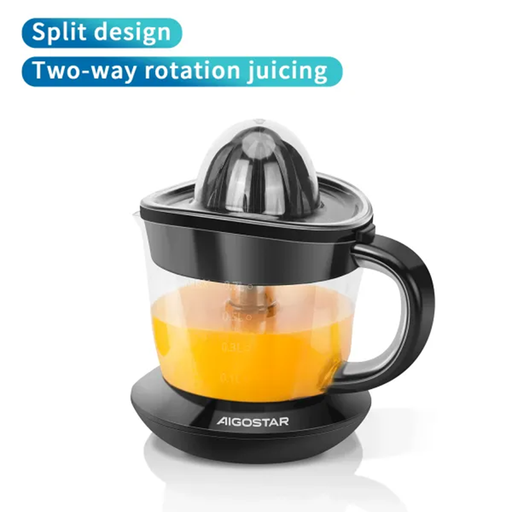
Why it suits this profile: This compact model is designed for citrus fruit and has a capacity of 700 ml, making it suitable for daily use by one person or a small household.
The product information clearly states that the appliance is only suitable for citrus fruit. This means you will not buy a universal fruit juicer for a purpose it was not designed for.
40 watts, two rotation directions, two pressing cones and a removable design with an adjustable pulp filter.
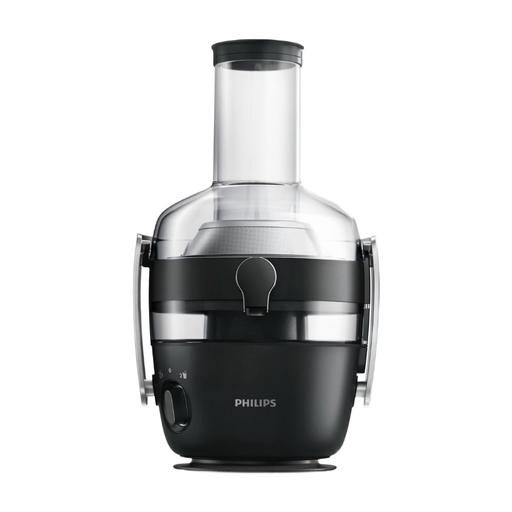
Why it suits this profile: The combination of 1,000 watts, an 8 cm feed tube and adjustable fibre texture is ideal for households that regularly process different types of fruit and vegetables.
According to Philips, the QuickClean and pre-clean functions are designed to rinse away residue more quickly. The removable components are dishwasher-safe according to the product information.
FiberBoost setting, integrated drip stop, BPA-free plastic components and a 1-metre power cord.
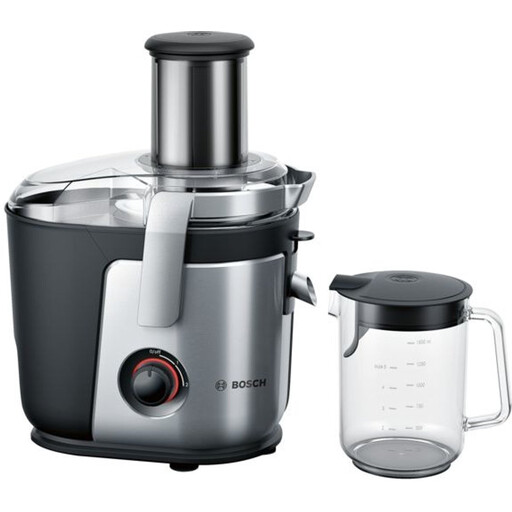
Why it suits this profile: This model is designed for larger quantities and a wide range of fruit and vegetables. Its 3-litre pulp container helps reduce the number of interruptions when making several glasses.
The 84 mm opening, two speeds and automatic pulp removal reduce preparation and the need to empty the container manually. However, check the recommended operating time in the manual.
1,000 watts, 1.5-litre juice jug, 3-litre pulp container, ceramic blade and dishwasher-safe removable components according to the product information.
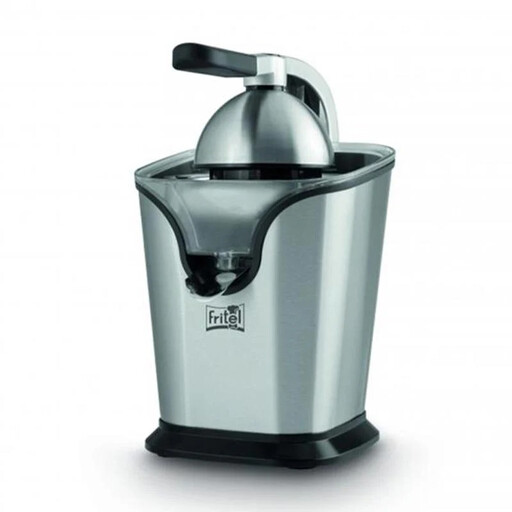
Why it suits this profile: The lever mechanism and two pressing cones are practical for households that mainly juice oranges, lemons, limes or grapefruits.
The product information states that this appliance is intended for citrus fruit and not for other ingredients. This makes its intended use clear from the outset.
100 watts, two cone sizes, built-in pulp filter, drip stop and dishwasher-safe removable components.
We have put together a complete, up-to-date list of products that fully meet these strict selection criteria and the applicable European safety regulations.
That depends on the model and the recommended operating time. Follow the manual and allow the motor to cool down when indicated. Wash the removable components after every use and check the filter for damage. This will help you maintain performance and hygiene.
Power consumption depends on the wattage and how long the appliance is used. A 1,000-watt appliance theoretically uses 1 kWh when it runs continuously for one hour. In practice, a juicing session usually takes much less time. A citrus press rated at 20 to 100 watts generally uses less electricity per use, but only works with citrus fruit.
Its lifespan is affected by how frequently it is used, maintenance, correct assembly and whether suitable ingredients are processed. Do not use frozen fruit, ice cubes or hard stones unless the manufacturer expressly permits this. Under EU consumer rules, many new products come with a minimum two-year legal guarantee; additional rights may depend on the circumstances and national legislation.
