
Vandaag of morgen in huis

Kwaliteit gegarandeerd

Welkomstaanbiedingen ontgrendelen: GRATIS bezorging | Tot 80% korting | Gratis 30 dagen JoyPlus-proefperiode
Download de app
A juicer can make fruit and vegetable juice quickly, but not every appliance works in the same way. A wide feed chute, high wattage or the term “cold press” says little about everyday use on its own. If you focus solely on marketing claims, you could end up with an appliance that is difficult to clean, noisy or mainly suitable for one type of fruit.
A 1,000-watt motor sounds powerful, but wattage alone does not determine the amount of juice produced. The sieve, the shape of the feed chute, the speed and the permitted operating time also make a difference. A powerful juicer may also be larger and heavier than expected.
A juicer with a large feed chute reduces the amount of chopping required, but ingredients still need to be washed and sometimes peeled. Citrus fruit, melons and fruit with hard stones require additional preparation. Always check the recommended ingredients in the manual.
An appliance with lots of separate parts can still take time to clean after making juice. Look for a dishwasher-safe sieve, a smooth design and a pre-cleaning function. An easy-to-clean juicer is particularly practical if you want to use it several times a week.
An anti-drip system helps keep your worktop tidy, but it does not prevent juice residue from remaining in the sieve or collection container. You should also verify quiet operation by checking the stated noise level. If this information is missing, comparing models is more difficult.
A feed chute measuring 8 cm or more can reduce the amount of chopping needed for apples and other suitable ingredients. However, a very wide opening does not mean that every type of fruit can be added whole. Also check the capacity of the juice reservoir and pulp container. A compact reservoir is sufficient for one glass, while families will benefit more from a larger collection container.
According to the product specification, a fine sieve produces smoother juice, while a fibre setting can adjust the texture. For example, Philips lists FiberBoost for the HR1919/70, allowing users, according to the manufacturer, to choose between a clear and a thicker texture. This is a product specification, not a medical claim.
Check whether the sieve is easy to access and whether the parts are dishwasher-safe. With a slow juicer, the screw, filter and pressing chamber may require more attention than those of a simple citrus press.
A stated noise level makes comparisons easier. For the MX0289, WOOX specifies a noise level of less than 72 dB. The same product specification states a maximum continuous operating time of 10 minutes, followed by a 20-minute rest period. This may make the appliance suitable for everyday use, but less suitable for long sessions.
Also look for a CE marking, sturdy non-slip feet and a locking mechanism that prevents the appliance from starting when parts have been fitted incorrectly. A CE marking indicates conformity with applicable EU requirements; it says nothing about juice yield or lifespan.
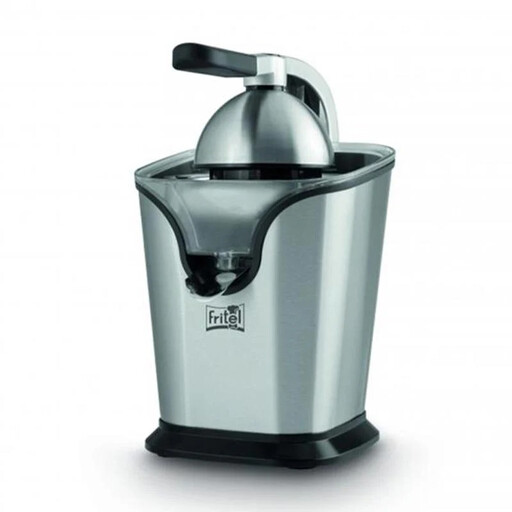
Why it suits this profile: This electric citrus press is suitable for anyone who mainly makes orange, lemon and grapefruit juice and does not need a versatile juicer.
Its intended use is clearly defined: citrus fruit rather than an appliance with functions you may not use. The product specification lists two cones and an anti-drip spout.
100 W power, two sizes of pressing cone, dishwasher-safe detachable parts and non-slip feet.
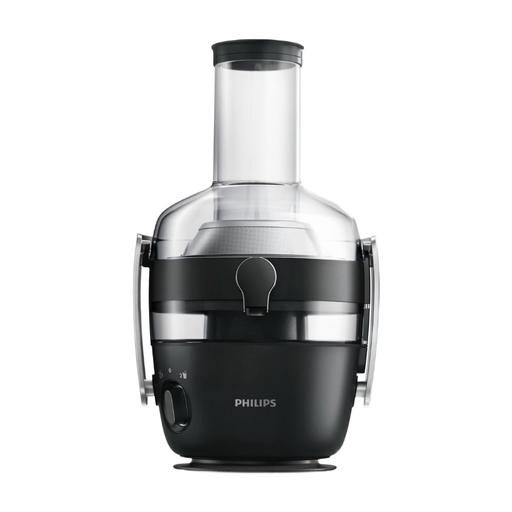
Why it suits this profile: For households that regularly make fruit and vegetable juice and value a choice of textures and quick cleaning.
The 8 cm-wide feed chute reduces the amount of chopping required. The product specification lists an integrated drip stop, pre-cleaning function and dishwasher-safe parts.
1,000 W motor, FiberBoost for an adjustable texture and a collection system designed for everyday use.
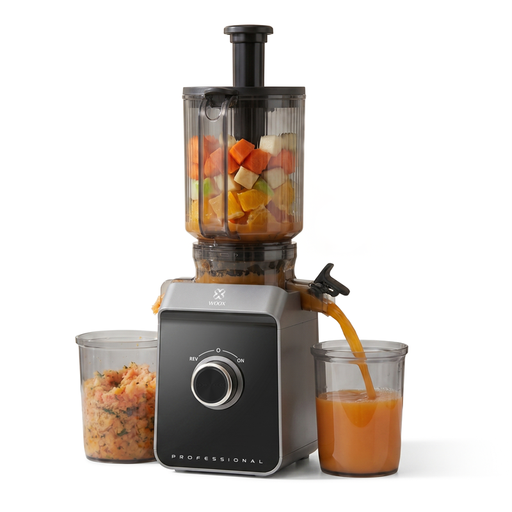
Why it suits this profile: This slow juicer is suitable for users who want to process different fruit and vegetable ingredients and consider a large pressing compartment important.
The manufacturer specifies a maximum feed chute width of 130 mm, but ingredients still need to be prepared appropriately according to the instructions. The stated operating limit prevents the appliance from running for too long without a break.
150 W motor, 726 ml juice cup, 836 ml pulp container and, according to the product specification, a noise level below 72 dB.
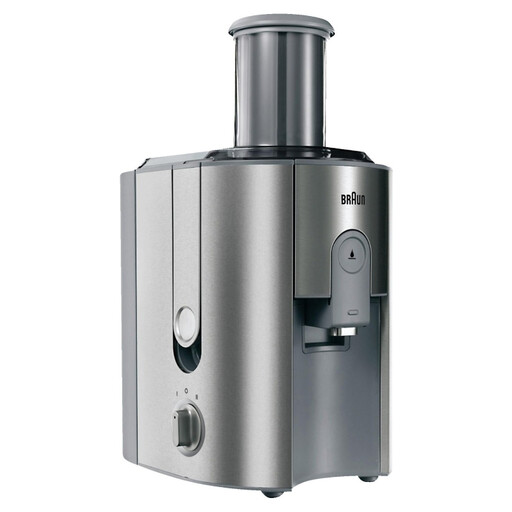
Why it suits this profile: The combination of a large pulp container, two speeds and a wide feed chute is practical when making several glasses in succession.
The product specification lists a 75 mm feed chute, a 2-litre pulp container and an anti-drip system. This makes the capacity and clean operation easy to assess in advance.
1,000 W power, two speeds, a 1.25-litre juice reservoir and dishwasher-safe parts with cleaning brush.
We have put together a complete, up-to-date list of products that fully meet these strict selection criteria and the applicable European safety regulations.
That depends on the permitted operating time, capacity and cleaning requirements. Check whether the manufacturer specifies a maximum running time and rest period. For everyday use, dishwasher-safe parts, an anti-drip system and an easily accessible sieve are practical features.
Power consumption depends on the motor wattage and operating time. A 1,000-watt appliance uses approximately 0.167 kWh after ten minutes of use in theory. Calculate the actual cost by multiplying this consumption by your current electricity tariff. Cleaning time and any replacement sieves should also be included in the total cost of use.
A juicer generally works quickly using a rotating sieve. A slow juicer processes ingredients more slowly through a pressing mechanism. Choose based on your routine: fast juice extraction calls for speed and capacity, while a slow juicer may suit you if you prefer to take your time with different types of fruit and vegetables. For both types, check the permitted ingredients and cleaning instructions.
