
Vandaag of morgen in huis

Kwaliteit gegarandeerd

Welkomstaanbiedingen ontgrendelen: GRATIS bezorging | Tot 80% korting | Gratis 30 dagen JoyPlus-proefperiode
Download de app
A juicer can be handy when you want a quick glass of juice, but not every model will suit every kitchen. A machine designed for oranges works differently from a fruit and vegetable juicer. Terms such as “powerful motor”, “wide feed chute” and “easy to clean” only tell you so much until you check the specifications.
The main pitfalls to watch out for when buying a juicer are:
An electric citrus juicer extracts juice from halved citrus fruit using a reamer. It doesn’t need a cutting blade and is suitable for oranges, lemons, limes and grapefruits. An orange juicer is usually compact and easy to use.
Check the jug capacity, the number of reamers and whether you can adjust the pulp level. A drip-stop feature helps prevent juice from spilling onto the worktop once you’ve removed your glass.
A centrifugal juicer grates fruit and vegetables using a spinning sieve. This type is suitable for hard ingredients such as apples, carrots and beetroot, as well as many softer options. A wide feed chute means less chopping before you start.
In particular, check:
A slow juicer extracts juice gradually using a pressing mechanism. According to the product description, the WOOX MX0289 has a 150-watt motor, a 1.8-litre chamber, a juice cup with measurements up to 600 ml and an 836 ml pulp container. Its stated noise level is less than 72 dB.
A slow juicer often requires more preparation, as ingredients need to be cut into smaller pieces. Check the recommended running time too. For example, the WOOX MX0289 should not be used for more than 10 minutes at a time and needs to cool down afterwards.
A feed chute measuring 75 to 84 mm is already wide enough for many apples and pieces of vegetable. According to its product specifications, the Philips HR1919/70 has an 8 cm feed chute. The Bosch MES4000 has an 84 mm opening. The Bear CZJ-A04B1 specifies a 110 mm citrus feed chute.
A wide opening means less chopping, but always check whether you need to remove pips, peel and hard pieces first. The juice jug is just as important: 700 ml may suit a small household, while 1.5 to 2 litres is better for making several glasses.
Not everyone likes their juice to have the same texture. An adjustable filter or several pulp settings gives you more control. According to the product information, the Bear CZJ-A04B1 has five pulp settings. Philips’ own product information says that the Philips Avance Collection HR1919/70 uses FiberBoost technology to let you choose between clearer juice and a thicker texture.
Treat performance claims like these as information from the manufacturer. The right choice depends on your household’s preferences and the types of ingredients you use.
A smooth sieve, removable parts and a pre-clean function can make everyday use easier. For the Philips HR1919/70, the manufacturer lists a pre-clean function and dishwasher-safe removable parts. Bosch also states that the removable parts of the MES4000 are dishwasher-safe.
Never immerse the motor base in water. Unplug any model before assembling, removing or cleaning parts. Blades, graters and sieves can be sharp. Only use the machine when all parts are correctly locked into place.
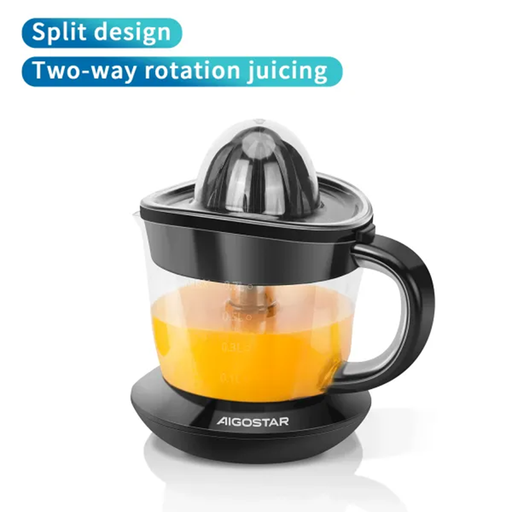
Why it suits this type of user: This compact model is designed for citrus fruit, has a 700 ml capacity and starts when you press lightly on the reamer. It’s a good fit for beginners who occasionally make orange or lemon juice.
The product information makes it clear that this model is designed for citrus fruit, not hard vegetables. That way, you won’t buy a citrus juicer expecting it to work as an all-purpose juicer.
700 ml capacity, two directions of rotation, two reamers and an adjustable filter.
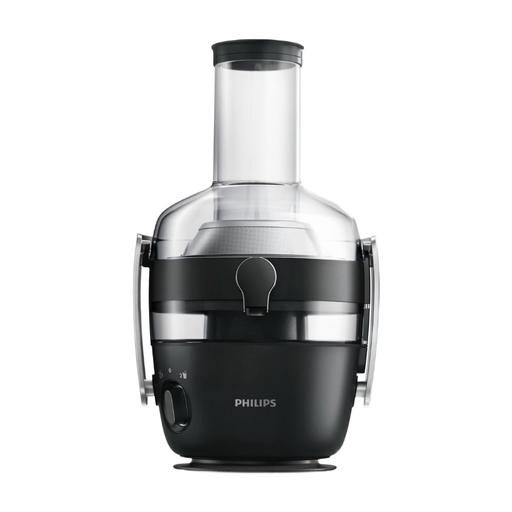
Why it suits this type of user: With a 1,000-watt motor, an 8 cm feed chute and adjustable juice texture, this model is a good match for households that regularly process fruit and vegetables.
The wide opening means less preparation, while the stated pre-clean function helps tackle the cleaning challenge. Check the manual to see which parts can go in the dishwasher.
1,000 watts, an 8 cm feed chute, FiberBoost setting and integrated drip-stop, according to the product information.
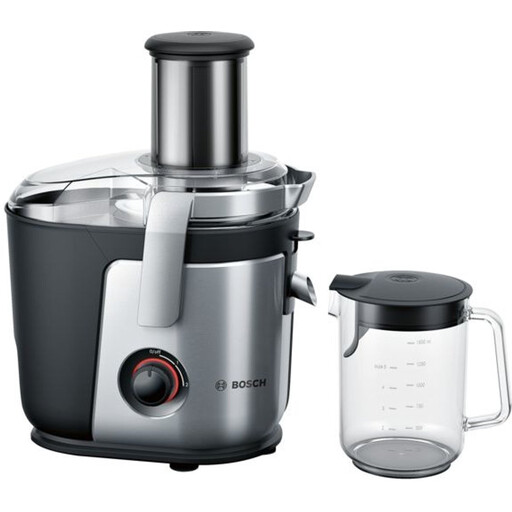
Why it suits this type of user: This model combines 1,000 watts, two speeds, a 1.5-litre juice jug and a 3-litre pulp container. That’s handy when you’re making several glasses in one go.
The two speeds let you adjust for softer or harder ingredients. The large containers mean you won’t have to keep stopping during a bigger batch.
1.5-litre juice jug, 3-litre pulp container, 84 mm opening and dishwasher-safe removable parts, according to Bosch.
As well as comparing the models mentioned above, check the noise level, cord length, warranty terms and available accessories. Look for a CE marking and check that the manual includes safety instructions. A certification mark or brand claim is no substitute for checking the product’s specific details.
For citrus fruit, a Fritel CP 4177 with two reamers, 100 watts and a drip-stop spout may make more sense than an all-purpose juicer. For a large family, the Braun MultiJuice 7, with two speeds, 1,000 watts and a stated capacity of 2 litres, may be a better fit. If you mainly juice citrus fruit and want a large jug, you could also consider the Braun MPZ9 with its 1-litre jug.
We’ve put together a complete, up-to-date list of products that meet these strict selection criteria and the applicable European safety regulations.
No. A citrus juicer is designed for citrus fruit. An all-purpose centrifugal juicer can usually handle a wider range of fruit and vegetables, but always check the manual for advice on hard, fibrous or large ingredients. With a slow juicer, you’ll usually need to remove pips and hard cores beforehand.
Switch off the machine, unplug it and remove the detachable parts. Rinse them straight after use, as pulp and fibres are less likely to stick. Clean the sieve with a soft brush or sponge. Wipe the motor base with a lightly damp cloth only. Check beforehand which parts are dishwasher-safe.
Its lifespan depends on how often you use it, how well you clean it and whether you follow the recommended operating cycle. Let the motor cool down when the manual says to, and don’t use a damaged sieve, cable or reamer. A longer manufacturer’s warranty may offer extra cover, but it doesn’t guarantee a particular lifespan.
