
Vandaag of morgen in huis

Kwaliteit gegarandeerd

Welkomstaanbiedingen ontgrendelen: GRATIS bezorging | Tot 80% korting | Gratis 30 dagen JoyPlus-proefperiode
Download de app
Instant noodles are convenient for a quick meal, but not every pack suits every eater. A cup for the office calls for a different choice from a box containing twenty portions for a household. Terms such as “authentic”, “spicy” and “ramen” also do not always tell you enough about the ingredients, preparation method or quantity.
With this buying guide, you can compare instant noodles based on verifiable details. That makes it easier to choose between Korean noodles, Japanese noodles, Chinese noodles, rice noodles and stir-fry noodles.
A box containing lots of sachets may look like good value, but check the weight per portion first. A standard sachet often contains around 100 to 120 grams, while a cup may contain around 68 to 92 grams. A multipack of instant noodles is practical if you eat noodles regularly, but less suitable if you want to try different flavours.
Also check the total weight and best-before date. With a box containing twenty portions, it takes longer to use everything up.
Spicy instant noodles can taste very different from one another. Korean ramen often uses chilli, garlic, fermented flavourings and dried vegetables. Japanese varieties are more commonly based on soya, miso, sesame or a milder broth. A spicy soba variety also has a different mouthfeel from a wheat noodle in noodle soup.
If you are not used to strong flavours, it is better to start with a milder soya, sesame or miso broth. For products containing chilli, it is sensible to check the ingredients and preparation method on the packaging.
“Authentic” does not automatically refer to the composition or country of production. Therefore, check:
According to a brand’s own research, a product may have a particular flavour or texture. That is not a general guarantee. The product description, ingredients list and usage instructions provide a more verifiable basis for comparison.
Most ramen and instant noodles are made from wheat flour. This generally gives them a firm, springy texture. Soba noodles contain buckwheat flour, sometimes combined with wheat flour. Check the exact ingredients carefully: a product described as soba may consist largely of wheat, according to the product description.
Rice noodles are an alternative if you are looking for a different texture. They are often lighter and softer than wheat noodles. Instant Rice Noodles Chicken Oh! Ricey are supplied in 71-gram portions and contain rice noodles with soup, oil and vegetable sachets.
There are three practical formats:
Always check whether you need to drain the noodles or retain the broth. This determines whether you end up with noodle soup, a stir-fry dish or dry ramen.
Do not compare only the front of the packaging. Look at the full ingredients list. Many products contain wheat and soya. Some varieties also contain sesame, milk, celery, fish, crustaceans, mustard or egg. If you have an allergy or intolerance, check the current packaging, as information on a website may differ from the details on the label.
The salt content also varies by product and preparation method. Nissin Soba Noodles Cup Classic, for example, states 4,1 grams of salt per cup, while the supplied nutritional information for Nissin Instant Demae Noodles Bag Tokyo Soy states 1,1 grams of salt per 100 grams. Always check whether the value applies per 100 grams, per portion or to the prepared product.
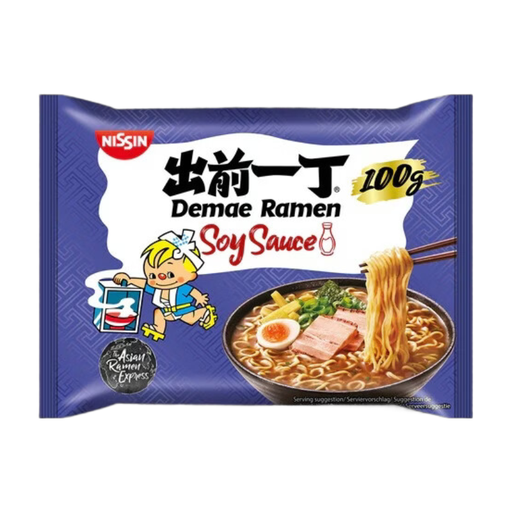
Why it suits this profile: A 100-gram portion and savoury Tokyo soya flavour make this a straightforward choice for anyone wanting to try Japanese ramen without immediately buying a large box.
The individual sachet means you do not have to buy a large multipack before you know whether you like the flavour. The product description also states that it can be prepared in just a few minutes.
100 grams per sachet; soya sauce and umami flavour; no artificial colourings according to the product description.
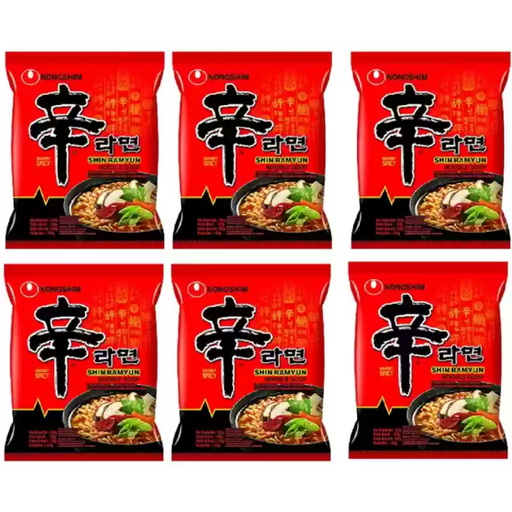
Why it suits this profile: These Korean ramen noodles use a spicy broth, dried vegetables and 120-gram portions for anyone who enjoys a hearty noodle soup.
The product information clearly states the portion size, ingredients and preparation time. This lets you compare the choice based on its contents rather than just the packaging.
Six individual portions; 120 grams per portion; prepare with 550 ml boiling water and cook for approximately 4,5 minutes.
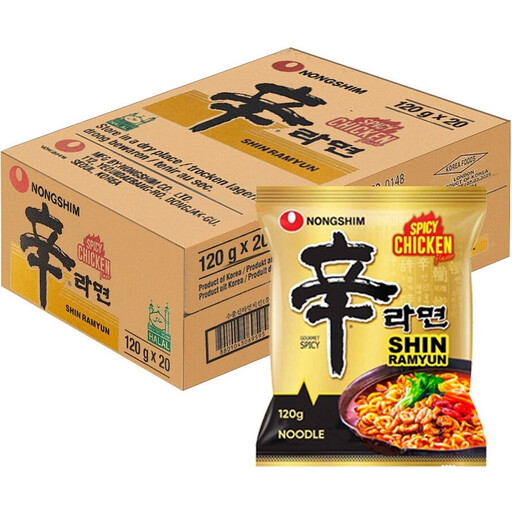
Why it suits this profile: If you like to keep a regular supply, you get twenty individual 120-gram portions with a spicy Korean broth and dried vegetables.
The box states the number of packs and the weight per sachet. This makes it easier to plan your supply than with a multipack that only shows the total weight.
20 portions; firm wheat noodles; soup with spices, soya paste and dried vegetables according to the product description.
Store instant noodles in a cool, dry place, away from direct sunlight, heat and moisture. Check the packaging before opening a product. It is better not to use a damaged sachet or dented cup.
Follow the stated amount of water and preparation time. Extra water makes the broth milder, but changes the flavour and concentration. Only add toppings such as egg, spring onion, pak choi or mushrooms after checking the basic preparation method. This helps prevent the noodles from becoming too soft.
For cups, pay attention to the instructions on the packaging. Some cups must not be placed in the microwave. Always read the label, allergen information and warnings before use.
We have put together a complete, up-to-date list of products that fully meet these strict selection criteria and the applicable European safety regulations.
For sachets, you usually boil water, add the noodles and seasoning, then cook everything for a few minutes. For cups, pour boiling water up to the indicated line and wait for the specified time. Always check the specific instructions, as stir-fry noodles often need to be drained.
The shelf life is stated on the individual packaging or outer packaging. Store unopened products in a cool, dry place. For a multipack, check the individual sachets as well, so you use the oldest portions first.
Yes, especially dry sachets and cups are easy to store. Choose a multipack if you regularly eat the same flavour. If you want to alternate between ramen, soba noodles, rice noodles and Chinese noodles, start with smaller packs or combine several flavours.
