
Vandaag of morgen in huis

Kwaliteit gegarandeerd

Welkomstaanbiedingen ontgrendelen: GRATIS bezorging | Tot 80% korting | Gratis 30 dagen JoyPlus-proefperiode
Download de app
An induction hob can be a smart choice when renovating a kitchen, moving home or setting up a compact student kitchen. Yet many buyers focus mainly on the number of cooking zones and the wattage. Important considerations such as the cut-out dimensions, electrical connection and suitable cookware can easily be overlooked.
As a Joybuy Product Recommendation Officer, I filter the most relevant product specifications from popular models. This helps you identify the induction hob that suits your kitchen and avoid buying a model that does not fit properly after delivery.
A 60 cm model is not automatically suitable for every cut-out. Always check:
A 30 cm built-in induction hob, such as the Wiggo WH-E312G(B), requires a different cut-out from a standard model of approximately 60 cm. The product specification lists a cut-out of 270 × 490 mm for this model. Measure the existing cut-out before placing your order.
A high total wattage may sound appealing, but the available power supply determines whether you can actually use that capacity. An induction hob with multiple zones may require a one-, two- or three-phase connection.
For example, the Wiggo WH-EF614G(B) lists a total power output of 7200 W and a 220–240 V connection. Check whether your home’s electrical installation is suitable. A qualified installer can verify that the consumer unit, wiring and connection are correctly configured.
An induction hob with a flex zone can be useful for large or unusually shaped pans. However, operation varies by model. Check whether the flex zone is designed to connect two cooking zones or to detect multiple pan sizes within a single area.
Features such as Wi-Fi, boost modes and temperature sensors are not essential for every user either. Start by choosing the right size, number of zones and electrical connection. Additional features only become relevant afterwards.
An induction hob with 2 burners is well suited to:
A model with 4 burners provides more room for using several pans at once. This is practical for families, home cooks and anyone who regularly prepares multiple courses. Do check the total connected load and the available worktop space.
A 30 cm hob is suitable for a narrow kitchen or as an addition to another cooking zone. An induction hob measuring 60 cm is a common size for many kitchens in the Netherlands. In a wider kitchen, an 80 cm model can provide additional space.
Do not measure only the external dimensions; pay particular attention to the cut-out dimensions, meaning the exact opening required in the worktop. Manufacturers may use different measurements for hobs with the same nominal width.
An induction hob with touch controls has a smooth surface that is easy to clean. Knobs may be more comfortable for anyone who prefers physical controls, as with a freestanding electric hob.
Check whether the hob includes:
A residual heat indicator does not mean that the surface is immediately cold. Do not touch the zone until the indicator has gone out and the hob has cooled sufficiently.
An induction hob heats compatible magnetic pans through a magnetic field. Not every pan therefore works on induction. Check whether a magnet sticks to the base or consult the pan’s product information.
A ceramic hob uses radiant heat and generally works with a wider range of cookware. The glass surface remains hot for some time after use. A traditional electric hob with metal plates is often straightforward to operate, but typically offers fewer features and a different heat response.
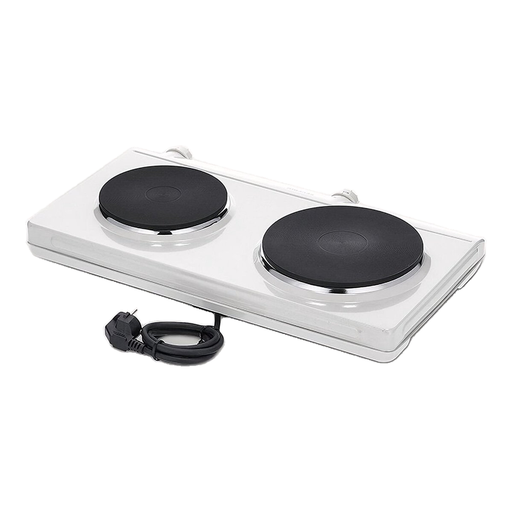
Why This Fits Their Persona: This freestanding electric hob has two cooking zones and is suitable for a student room, office or small kitchen where built-in installation is not required.
There is no need to modify a cut-out or install a fixed connection. The two zones have separate rotary controls and a total power output of 2500 W.
Two independent cooking zones, compact dimensions and sealed plates that, according to the product description, are easy to clean.
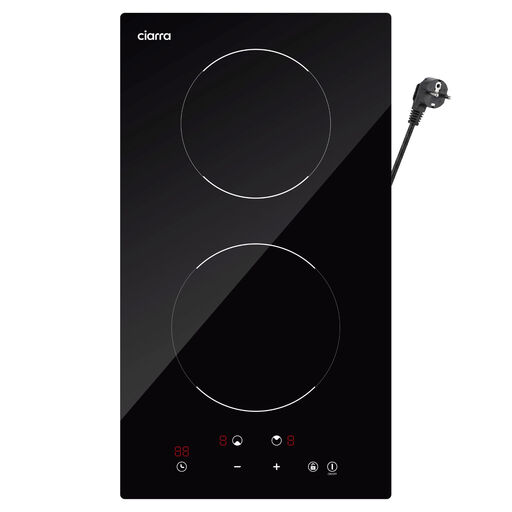
Why This Fits Their Persona: A practical choice for anyone who wants two zones in a narrow built-in configuration measuring approximately 30 cm wide.
The product information specifies a cut-out of 270 × 490 mm, allowing you to check whether the hob will fit before purchasing.
3000 W, 9 power levels, a timer of up to 99 minutes, child lock and residual heat indicator according to the product specifications.
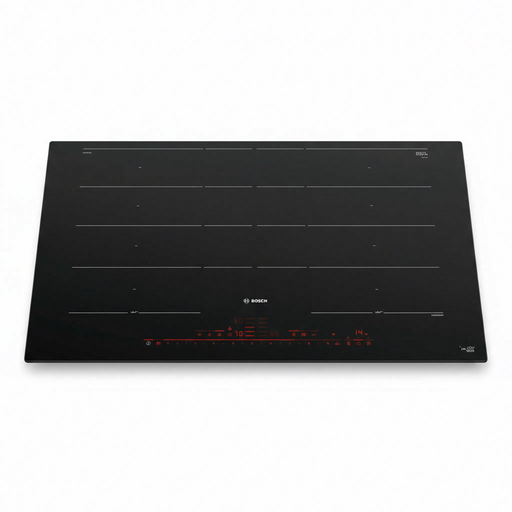
Why This Fits Their Persona: The wide 80 cm format and flexible cooking zone are designed for cooking with larger or multiple pans.
Here, the flex zone is a clearly defined product specification: according to Bosch, the hob detects the position and size of pans within the flex area.
FlexInduction and a Power Boost function are listed in the product description. Do check the required electrical connection before installation.
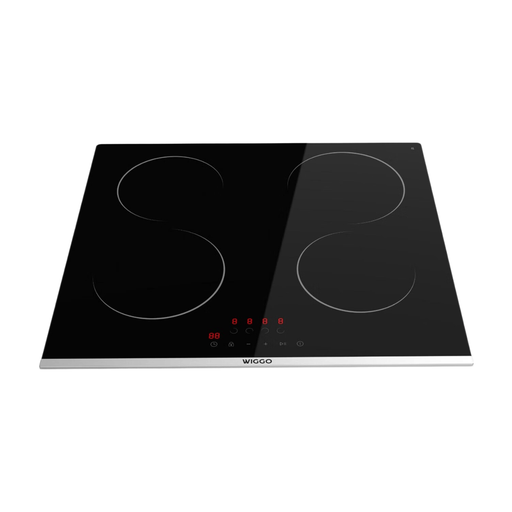
Why This Fits Their Persona: This 60 cm model has four cooking zones and suits households that use several pans at the same time.
The required cut-out dimensions are clearly stated: 56 cm wide and 49 cm deep. This allows you to check the installation space in advance.
Four cooking zones rated at 1.8 kW each according to the product specification. Installation must be carried out by a qualified electrician.
Browse a current selection of hobs in different sizes, with various cooking zones, control features and connection options.
Have a fixed built-in hob connected in accordance with the installation instructions and local regulations. Models without a plug require a qualified electrician. Also check that your cookware is suitable for induction and keep ventilation openings clear.
Only clean a glass surface once the residual heat indicator has gone out. Use a soft cloth and a cleaning product suitable for glass or glass-ceramic surfaces. Avoid sliding cast-iron or rough-based pans across the surface to help prevent scratches.
No. A pan must have a magnetic base. Test it with a magnet or check for the induction symbol on the packaging or the base of the pan. Ceramic and some electric hobs have different requirements.
Consumption depends on cooking time, power level, pan size and energy prices. Induction heats the pan directly, whereas a ceramic hob first heats the heating element and glass surface. Exact running costs therefore vary by household and usage pattern.
Service life depends on usage, installation, maintenance and the quality of its components. When buying, check the warranty terms, available manual and service information. A cracked glass surface must not be used; switch the appliance off and have it inspected.
