
Vandaag of morgen in huis

Kwaliteit gegarandeerd

Welkomstaanbiedingen ontgrendelen: GRATIS bezorging | Tot 80% korting | Gratis 30 dagen JoyPlus-proefperiode
Download de app
A new induction hob can often seem easy to compare on paper. In practice, though, differences in electrical rating, cut-out dimensions and cooking zone layout can cause problems. The hob may not fit your worktop, require a more powerful electrical connection or prove less suitable for your existing pans.
The Joybuy Product Recommendation Officer helps you look beyond marketing claims and focus on specifications you can check. Before buying an induction hob, watch out for these three common pitfalls.
A 60 cm induction hob is not automatically suitable for every 60 cm cut-out. Always check the cut-out width, depth and height. For example, a hob may be 590 mm wide, while the required cut-out is 560 mm.
When renovating, the ventilation space available beneath the worktop is also important. A hob with an integrated extractor needs extra consideration too, including air ducts, filters and installation height.
A high wattage does not mean that every cooking zone will always operate at full power. The maximum power is often shared between zones when several are in use at the same time. So check:
An 80 cm induction hob rated at 7350 W, such as the AEG CCE84543CB, may have different requirements from a 2000 W portable induction hob with a plug.
Touch controls, a timer and a child lock are useful, but the controls vary from model to model. Small touch controls can be less convenient if there is water or grease on the glass. A timer for each zone is also different from a single general timer.
Features such as automatic pan detection, temperature assistants and extraction capacity should be assessed against the product specifications too. A brand’s claims about how a feature works are not guaranteed results: according to the brand’s own research, features may be presented differently from how you experience them in everyday use.
For an existing kitchen, dimensions are usually the first thing to consider. Many households look for a built-in 60 cm induction hob. Before buying, check that the cut-out matches the installation manual.
An 80 cm model gives you more space between pans, but it is only suitable if your worktop and kitchen unit are wide enough. The Bosch PXY801DW4E is 80 cm wide and has a FlexInduction zone. The AEG CCE84543CB is also designed for wider installations and has a specified cut-out width of 75 cm. Always check these details again in the latest installation manual.
An induction hob with 4 cooking zones is generally a good fit for families and households that use several pans at once. A model with two or three zones may be enough for one or two people.
Don’t just look at the number of zones. Also consider:
A flexible zone is useful for a griddle or a large roasting pan, but check that your cookware has a magnetic base and fits within the specified zone.
A built-in model must be connected according to the installation manual. Some models require professional installation by a qualified electrician. The AEG CCE84543CB specifies a three-phase connection, while the product information for the Wiggo WH-E614G states that it is designed for a single-phase connection with an EU plug. If you’re unsure, ask an installer to check the electrical rating.
Useful safety features include:
No feature replaces supervision while you’re cooking. The glass surface may still be hot after the hob is switched off.
The selection below matches specific product specifications to different needs. That way, you can compare not just the features, but also installation and everyday use.
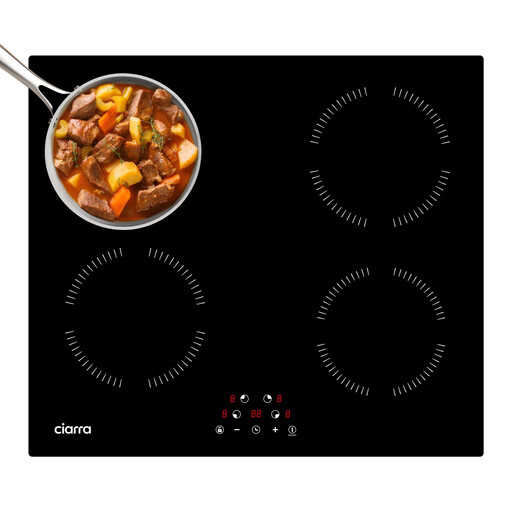
Why it suits this profile: This 60 cm built-in model has touch controls, 9 power levels and a timer of up to 99 minutes. It’s designed for everyday cooking in a standard kitchen layout.
The product information gives the overall dimensions as 590 × 520 × 62 mm and the cut-out size as 560 × 490 mm. Check these measurements before installation and have the electrical connection professionally installed.
6000 W total power, individual timer, child lock, residual heat indicator and automatic shut-off.
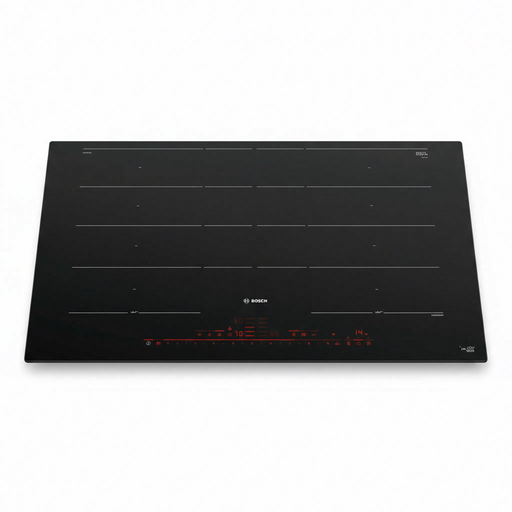
Why it suits this profile: This wide hob is designed for flexible cooking with larger pans. According to the product description, the FlexInduction zone detects the position and size of suitable cookware.
Its wide layout means you don’t have to focus solely on the number of cooking zones. Do check that your kitchen has space for an 80 cm worktop and the required electrical connection.
80 cm wide, FlexInduction, Power Boost and a PerfectFry sensor with 5 settings, according to the product information.
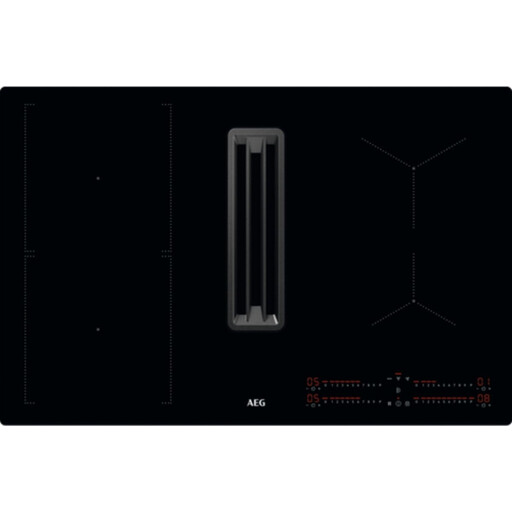
Why it suits this profile: This 80 cm built-in combination pairs four cooking zones with an integrated extractor. It could be a good fit for an open-plan kitchen where you’d rather not have a separate cooker hood.
The product information lists an extraction rate of 630 m³/h and a noise level of 48 dB. Check the filter maintenance requirements, air supply and required three-phase connection before buying.
Four zones, connectable cooking zones, touch controls, timer, child lock and integrated extraction.
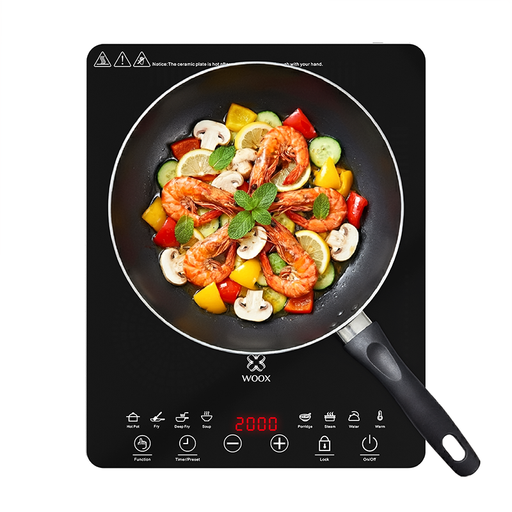
Why it suits this profile: This portable induction hob takes up little space and has a power rating of up to 2000 W. That makes it suitable for a student room, temporary kitchen or as an extra cooking zone.
You avoid the need for an unnecessary built-in installation. The appliance runs on 220–240 V and has automatic pan detection, automatic shut-off and a child lock.
8 power levels, temperature settings from 80 to 240 °C, timer and a compact size of 280 × 350 × 47 mm.
We’ve put together a complete, up-to-date list of products that meet these strict selection criteria and the applicable European safety regulations.
Use pans with a magnetic base, such as cast iron or magnetic stainless steel. Hold a magnet against the base to check before use. Aluminium, copper and ceramic pans won’t work on their own unless they have a suitable magnetic base.
It depends on the model. A 2000 W portable model will usually work from a standard socket that’s suitable for the load. A built-in induction hob with a high connected load may need a dedicated circuit, a cooker circuit or a three-phase connection. Ask a qualified electrician to check your setup.
Running costs depend on the power rating, cooking time, setting you choose and your energy tariff. Induction heats the base of the pan directly, so it can be efficient, but the maximum wattage doesn’t tell you exactly how much each meal will cost. Use the timer, choose a suitably sized pan and avoid unnecessary preheating.
