
Vandaag of morgen in huis

Kwaliteit gegarandeerd

Welkomstaanbiedingen ontgrendelen: GRATIS bezorging | Tot 80% korting | Gratis 30 dagen JoyPlus-proefperiode
Download de app
Buying a new induction hob seems simple until you have to choose between a built-in model, ceramic hob, electric hob or portable induction hob. Marketing often focuses on features such as boost, flexible zones and smart controls. But it’s the dimensions, electrical connection, cooking zones and installation requirements that determine whether a model is right for your kitchen.
Look out for these common pitfalls when comparing models:
An induction hob heats a compatible pan using a magnetic field. The hob itself may still feel warm after use because of the pan, but it doesn’t have a traditional heating element like a ceramic hob. Always check the product manual and installation requirements.
The most common choice is a 60 cm induction hob. This size often fits standard kitchens, but the exact width of the appliance and the cut-out can vary between models. For example, a 59 cm hob may require a cut-out of around 56 cm.
An 80 cm induction hob gives you more space between pans. This is handy for families and keen home cooks, but check that your worktop and base unit have enough room. According to its product specifications, the AEG CCE84543CB is 80 cm wide and requires a 75 cm-wide cut-out. For non-standard dimensions, follow the installation manual.
A 30 cm built-in model with two zones may be enough for a small kitchen or student accommodation. A portable model works well as an extra cooking zone or a temporary solution, without needing to alter the worktop.
The total power rating affects not only how quickly the hob heats up, but also its installation requirements. A 3,000-watt model may have different requirements from a 7,400-watt hob.
Before buying, check:
Product information sometimes lists different connection options. Ask a qualified installer to assess the connection. Connecting it yourself can risk overloading the circuit, causing damage or starting a fire.
Four cooking zones are common on a 60 cm built-in induction hob. Check the diameter of the zones too. A large pan won’t work efficiently on a small zone, even if the hob has enough total power.
An induction hob with a flexible zone can link two zones for a roasting tin or larger pan. An induction hob with a boost function provides extra power for a short time, for example to boil water. According to Bosch’s product specifications, the FlexInduction zone detects the position and size of compatible cookware. Check which pans and settings the manufacturer recommends.
An induction hob with a timer switches a zone off after the set time. An induction hob with a child lock helps prevent the control panel from being switched on accidentally, but it’s no substitute for supervision. With an induction hob with an extractor, the ducting, filters, airflow and installation height are also important.
The selection below is based on the product specifications, dimensions, features and connection information provided. Check the current product page and manual before installation.
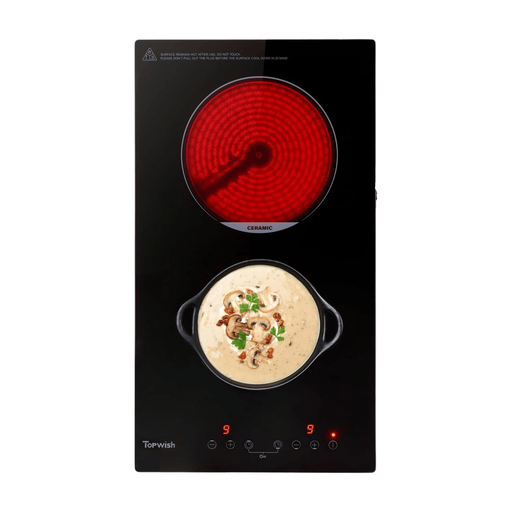
Why it suits this type of user: This compact hob has two zones and is designed for small kitchens, studios and households that usually cook with one or two pans.
The stated dimensions are 29 × 52 × 5.2 cm, with a cut-out size of 26 × 49 cm. This lets you check that your cut-out is suitable in advance. It’s a ceramic hob, not an induction hob; according to the product specifications, it works with a wider range of suitable pans.
Two zones, 3,000 watts of total power, nine settings, a timer of up to 90 minutes, residual heat indicator and child lock.
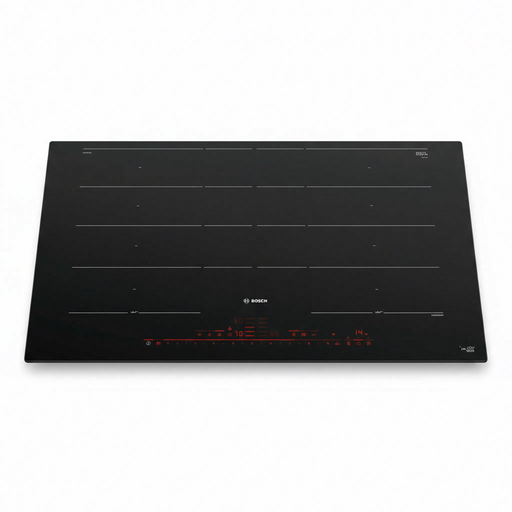
Why it suits this type of user: This wide hob is designed for people who use several pans at once and value flexible positioning.
The flexible zone is designed to accommodate different pan sizes, but check the wide cut-out dimensions before buying. The product specifications also list a Power Boost function and a temperature sensor.
80 cm wide, FlexInduction zone, automatic pan detection and Power Boost, according to the product information.
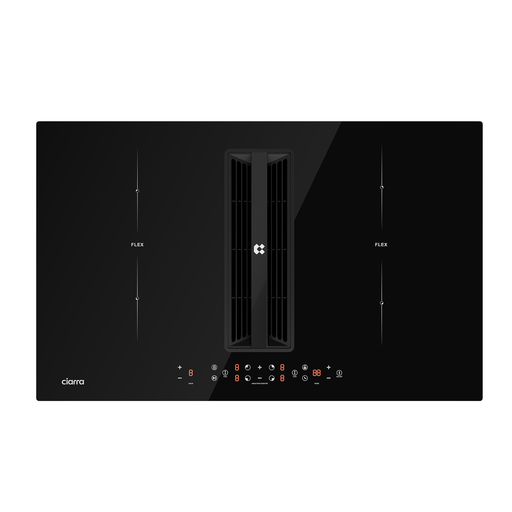
Why it suits this type of user: This 2-in-1 model combines a hob and extractor, making it a good option for open-plan kitchens where a separate cooker hood is less desirable.
The product information clearly states that the installation kit is sold separately. You’ll also need to allow for a 32-amp connection, 7,000 watts for the hob and the required cabinet ventilation.
83 cm wide, four zones with two flexible zones, boost function and integrated extractor with multiple speeds.
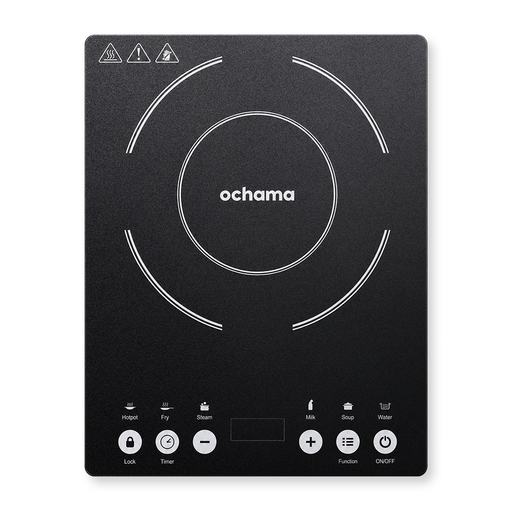
Why it suits this type of user: This portable model works as an extra zone, in student accommodation or when you don’t want to alter a permanent built-in installation.
The model runs from a standard plug socket, but still needs magnetic pans and clear ventilation openings. Don’t move the hob while it’s in use.
2,000 watts, ten settings, six programmes, child lock and a slim design for easy storage.
We’ve put together a complete, up-to-date list of products that meet these strict selection criteria and the applicable European safety regulations.
With all types, look for residual heat indicators, automatic switch-off, a child lock and controls that are easy to keep clean and dry. If the glass surface cracks, switch the appliance off immediately and stop using it.
It depends on the power rating and product specifications. Compact models can sometimes run on a single-phase connection, while more powerful hobs may need two or three phases. Ask a qualified electrician to check your existing consumer unit and wiring.
Its lifespan depends on use, installation, maintenance and the quality of the glass surface and electronics. Use flat-bottomed cookware, avoid knocks and clean the hob according to the manual. The statutory guarantee in the EU is usually at least two years; additional manufacturer terms vary by brand.
Energy use depends on cooking time, power, pan size and your cooking habits. Induction transfers heat directly to compatible pans, while ceramic hobs heat the element first and then the pan. So don’t compare wattage alone: consider your everyday cooking habits and local electricity prices too.
