
Vandaag of morgen in huis

Kwaliteit gegarandeerd

Welkomstaanbiedingen ontgrendelen: GRATIS bezorging | Tot 80% korting | Gratis 30 dagen JoyPlus-proefperiode
Download de app
Gas bills remain a concern, yet no one wants to be left in the cold. A chilly home office, a brisk bedroom, or an attic that never quite gets warm enough—these are all familiar situations. Instead of cranking up the central heating for a single cold spot, an energy-efficient electric heater provides a practical solution for targeted, supplemental warmth.
But which heater is right for your situation? The market is vast, and specifications aren't always clear. As a Joybuy Product Recommendation Officer, I'm here to help you see past the marketing claims. This article offers practical tips and a selection of models that stand out for their efficiency, safety, and ease of use.
Before we dive into the products, it's helpful to know which features truly make a difference. Pay attention to the following three points to find a model that meets your needs.
Not all electric heaters work the same way. A popular and efficient option is the ceramic heater. This is a type of fan heater that uses a ceramic heating element (PTC). This element heats up quickly and transfers warmth evenly to the air blown across it. The main advantage is that ceramic elements retain heat well, meaning the heater doesn't need to run constantly at full power to maintain the temperature. This contributes to lower energy consumption.
A safe heater for the bedroom or any space frequented by children or pets is essential. Modern heaters are equipped with multiple safety features. Look for the presence of:
These features ensure you can use the heater with peace of mind, even when you're not paying close attention.
An electric heater with a thermostat is essential for anyone looking to save energy. You set the desired temperature, and the heater automatically shuts off once it's reached. It only turns back on when the temperature drops, preventing unnecessary power consumption.
Other features that enhance comfort include a heater with a remote control and a timer function. For use in a bedroom or office, a quiet electric heater is a key consideration. The noise level, expressed in decibels (dB), provides an indication of this. A value below 45 dB is generally considered quiet.
Based on the criteria above, we have selected several models that stand out for their specifications.

Why It Stands Out The DREO Solaris 628 is a tower model designed for larger spaces. According to the manufacturer, its "Hyperamic" ceramic technology delivers heat within 2 seconds. With a 2000W output and a large heating element, this model is geared for rapid and effective heat distribution.
Key Features
Who Is It For? For those who want to quickly and efficiently heat a larger space like a living room, a spacious attic, or a large home office. Its higher power output makes it ideal for areas where you want to see results fast.
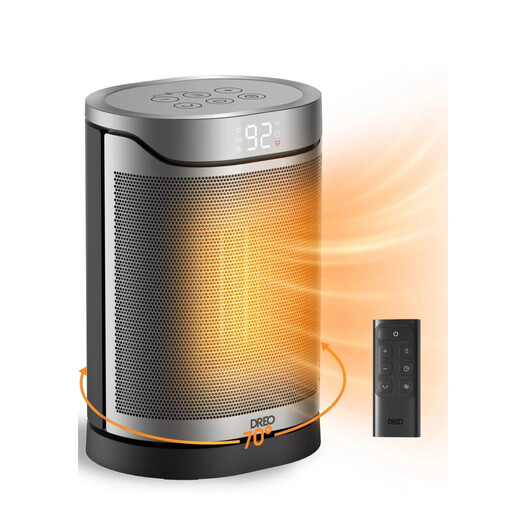
Why It Stands Out The DREO Atom 318 is a compact and versatile model. With 1500W of power, it's a great all-rounder for most common rooms. The combination of an adjustable thermostat, multiple power settings, and a quiet motor makes it a practical choice for daily use.
Key Features
Who Is It For? Ideal for standard bedrooms, home offices, or seating areas. It's a balanced choice for those seeking efficient electric supplemental heating without needing the power of a 2000W model.

Why It Stands Out The DREO Atom 416 focuses on the quietest possible operation. The manufacturer calls this "HyperSilent" technology, with a specified noise level starting from 34 dB. This makes it particularly suitable for environments where peace and quiet are important. Despite its quiet nature, it delivers solid heating performance at 1500W.
Key Features
Who Is It For? The perfect candidate for anyone seeking a quiet electric heater for the bedroom, nursery, or a quiet workspace. If noise reduction is your top priority, this model is worth considering.
Every situation is unique. Perhaps you're looking for a model with a different design, a different power output, or specific features not highlighted here. A good heater is one that perfectly fits your space and needs.
For a broader overview of models and types, you can browse our full category.
Discover more electric heaters
Per unit (kWh), gas is typically cheaper than electricity. However, the advantage of an electric heater lies in its efficiency for targeted use. You only heat the space you're in, with 100% of the energy consumed converted into heat. This allows you to turn the central heating down or even off, which can ultimately lead to a lower total energy bill.
Yes, a ceramic heater is considered energy-efficient compared to older types of electric heaters. The ceramic plates retain heat well, allowing the built-in thermostat to switch the heater off and let the residual heat do its work. This cyclical process of heating up and shutting down consumes less power than a heater that must run continuously.
As a rule of thumb, a 1500W electric heater is suitable for supplementally heating well-insulated rooms up to about 20 m?. However, factors like ceiling height, the number of windows, and the quality of insulation do have an impact. For larger or poorly insulated spaces, a model with a higher output, such as 2000W, is a better consideration.
