
Vandaag of morgen in huis

Kwaliteit gegarandeerd

Welkomstaanbiedingen ontgrendelen: GRATIS bezorging | Tot 80% korting | Gratis 30 dagen JoyPlus-proefperiode
Download de app
An electric heater can quickly make a home office, bedroom or small living room more comfortable. However, it is unwise to rely solely on claims such as “heats in 3 seconds”, “energy-efficient” or “suitable for large rooms”. Performance also depends on insulation, ceiling height, outdoor temperature and where you position the heater.
The main pitfalls when buying electric heating are:
A fan heater distributes warm air using a fan. This usually creates noticeable warmth quickly, for example under a desk or in a home office. The trade-off is that you may hear the fan.
A PTC ceramic heater uses a ceramic heating element. Product information often associates PTC with stable heat output and a lower surface temperature than some traditional heating elements. Always check the specific model’s specifications; the term “ceramic” alone does not tell you how much noise, power or room coverage to expect.
A convector heater warms the air flowing past the heating element. This type is often relatively quiet, as models without an active fan do not produce airflow noise. A model with a built-in fan can distribute heat more quickly, but will not be completely silent.
For long-term use in a fixed room, a convector heater can be practical. For quickly directed warmth and easy portability, a mobile heater with a handle is often a better choice.
Many models have a power rating between 1,500 and 2,000 watts. Do not look only at the highest figure; check the lower settings too. A heater with, for example, 900, 1,300 and 1,500 watts gives you more choice than a device that can only be switched on or off.
A simple indication of energy consumption:
power in kW × operating time in hours = consumption in kWh
A 2,000-watt heater operating at full power for one hour therefore uses 2 kWh. Actual consumption may be lower if the thermostat temporarily switches off the heating element. For a bedroom or home office, also compare the stated coverage area with the room’s insulation and volume.
A heater with a thermostat can help maintain the set temperature. A digital setting range, such as 5 to 35 °C on some DREO models, allows more precise control than a simple dial. Also look for:
According to DREO’s own information, smart power control on certain models can save up to 40% energy. This is a brand claim and not a guaranteed saving for every room or user.
At a minimum, look for overheat protection and tip-over protection. Some models also specify a flame-retardant casing, automatic power cut-off and a cool-touch exterior. Check that these features are actually listed in the product specifications.
Always place a heater on a stable, dry and hard surface. According to the safety instructions for the products mentioned, keep approximately 1 metre away from curtains, bedding, furniture and other flammable materials. Do not cover the heater, block the air inlet or outlet, and do not use an electric heater in a bathroom unless the model is explicitly designed for this purpose and the installation instructions permit it.
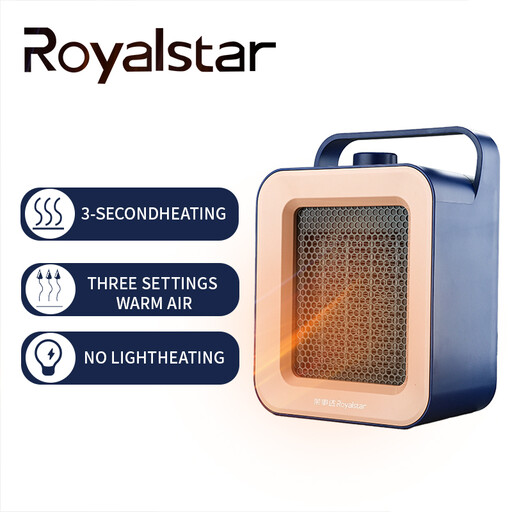
Why it suits this profile: A straightforward mobile heater for anyone who wants quick warmth at their desk, in a small bedroom or while studying.
The product information states 1,500 watts and three settings. This allows you to adjust the power instead of heating only at the maximum setting.
Compact design, warmth within 3 seconds according to the product description, plus tip-over and overheat protection.

Why it suits this profile: Ideal for anyone looking for a quiet ceramic heater with precise controls, a timer and remote control for a medium-sized room.
According to DREO, the stated noise level is between 25 and 42 dB. Tip-over, overheat and child safety features are also listed.
2,000 watts, 70° oscillation, a 5–35 °C thermostat and a 12-hour timer. The stated coverage is 15–25 m².
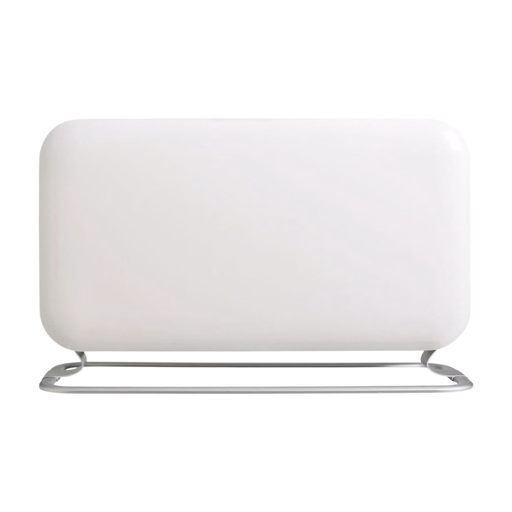
Why it suits this profile: A good choice for a permanent living room, office or other space where quiet operation matters more than maximum portability.
The product information states 100% silent operation, an electronic thermostat and three settings. This is a convector heater, not a noisy fan heater.
2,000 watts, LED display, electronic thermostat and a stated suitable coverage of up to 20 m².

Why it suits this profile: Well suited to a bedroom, student room or office where a quiet heater with a timer and compact dimensions is desirable.
The stated power settings are 900, 1,300 and 1,500 watts. This means you can select a lower setting for a smaller room. The manufacturer states a low noise level of 34 dB.
PTC ceramic element, 5–35 °C thermostat, 12-hour timer, remote control, plus tip-over and overheat protection.
We have put together a complete, up-to-date list of products that fully meet these strict selection criteria and the applicable European safety regulations.
For a small bedroom or home office, a model rated at 1,000 to 1,500 watts may be sufficient, depending on the insulation and room size. For a medium-sized living room, 1,800 or 2,000 watts is often considered. Use the stated coverage area as a guide, not a guarantee. A poorly insulated room requires more power or a longer operating time.
An electric heater converts electricity directly into heat, but consumption still depends on its power rating and operating time. In practice, an energy-efficient heater is primarily a model with lower settings, a good thermostat, a timer and, where available, an ECO mode. Only heat the room you are using and set the timer to avoid unnecessarily long operation.
This depends on the instructions and the safety features provided. Ideally, choose a model with a timer, thermostat, tip-over protection and overheat protection. Keep the appliance away from bedding and curtains, never cover it and always follow the instructions for use. Automatic shut-off reduces the risk of unnecessary prolonged operation, but it does not replace safe positioning and supervision.
