
Vandaag of morgen in huis

Kwaliteit gegarandeerd

Welkomstaanbiedingen ontgrendelen: GRATIS bezorging | Tot 80% korting | Gratis 30 dagen JoyPlus-proefperiode
Download de app
An electric heater can quickly make a chilly bedroom, home office or living room more comfortable. But the difference between a handy portable heater and a poor purchase often comes down to more than just wattage. A high power rating doesn’t automatically mean lower energy use, quiet operation or a suitable place to position it.
Joybuy Product Recommendation Officer helps you look beyond marketing claims and focus on what you can check: power, controls, safety features, noise levels and intended use.
Many models promise quick warmth, but the size and insulation of the room, as well as where you place the heater, also affect the results. A compact fan heater can work well at a desk or in a small bedroom, while a convector heater may be better for longer periods of even, supplementary heating.
So, look out for:
An electric heater with an ECO mode or thermostat can adjust its operation automatically. According to information provided by some brands, this can reduce energy use in certain conditions. It doesn’t guarantee a set saving in every home.
You can easily calculate the maximum energy use:
power in kilowatts × running time in hours = energy use in kilowatt-hours
A 2000-watt heater running continuously at full power uses 2 kWh per hour. A thermostat, lower setting or timer can help prevent the heating element from running at full power all the time.
Overheat protection and tip-over protection are useful features, but they don’t make an electric heater risk-free. Never cover the appliance, keep it away from curtains, bedding and furniture, and plug a high-powered model directly into a suitable socket. Manufacturers generally recommend keeping it at least about one metre away from flammable materials.
Don’t use a standard room heater in a bathroom. Only choose a model whose product information confirms it’s suitable for use in a damp environment, such as a bathroom heater with an appropriate IP rating.
Models from 600 to 2000 watts are commonly used for supplementary heating in a specific area. A 600W model is more suited to a desk or small personal space. A 2000-watt heater can provide more heat, but it also uses more electricity when running continuously on its highest setting.
Don’t just look at the maximum power. A model with settings such as 750W and 1500W, or 1200W and 2000W, gives you more control over energy use.
A PTC ceramic heater uses a ceramic heating element and a fan to distribute warm air. This type is often compact and quick to use. However, you may hear the airflow, so noise levels matter if you’re using it in a bedroom or office.
A convector heater generally warms the air without a continuously running fan. It can run quietly, but the heat may take longer to spread. Some convector heaters have an additional fan to distribute heat more quickly.
An oil-filled radiator takes longer to heat up, but can provide an even warmth. This may be particularly relevant if you’ll be spending a long time in the same room.
A heater with a thermostat switches the heating element on and off to maintain a set temperature. A heater with a timer can switch off automatically after a set period. A remote control is handy if the heater is next to your bed or sofa.
Also check whether you can set the temperature in degrees or choose only between low and high settings. A digital display, oscillation and quiet mode are practical features, but they’re only useful if they suit your day-to-day needs.
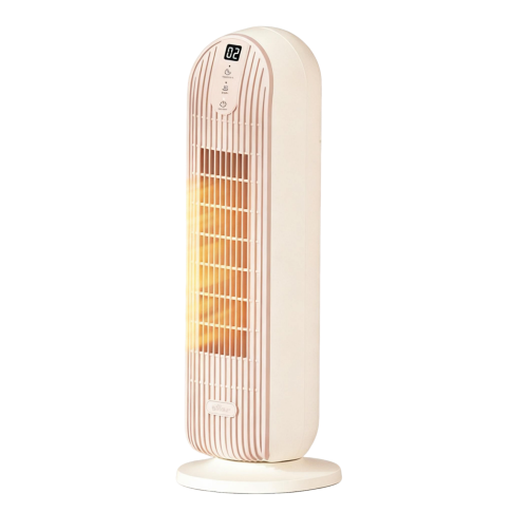
Why it suits this profile: This model combines 1200W and 2000W settings with a timer of up to 12 hours and 90° oscillation. That lets you adjust the heat for a bedroom, living room or home office.
The two power settings mean you don’t always have to heat at maximum power. The timer helps prevent it being left on for longer than necessary.
PTC ceramic element, 90° oscillation, low noise levels according to the product description, and a concealed handle.

Why it suits this profile: A good choice if precise temperature control, a remote control and quiet operation matter to you in a bedroom, office or living room.
The thermostat can be set from 5 to 35°C, and the timer runs for up to 12 hours. According to information provided by DREO, noise levels range from 25 to 42 dB.
2000W PTC heating, 70° oscillation, remote control, child lock and multiple layers of protection according to the product information.
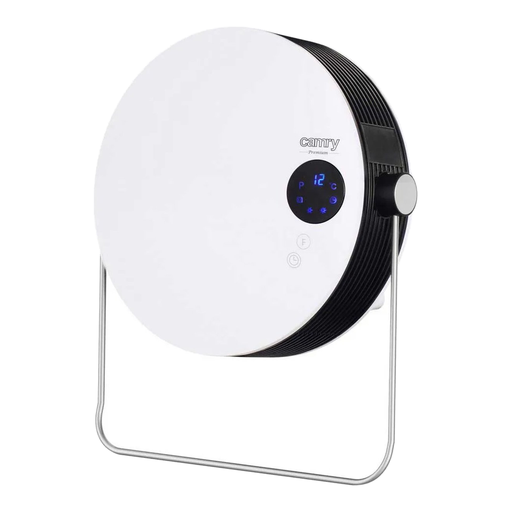
Why it suits this profile: This wall-mounted model is designed for bathrooms and has an integrated towel rail, a weekly timer and two heating settings.
Its IPX2 rating and suitability for bathroom use are clearly stated. However, follow the installation instructions and don’t let the appliance come into direct contact with water.
1400W and 2000W settings, adjustable temperature from 10 to 49°C, overheat protection and a programmable weekly timer.
We’ve put together a complete, up-to-date list of products that meet these strict selection criteria and the European safety requirements currently in force.
It depends on the floor area, insulation, ceiling height and how quickly you want the room to warm up. A compact 600W model may be suitable for a desk or small room. For a larger bedroom or living room, people often choose a model rated from 1500W to 2000W. Always check the stated coverage for the specific product.
An electric heater converts electricity directly into heat, but energy use depends on the power rating and how long you run it. A thermostat, timer and lower heat setting can limit the number of hours it runs. According to information provided by a brand, an ECO mode can adjust the power, but actual costs vary depending on your home and electricity tariff.
It’s not generally recommended. If you plan to use one overnight, choose a model with clearly stated overheat and tip-over protection, position it away from bedding and curtains, and use a timer if possible. Always follow the manufacturer’s safety instructions and switch the heater off when you leave the room.
