
Vandaag of morgen in huis

Kwaliteit gegarandeerd

Welkomstaanbiedingen ontgrendelen: GRATIS bezorging | Tot 80% korting | Gratis 30 dagen JoyPlus-proefperiode
Download de app
An electric heater seems simple: plug it in, set the temperature and you’re ready to go. Yet many households buy a model that isn’t suited to the room or how they intend to use it. For example, a heater may blow out warm air quickly but also make too much noise for the bedroom. Or a model may have a high wattage while offering very few thermostat and timer settings.
This buying guide explains what to look for in a fan heater, ceramic heater, convection heater or portable heater. The recommendations below are based on verifiable specifications from the product descriptions.
A 2000-watt heater uses approximately 2 kWh per hour at maximum power. The exact cost depends on your energy tariff. Higher power therefore doesn’t automatically mean lower running costs. Also look for multiple heat settings, a thermostat and a timer. These allow the heater to switch off once the desired temperature has been reached.
For a small workspace, 600 to 1500 watts may be sufficient, while a larger or less well-insulated room requires more power. The area stated by the manufacturer is a guideline; ceiling height, draughts and insulation all have a significant effect.
Terms such as quiet heater and energy-efficient heater say little without additional information. Check whether the noise level is given in decibels and whether an eco mode or different power settings are available.
According to DREO’s own research, the Atom 416 can save up to 40% energy thanks to intelligent power control and a DC motor. This is a brand claim, not a guaranteed saving in every home. Actual consumption depends on the set temperature, usage duration and insulation.
A heater with overheat protection and heater with tip-over protection has an additional automatic shut-off, but that doesn’t make covering it or positioning it incorrectly safe. Keep a minimum distance of approximately one metre from curtains, bedding, paper and furniture. Place the heater on a flat, stable surface and don’t use it in a bathroom or other damp area unless the instructions expressly allow it.
A CE mark is a declaration by the manufacturer that the product meets applicable EU requirements. It is not an independent assessment of heating speed or energy consumption.
A fan heater distributes warm air quickly using a fan. This is useful when you want to heat a home office or bedroom quickly. A ceramic heater generally uses a PTC element. According to the product description, the Mill CUS1800MEC uses a PTC element and offers 1200- and 1800-watt settings.
A convection heater warms the air through natural convection. Models such as the Mill SG2000LED also have a fan for additional heat distribution. Convection heaters are often suitable for longer periods of even heating, but usually take up more floor or wall space.
A heater with a thermostat can adjust its power or interrupt heating when the set temperature has been reached. Check the range and accuracy. According to the product specifications, the DREO Atom 416 and Atom 318 offer temperature settings from 5 to 35 °C.
A heater with a timer is practical when you don’t want the appliance to keep running unnecessarily. The DREO models have a 12-hour timer, while the OmniHeat offers a programmable 24-hour timer. A heater with remote control is convenient from the sofa or bed, while a smart electric heater such as the Xiaomi Smart Tower Heater Lite also supports app control and voice commands. Full app functionality for this model requires an internet connection and the Mi Home app.
For a bedroom or study, the stated noise level is more important than a general term such as “whisper quiet”. The DREO Atom 416 is listed at 25–42 dB; the Atom 318 has the same stated range. Their dimensions are 15.8 × 15.4 × 25 cm and 17.9 × 14.5 × 26 cm respectively.
Measure the space where you plan to place the heater in advance. Also consider the length of the cable, the carrying handle and the space around the air inlet and outlet. A compact portable heater is convenient to move around, but it must not be wedged under a desk or covered with belongings.

Why it suits this profile: This compact 1500W model has three power settings, a thermostat from 5–35 °C and a 12-hour timer. Its size and weight of 1.44 kg make it easy to move.
The stated noise level of 25–42 dB and the different settings provide more information than simply claiming that it is “quiet” or “energy efficient”.
PTC ceramic heating, remote control, thermostat and stated eight-layer safety protection.
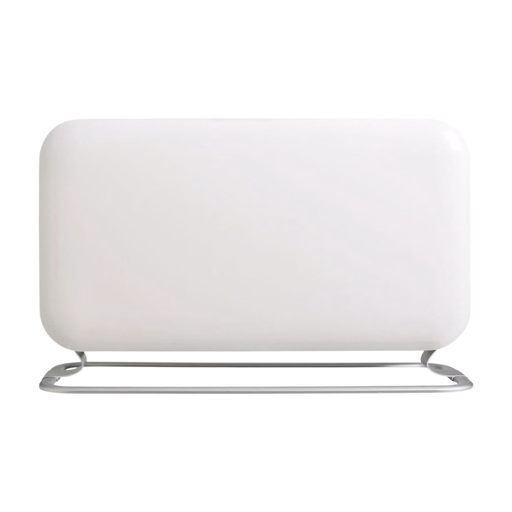
Why it suits this profile: This convection heater is specified for rooms of up to 20 m² and is suited to anyone looking for a permanent, quiet solution for the living room or home office.
The electronic thermostat and three settings make it easier to control than a model with only an on/off switch.
2000 watts, LED display, fan for heat distribution and a 160 cm cable.
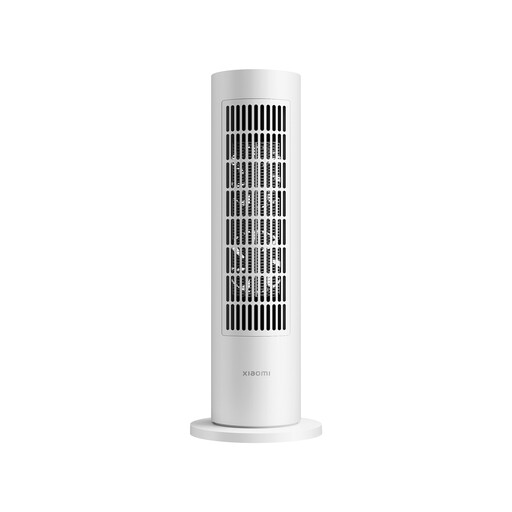
Why it suits this profile: The tower design takes up little floor space and offers control via the app, remote control and voice commands within the Mi Home platform.
The product description lists 2000 watts, a timer, four modes and automatic shut-off. This makes the controls more specific than a general smart claim.
PTC ceramic element, 70° oscillation, thermostat, tip-over protection and overheat protection.
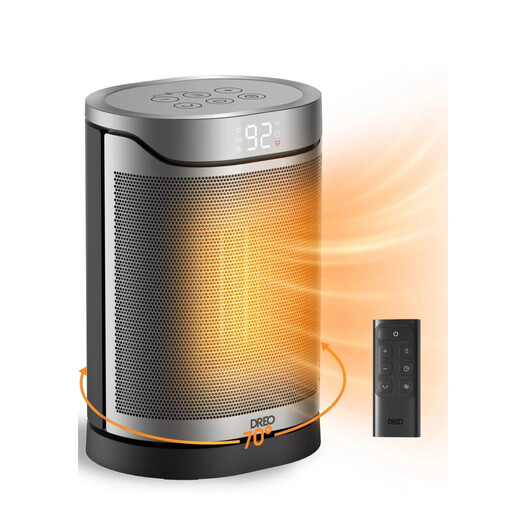
Why it suits this profile: This 1500W model is specified for 10–20 m² and combines a low stated noise level with 70° oscillation, a 12-hour timer and remote control.
The 900-, 1300- and 1500-watt settings let you choose the right level for different situations instead of running continuously at maximum power.
Temperature setting from 5–35 °C, PTC element, oscillation and stated overheat and tip-over protection.
We’ve put together a complete, up-to-date list of products that fully meet these strict selection criteria and the applicable European safety regulations.
Only use an electric heater in accordance with the instructions. Pay particular attention to these points:
A 2000-watt model uses approximately 2 kWh per hour when operating continuously at maximum power. Multiply this by your current price per kWh for an estimate. In practice, a thermostat often switches the heater off intermittently, so consumption depends on the room and the set temperature.
It can be, provided the model is suitable for the room and is positioned safely with plenty of space around it. Ideally, choose a model with a thermostat, timer, overheat protection and tip-over protection. Also check the stated noise level. A fan will generally make more noise than a convection heater without active air circulation.
Its lifespan depends on usage duration, dust, storage and maintenance. Keep the ventilation openings clean, only move the appliance once it has cooled down and store it in a dry place. Check the cable, plug and casing before every use. If there is visible damage, the appliance should no longer be used.
