
Vandaag of morgen in huis

Kwaliteit gegarandeerd

Welkomstaanbiedingen ontgrendelen: GRATIS bezorging | Tot 80% korting | Gratis 30 dagen JoyPlus-proefperiode
Download de app
An electric heater can quickly make a bedroom, home office or study more comfortable. However, it is not wise to rely solely on wattage or a promising marketing term. A 2000-watt model is not automatically suitable for every room, and an “ECO” setting does not mean the appliance always uses very little electricity.
Pay particular attention to these three common pitfalls:
The right electric heater depends on the size of the room, its insulation and how long you use the appliance.
Use a portable electric heater mainly as supplementary heating. For a room of around 10 to 20 m², 1500 to 2000 watts may be suitable, but actual suitability depends on factors including ceiling height, draughts and insulation. The area stated by the manufacturer is therefore a guideline, not a guarantee of a particular room temperature.
A 2000-watt heater uses a maximum of 2 kWh per hour at full power. The actual cost depends on your energy tariff and how often the thermostat switches the heating element on. With a lower setting, such as 600, 750 or 1000 watts, you can match the power more closely to a smaller room.
A heater with a thermostat switches the heating element off once the set temperature has been reached. A heater with a timer also prevents the appliance from running unnecessarily. Check whether the timer can be set in hours and whether it is an off-timer or a complete programme.
For a bedroom or office, a quiet electric heater is more important than simply having a high power rating. A stated noise level, such as 24 dB(A), 34 dB or 50 dB, provides a useful indication. Bear in mind that measurement conditions may vary between manufacturers.
Oscillation helps spread warm air more widely. A heater with a remote control, display or app control is particularly convenient when you use the appliance next to a desk or bed. For smart features, check whether a Wi-Fi connection or a specific app is required.
Ideally, choose a model with the following features:
Place an electric heater on a flat, hard and stable surface. Never cover the appliance, do not block the air inlet or outlet, and keep flammable materials well away. Do not use the appliance in a damp room unless the manufacturer expressly permits it. Ideally, plug a high-powered model directly into a suitable wall socket and always follow the instructions.
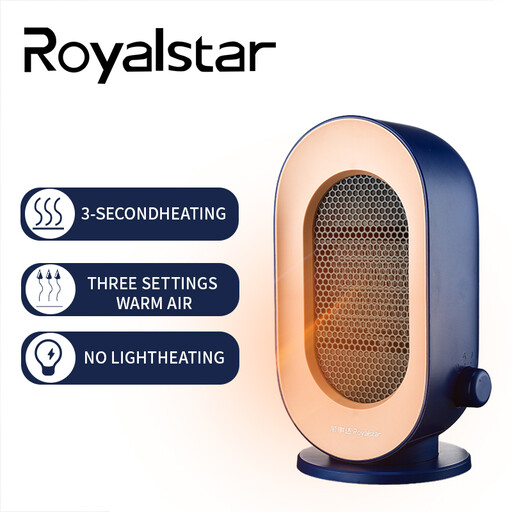
Why it suits this profile: The low power rating and compact size are well suited to a desk, small study or personal workspace where you want targeted supplementary heating.
The three heat settings make it easier to adjust the power than with a model that simply switches on or off. The product description states that it has tip-over and overheat protection.
600 watts, three heat settings, compact design and portable for use at home or in the office.

Why it suits this profile: According to the product information, this model focuses on temperature control, wide air distribution and a low stated noise level for bedrooms and workspaces.
The listed safety features include tip-over protection, overheat protection and child lock. According to DREO’s own information, the noise level is between 25 and 42 dB.
2000 watts, 70° oscillation, thermostat from 5–35 °C and a timer of up to 12 hours.
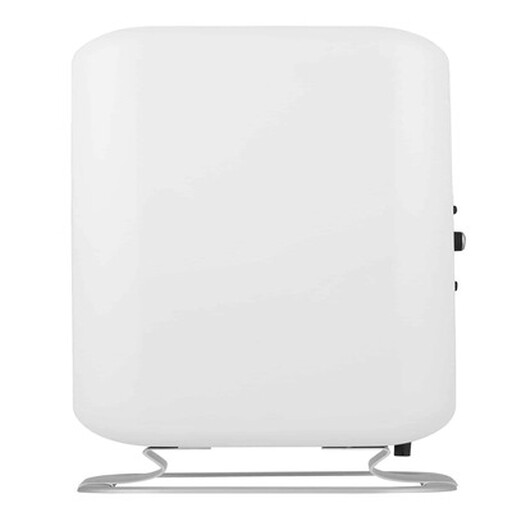
Why it suits this profile: An oil-filled radiator is a good choice if you want longer-lasting, more even supplementary heating in a medium-sized room and have less need for immediate warm air.
The electronic thermostat and day-night programming help you plan longer periods of use. The product details also mention tip-over and overheat protection.
1000 watts, three settings, electronic thermostat and, according to the product information, suitable for rooms of up to 16 m².
We have put together a complete, up-to-date list of products that fully meet these strict selection criteria and the applicable European safety requirements.
An electric heater converts electricity directly into heat. The power rating mainly determines how much electricity the appliance can draw at most. A 1500-watt model running at full power for one hour uses approximately 1.5 kWh. A thermostat can reduce actual consumption because the heating element does not remain active continuously, but the result depends on the room and the temperature setting.
Follow these practical rules:
This is not necessarily the case. An electric heater can be useful if you are temporarily heating one small room instead of the whole home. Compare the power rating, usage time and your current electricity and gas prices before drawing a conclusion.
For a small, well-insulated room, 600 to 1500 watts may be sufficient as supplementary heating. Models rated at 1800 to 2000 watts are often offered for larger or less well-insulated spaces. Also check the stated room size and use a thermostat to control the temperature.
Always follow the instructions. Only choose a model with suitable safety features, a stable base and a timer if you use the appliance while sleeping. Keep the heater clear of bedding and curtains, and switch it off if you are unsure about its positioning or operation.
