
Vandaag of morgen in huis

Kwaliteit gegarandeerd

Welkomstaanbiedingen ontgrendelen: GRATIS bezorging | Tot 80% korting | Gratis 30 dagen JoyPlus-proefperiode
Download de app
An electric heater can be useful if you only want to add extra warmth to your bedroom, living room, study or home office. However, it’s not wise to focus only on wattage or a low price. A compact fan heater can warm a room quickly, but it can also be noisy. A convector heater often provides more even heat, but takes up more space. And a smart heater with Wi-Fi offers extra control, although not everyone needs the installation process or app.
A 2,000-watt heater can warm a room quickly, but at full power it also uses 2 kWh per hour. You can work out the cost easily using:
power in kW × usage time in hours × your electricity tariff
A model with a thermostat, multiple heat settings or a timer may switch off sooner once the desired temperature is reached. However, it’s worth treating energy-saving claims with caution. For example, a brand’s own research may suggest that certain modes can save energy, but actual consumption depends on insulation, room temperature, usage time and the temperature setting.
A claim such as ‘suitable for 20 m²’ is a guideline from the product description. A cold end-terrace house with high ceilings needs more power than a well-insulated bedroom. So also consider:
An electric heater for a bedroom doesn’t necessarily need the same features as one for a living room.
Tip-over protection and overheat protection are important features, but they don’t make unsafe use safe. Never cover a heater, keep it away from curtains, paper, bedding and furniture, and don’t use it in a damp room unless this is explicitly permitted. The product information for several models also advises plugging the heater directly into a wall socket and not using an extension lead.
A 600W model may be enough to provide extra warmth in a small room. For medium-sized rooms, you’ll often see models rated between 1,000 and 2,000 watts. A ceramic heater or PTC heater uses a ceramic heating element and often a fan. This type warms up quickly and is usually compact.
A fan heater actively circulates warm air. So check the stated noise level if you plan to use it in a bedroom or home office. A convector heater warms the air, which then rises. This can be comfortable for more even heating, while an oil-filled radiator takes longer to warm up but operates without a fan.
A heater with a thermostat switches the heating on and off to maintain the set temperature. That’s more practical than running the heater continuously at full power. A heater with a timer is useful when you want to set how long it runs in advance.
Think about your daily routine when choosing how to control it:
For Wi-Fi models, check that the app, network and any account requirements suit the way you plan to use the heater.
Look for clear information on tip-over protection, overheat protection, a stable base and a suitable cable as a minimum. A CE mark shows that the manufacturer declares the product complies with the applicable EU requirements. Also check that the manual, manufacturer details and safety instructions are clearly available.
Place a portable heater on a flat, stable surface, with the air inlet and outlet unobstructed. Keep flammable materials at least one metre away where the manual specifies this. Let the appliance cool down before moving or cleaning it.
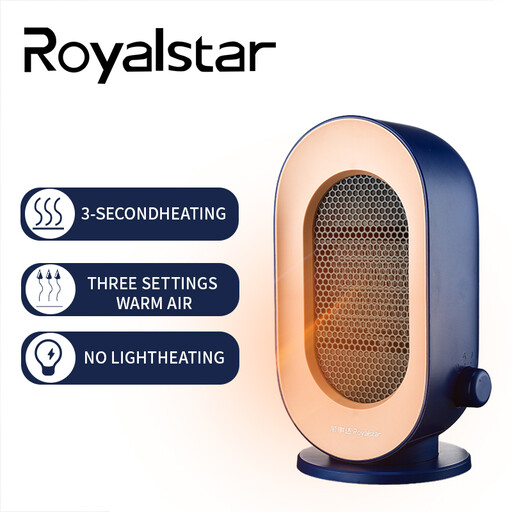
Why it suits this need: A compact portable heater with 600W of power and three heat settings, ideal for a desk, small study or personal workspace.
The lower power rating helps you avoid automatically buying a large model for a small space. The description mentions tip-over and overheat protection.
600W of power, three settings and a compact design, according to the product specifications.

Why it suits this need: Ideal if fast warmth, precise temperature settings and quiet operation are important to you in a bedroom or living room.
The product specifications list a thermostat range of 5–35°C, a timer of up to 12 hours, and tip-over and overheat protection.
2000W PTC heating, 70° oscillation and a stated noise level of 25–42 dB.
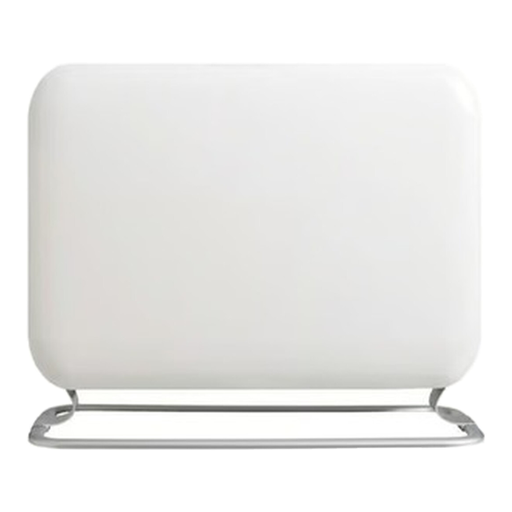
Why it suits this need: A good fit if you want to set regular heating schedules for a home office, second home or several rooms.
According to the product description, the app supports weekly schedules, comfort, sleep and away modes. That means you don’t have to keep adjusting the settings manually.
1200W of power, Wi-Fi control, weekly scheduling and a stated coverage area of up to 18 m².
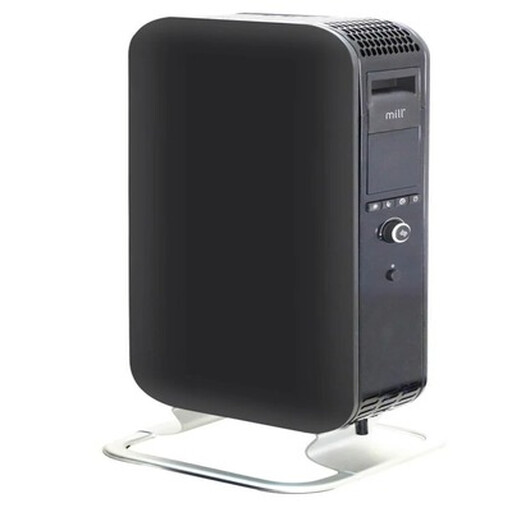
Why it suits this need: An option if you’d rather avoid airflow and fan noise, and want to heat a bedroom of up to around 16 m².
With three settings of 400, 600 and 1000W, you can adjust the power to suit your needs. The product specifications also mention tip-over and overheat protection.
1000W of power, three settings, a day/night programme and, according to the specifications, no fan noise.
We’ve put together a full, up-to-date list of products that meet these strict selection criteria and the applicable European safety regulations.
It depends on the heater’s power rating and your electricity tariff. A 2,000-watt model uses 2 kWh per hour at full power. A 600-watt model uses 0.6 kWh per hour in the same conditions. A thermostat can reduce average consumption by preventing the heater from running continuously, but actual costs vary depending on your home and how you use it.
It can be, provided the model is suitable for indoor use and is positioned safely. If noise matters, choose a quiet ceramic heater, convector heater or oil-filled radiator. A timer and thermostat are useful, but never cover a heater or place it too close to bedding, curtains or other flammable materials.
Its lifespan depends on how often you use it, how well you maintain and store it, and the quality of its components. Only clean the appliance as instructed in the manual, keep the vents clear and wait until it has cooled completely before moving it. Also check the warranty and keep your proof of purchase. If the cable is damaged, you notice an unusual smell or the heater isn’t working as it should, stop using it and contact the seller or manufacturer.
