
Vandaag of morgen in huis

Kwaliteit gegarandeerd

Welkomstaanbiedingen ontgrendelen: GRATIS bezorging | Tot 80% korting | Gratis 30 dagen JoyPlus-proefperiode
Download de app
An electric heater can quickly add extra warmth to a bedroom, home office or living room. But it’s unwise to focus only on the wattage or an attractive offer. A compact 1500W heater may be enough for a small room, while a poorly positioned 2000W heater could use more electricity than necessary.
The most common purchasing pitfalls are:
The type of heater determines how the warmth is distributed.
A ceramic heater often uses a PTC element. PTC stands for Positive Temperature Coefficient: the material’s electrical resistance changes as it gets warmer. Many models combine this with a fan, which quickly circulates warm air around the room.
An electric fan heater is a good choice if you want to feel warm quickly, for example under a desk or in a small bedroom. The downside is that the fan makes noise. Check the stated noise level in decibels. Manufacturers sometimes give a range; according to DREO’s own information, certain models operate between 25 and 42 dB. Always check which setting this applies to.
A convector heater warms the air, which then rises. This type is often larger and less directional than a fan heater. A convector heater can be useful for heating a living room or another room for longer periods. Models with a thermostat switch the heating off once the set temperature is reached.
A portable heater is practical for renters, students and people working from home. Check its weight, handle, dimensions and power cable length. It should be easy to move, but must always stand securely on a flat, hard surface while in use.
Many models fall into the 1500W heater, 1800W heater or 2000W heater categories. You can easily calculate the maximum energy use:
power in kW × hours of use = energy use in kWh
A 2000W heater running at full power uses 2 kWh per hour. A 1500W heater uses 1.5 kWh per hour. The actual cost depends on your energy tariff and how often the thermostat switches the heater off.
A lower power rating isn’t always the right choice. A 600W model, for example, is suitable for a desk or a very small room, but will take longer to warm a larger living room.
A heater with a thermostat can adjust its power or switch off temporarily once the desired temperature is reached. This is more practical than a heater that runs constantly at full power.
A heater with a timer stops the appliance from staying on unnecessarily. Some models have a 12-hour timer, while others offer a programmable 24-hour period. A remote control is especially useful if the heater is next to a bed or sofa. Also check that the temperature settings are clearly shown on the display.
At a minimum, check for:
A CE marking doesn’t prove that a product can be used safely in every situation. Follow the instructions and check that the model is suitable for the room you intend to use it in. Don’t position a heater under a socket, never cover it, and keep curtains, paper, clothing and bedding at least one metre away if the instructions require it. Where possible, plug it directly into a wall socket and avoid using extension leads.
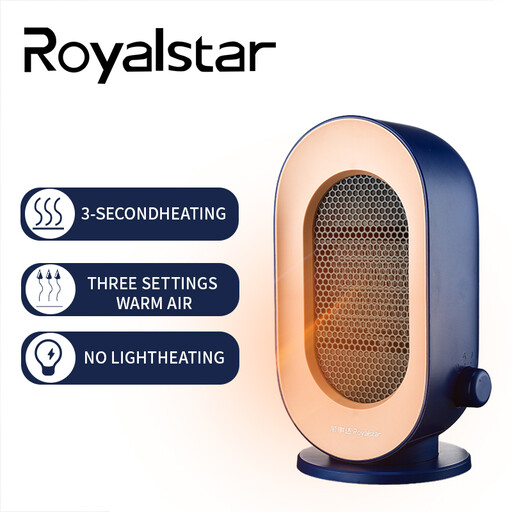
Why it suits this type of buyer: Its low rated power makes it suitable for personal use at a desk or in a small workspace, without going straight for a 1500W or 2000W model.
The product specifications state 600W and three heat settings. This makes its maximum power easier to assess than an unclear eco claim.
600W power, three settings, and tip-over and overheat protection according to the product description.

Why it suits this type of buyer: For anyone looking for a quiet heater with a remote control, timer and precise temperature control for a bedroom or office.
According to its own product information, DREO lists a noise level of 25–42 dB, a temperature range of 5–35°C and eight layers of safety protection. Check the manual for the exact setting.
1500W PTC heating, a 12-hour timer, remote control, and tip-over and overheat protection according to the specifications.
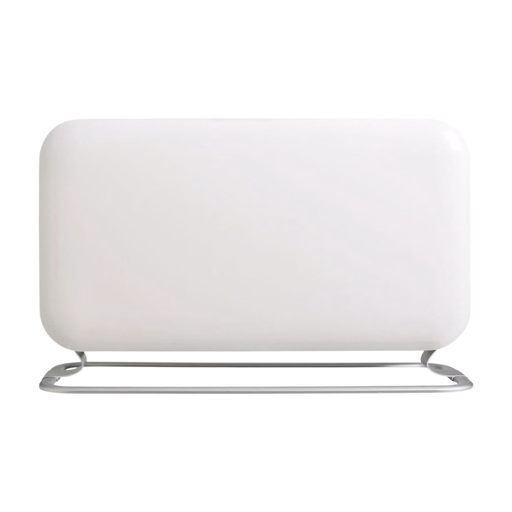
Why it suits this type of buyer: This fixed convector heater is designed for a medium-sized room of up to around 20 m². It’s a good fit for anyone who wants to heat a space quietly for longer periods.
The description lists 2000W, three settings and an electronic thermostat. The manufacturer describes it as quiet; this is a brand claim, not a guarantee for every room.
2000W power, LED display, electronic thermostat and a fan for extra air circulation.
We’ve put together a complete, up-to-date list of products that meet these strict selection criteria and the applicable European safety regulations.
That depends on the wattage, how many hours it’s used and your energy tariff. A 2000W heater uses up to 2 kWh per hour. A thermostat, lower heat setting and timer can limit how long it runs, but they don’t change its maximum power rating.
Yes, as long as the model is suitable for indoor use and is positioned correctly. We recommend choosing a quiet heater with a timer and overheat protection. Keep it clear of bedding and curtains, never cover it, and follow the manufacturer’s instructions. Don’t leave a heater running unattended if the manual advises against it.
Lifespan varies depending on the model, how intensively it’s used and how well it’s maintained. Keep the air vents free of dust as instructed in the manual, only move the appliance once it has cooled down, and don’t use it if the cable, plug or casing is damaged. Before buying, also check the warranty and whether customer support is available in the EU.
