
Vandaag of morgen in huis

Kwaliteit gegarandeerd

Welkomstaanbiedingen ontgrendelen: GRATIS bezorging | Tot 80% korting | Gratis 30 dagen JoyPlus-proefperiode
Download de app
An electric heater may seem simple to choose: check the wattage, compare the price and plug the appliance in. Yet many poor purchases are caused by features that are made to sound more impressive in product titles than they are in practice. A bedroom, home office, living room or bathroom will not automatically need the same type of heating.
This buying guide compares an electric radiator, oil-filled radiator, ceramic heater, fan heater and infrared heating based on practical considerations. This makes it easier to choose a portable heater that suits the room, how you use it and your safety requirements.
A 2,000-watt heater can warm a room more quickly than a 600- or 1,000-watt model, but it also uses more electricity while heating. Lower power is therefore not automatically more energy-efficient: the appliance may need to run for longer.
For electric resistance heating, a useful rule of thumb is:
consumption in kWh = power in kW × usage time in hours
A heater with a thermostat, timer or day-and-night programme can help reduce unnecessary heating. According to Mill’s own research, the day-and-night programme on the AB-H1000DN can reduce energy consumption by up to 25%. This is a brand claim; the actual result depends on insulation, the temperature setting and how long the heater is used.
A product description may state that a heater is suitable for a room of up to, for example, 25 or 60 m². However, the required capacity is also affected by ceiling height, draughts, insulation, window area and the desired temperature. A heater that is sufficient in a well-insulated room may be less effective in a draughty rented home.
Use the stated room size as a guideline. Also check the wattage, placement options and whether you want to heat the room continuously or only temporarily.
Overheating protection and tip-over protection are important features, but they are no substitute for safe positioning. Never cover an electric heater, keep curtains and bedding away from it, and do not use an extension lead that is unsuitable for the appliance’s power rating.
A bathroom requires extra care. An IP rating indicates the extent to which an appliance is protected against water or solid particles. A model with IPX2 is not the same as a fully splashproof appliance. Always follow the instructions and do not place a heater near a bath, shower or standing water.
For temporary supplementary heating in a study or small room, a lower wattage can be practical. A larger living room may require 1,400 to 2,000 watts, depending on the insulation. Multiple settings, such as 400/600/1,000 watts or 1,400/2,000 watts, give you more control than a single fixed setting.
Also consider how the heat is distributed:
A heater with a thermostat switches the heating element on and off around the set temperature. This is more practical than repeatedly switching it on and off manually. A timer or weekly programme can be useful for a home office, bedroom or study used at set times.
Check whether the thermostat uses a dial, buttons, remote control or LCD display. A display is useful for reading the setting, but additional electronics do not automatically make a product more energy-efficient.
At a minimum, look for:
Place the appliance on a flat, non-combustible surface. Unplug it before moving or cleaning it.
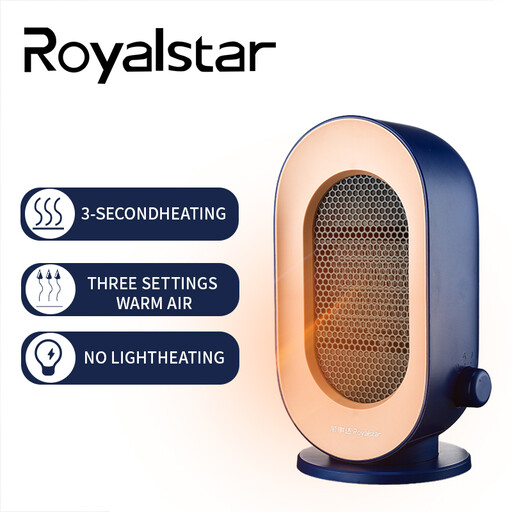
Why it suits this profile: This compact model is designed for supplementary heating in smaller areas at home or in the office. With 600 watts, the maximum power remains manageable, while three heat settings provide flexibility.
The product is not presented as a solution for large rooms. The product details specify a low wattage, three settings, tip-over protection and overheating protection.
600 watts, three heat settings, a compact portable casing and two specified safety features.
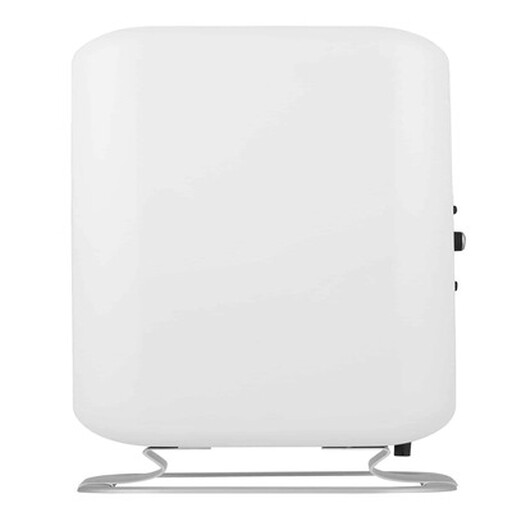
Why it suits this profile: According to the product information, this electric radiator is designed to provide even, quiet heating in rooms of up to 16 m². The electronic thermostat and day-and-night programme are well suited to regular use.
The 1000W model has three settings of 400, 600 and 1,000 watts. This lets you adjust the power instead of always heating at the highest setting.
Electronic thermostat, day-and-night programme, three power settings, plus tip-over and overheating protection.
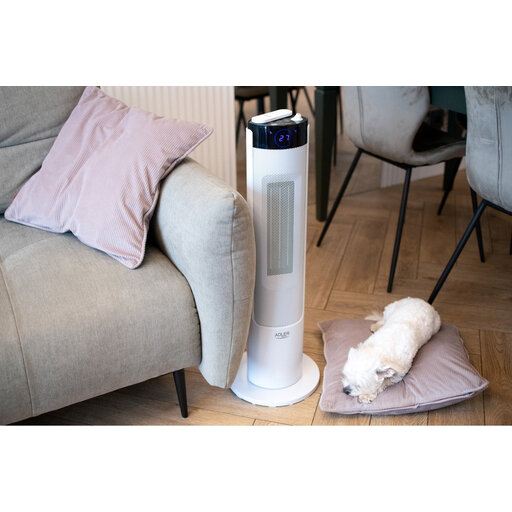
Why it suits this profile: This ceramic heater combines two heat settings of 1,400 and 2,200 watts with a timer, thermostat, remote control and oscillation. This is practical when you regularly heat a larger indoor space.
The product information specifies both the maximum power and the lower setting, as well as a timer of 1 to 12 hours. This allows you to limit the heating time.
LCD display, thermostat from 10–35 °C, timer, tip-over protection and overheating protection. According to the product details, the model has a noise level below 50 dB.
We have put together a complete, up-to-date list of products that fully meet these strict selection criteria and the applicable European safety regulations.
That depends on the electricity tariff, your heating requirements and the room. An electric heater can be practical for targeted supplementary heating in a single room. However, heating an entire room for a long time with 2,000 watts can use a considerable amount of electricity. Calculate consumption based on the power and usage time, then compare it with your current heating costs.
There is no universal ratio, as insulation and ceiling height also play a part. Use the manufacturer’s stated room size as a starting point, but do not choose solely on the basis of that figure for draughty or poorly insulated rooms. A thermostat and multiple settings give you more control over everyday use.
Only if the manufacturer explicitly permits it and the protection rating is suitable for the chosen location. Keep it away from water, the shower and bath, use an earthed socket and follow the installation instructions. Tip-over or overheating protection does not make an unsuitable appliance safe to use in a damp room.
