
Vandaag of morgen in huis

Kwaliteit gegarandeerd

Welkomstaanbiedingen ontgrendelen: GRATIS bezorging | Tot 80% korting | Gratis 30 dagen JoyPlus-proefperiode
Download de app
A digital thermometer should be easy to use, but there’s a wide range to choose from. Some models take a reading rectally, orally or under the arm. Others use infrared technology to measure temperature from the forehead or ear. Features such as a fever alarm, memory and silent mode can also be useful, but only if they suit your needs.
Look out for these three common pitfalls:
The right choice mainly depends on who will use the thermometer and how often you’ll take a reading.
A classic pen-style thermometer is usually a practical choice for your medicine cabinet. These models are often compact, run on a single button cell and can be used to take readings orally, under the arm or sometimes rectally. A flexible tip can make them more comfortable to use.
Check in advance:
A forehead thermometer or other contactless thermometer means you don’t have to touch a sleeping child. This is particularly useful at night. However, be sure to follow the recommended measuring distance. A cold room, a sweaty forehead, a hat or direct sunlight can affect the reading.
A baby thermometer with a silent mode avoids beeping during a reading. Memory can be useful if you want to compare readings, but make a note of the time, measurement site and conditions too.
An infrared thermometer can sometimes measure the temperature of a bottle, bath water, food or a room, as well as body temperature. This makes one device more versatile. However, check that the object mode is suitable for your intended use. A surface temperature reading is not the same as a body temperature reading.
An ear thermometer works differently from a forehead thermometer. An ear thermometer needs to be positioned correctly in the ear canal. Getting the right position may require extra care when taking a reading from a young child. Some models have age settings, for example for babies, toddlers and adults.
A contactless forehead thermometer is easy to use, but requires a consistent distance and a clear, dry area to measure. A classic digital thermometer may take longer, but is less affected by the distance from the forehead.
Don’t rely on terms such as “clinical” or “professional” alone. Check the technical information:
A display showing one decimal place doesn’t automatically mean that every reading is accurate to within 0.1 °C. Always follow the instructions and, if in doubt, take another reading in the same way.
An ear thermometer may need disposable hygiene caps. Check how many caps are included and whether replacements are available. A contactless thermometer doesn’t need caps, but you should still clean the sensor according to the instructions.
Also look out for batteries, automatic shut-off, a storage case and an easy-to-read screen. For use at night, a silent mode, vibration or backlit display can be useful.
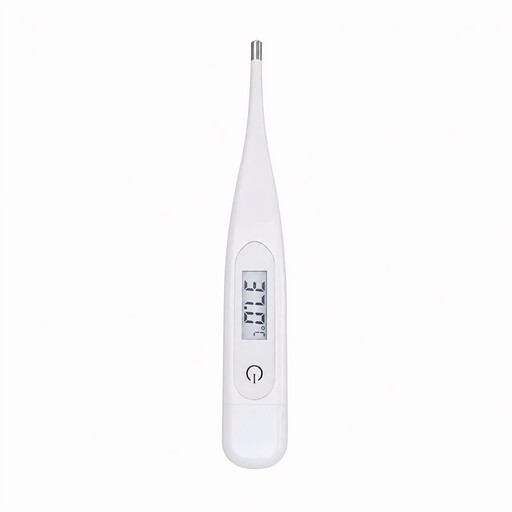
Why it suits this user: A simple pen-style thermometer for families looking for a basic solution for home use, without extra measurement modes.
The product information states a measurement resolution of 0.1 °C, a range of 32.0 to 42.9 °C and a mercury-free design. Check the instructions for permitted measurement sites.
Compact pen-style design, °C/°F switch and an audible signal when the reading is complete.
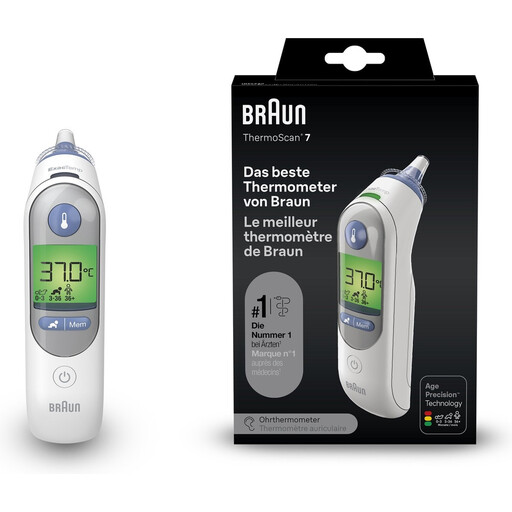
Why it suits this user: A good choice if you’re looking for an ear thermometer with age settings, positioning support and accessories for regular family use.
According to the product information, the ExacTemp indicator helps you position the thermometer steadily. Use a clean hygiene cap for every reading, as instructed.
Age settings, colour-coded display, backlit screen and memory for 9 readings.
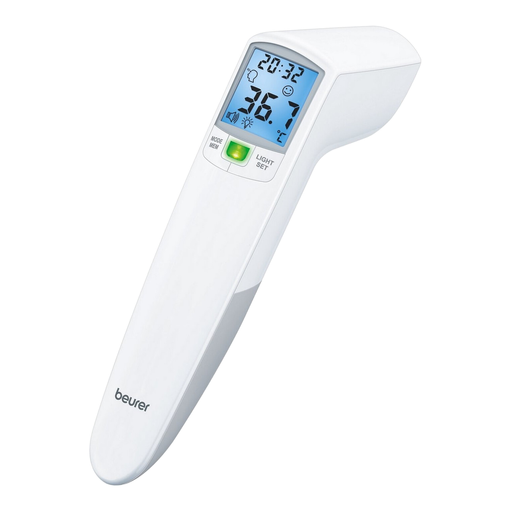
Why it suits this user: A practical choice for families and carers who want to take regular contactless readings and look back at the results.
The product information specifies the correct measuring distance: hold the device 4–6 cm from the forehead. This helps reduce errors caused by incorrect positioning.
60 memory slots, body, object and ambient temperature readings, plus a large backlit display.
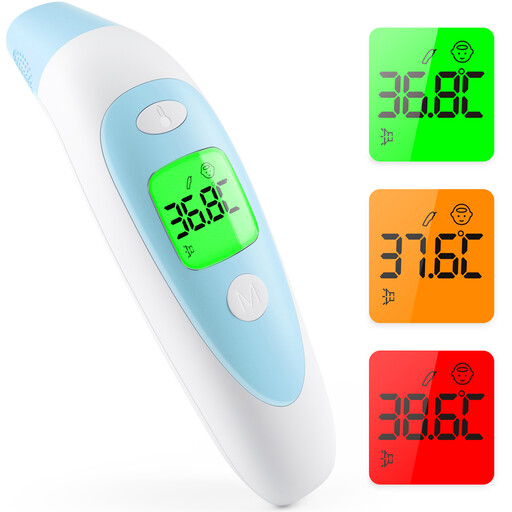
Why it suits this user: A handy option if you want to combine quick temperature readings, a silent mode and multiple measurement settings in one device.
According to the product description, the thermometer has forehead, ear and object modes. Select the right mode before each reading and follow the instructions provided.
32 memory slots, fever alarm, °C/°F selection and a silent mode for use when children are asleep.
We’ve put together a complete, up-to-date list of products that meet these strict selection criteria and the applicable European safety requirements.
For consistent readings, it’s important to follow the same routine:
A CE mark or mention of certification doesn’t, on its own, tell you how well a specific model will work in your situation. So check the instructions, manufacturer’s information, included accessories and warranty terms before ordering.
Its lifespan depends on the model, battery, cleaning and storage. A device with an undamaged sensor may remain usable for a long time, but replace the batteries promptly and check the casing regularly. If you’re concerned about unusual readings, contact the manufacturer.
A contactless forehead thermometer can be practical for babies, as you don’t need to touch them. Be sure to follow the instructions on distance, positioning and surroundings carefully. Don’t use the reading as a substitute for medical advice.
Contactless infrared thermometers usually don’t need disposable ear caps. The main ongoing cost is batteries. An ear thermometer may have extra costs for hygiene caps. So check not only the purchase price, but also which accessories need replacing regularly.
