
Vandaag of morgen in huis

Kwaliteit gegarandeerd

Welkomstaanbiedingen ontgrendelen: GRATIS bezorging | Tot 80% korting | Gratis 30 dagen JoyPlus-proefperiode
Download de app
A digital thermometer is a household essential for many people in the Netherlands. Even so, it can be difficult to compare products fairly. One retailer might highlight a reading in one second, while another claims medical accuracy or a smart fever alert. These claims only mean something if you know how and under what conditions the measurement is taken.
An infrared thermometer can often display a reading in less than a second. That’s useful when you’re checking a sleeping baby or a restless child. However, the result can also depend on the distance, position, sweat on the forehead, draughts and room temperature.
Always follow the instructions for use. If the manual says to, let the thermometer and the person being checked adjust to the same surroundings first. It’s also best to compare readings using the same method and measuring at the same place each time.
Forehead, ear and object thermometers use different measuring conditions. Object mode is suitable for checking things such as milk, bath water or a surface, but it isn’t intended as a substitute for a body temperature reading.
So, if you’re considering a multifunctional model, check:
A red display, beep or fever alert can help you spot a reading quickly. However, the threshold can vary by product and age. An alert won’t tell you what’s causing a change in temperature.
So use a thermometer as an aid for monitoring at home. If you’re unsure, symptoms persist or you’re concerned about a child, contact your GP or another healthcare professional.
A non-contact thermometer usually measures infrared radiation from the forehead. It’s hygienic and handy at night, as you often won’t need to touch a sleeping child. An ear thermometer can give a quick reading, but needs to be positioned correctly and may require a disposable filter.
A classic pen-style fever thermometer is simpler and often affordable. The trade-off is that it can take longer to get a reading, and you need to choose the measuring site according to the instructions.
Look at the difference between resolution and accuracy. A display showing 0.1 °C doesn’t automatically mean every reading is accurate to within 0.1 °C. Check the stated margin of error, measuring range and the conditions under which those specifications apply.
For example, the Treesmile T11 specifies a display resolution of 0.1 °C and different margins of error for different temperature ranges. That’s more informative than simply claiming it’s “highly accurate”. Other models focus mainly on the measuring method or a colour indicator.
A thermometer with memory is useful if you want to compare several readings. Check how many readings it stores: in this selection, that ranges from the latest reading to 60 memory slots.
These features can also come in handy for families:
A thermometer shouldn’t be immersed in water unless the instructions expressly say that it can be. Clean the sensor according to the instructions and keep batteries out of children’s reach.
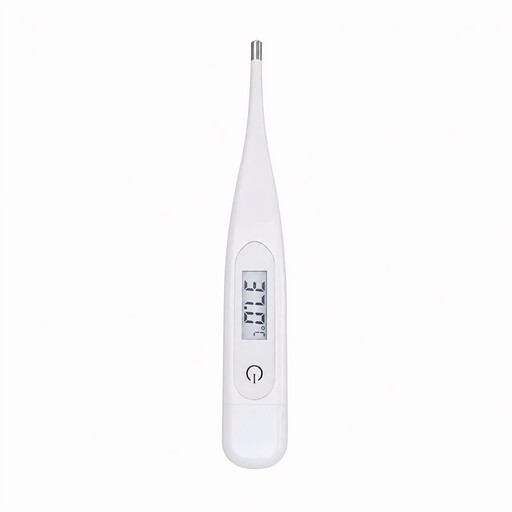
Why it suits this profile: A pen-style model for anyone looking for a simple thermometer for children and adults, without extra measuring modes.
The specifications state the measuring range, resolution and margins of error for each range. This helps you understand what the figures on the display do and don’t mean.
Mercury-free pen-style design, readings to 0.1 °C and a switch between °C and °F.
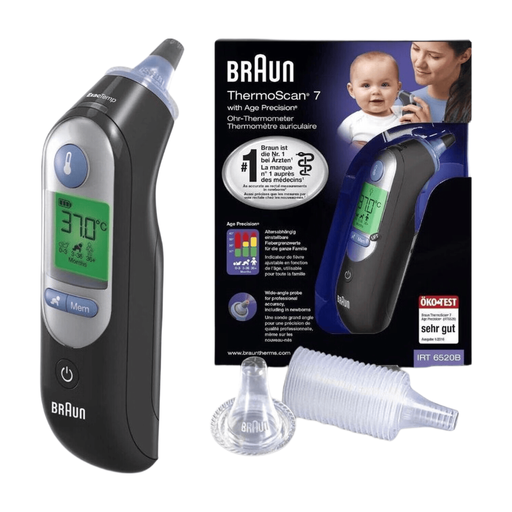
Why it suits this profile: A good fit for families who specifically want an ear thermometer with age settings and positioning aids.
According to the product description, the ExacTemp indicator helps you position the thermometer securely. Hygiene filters are designed for single-measurement use.
Age settings, colour-coded display, pre-warmed tip and storage for the last 9 readings.
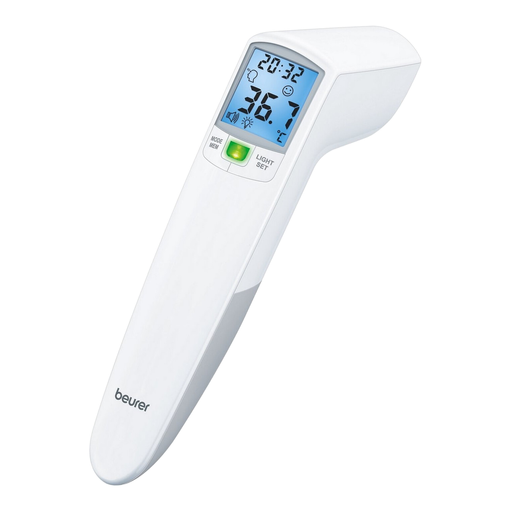
Why it suits this profile: A practical choice for households that take readings regularly and also want to check object or room temperature.
The product information specifies the correct distance of 4–6 cm. This makes the measuring process clearer than simply saying “non-contact”.
60 memory slots, automatic distance measurement according to the product description, and readings for body, surface and room temperature.
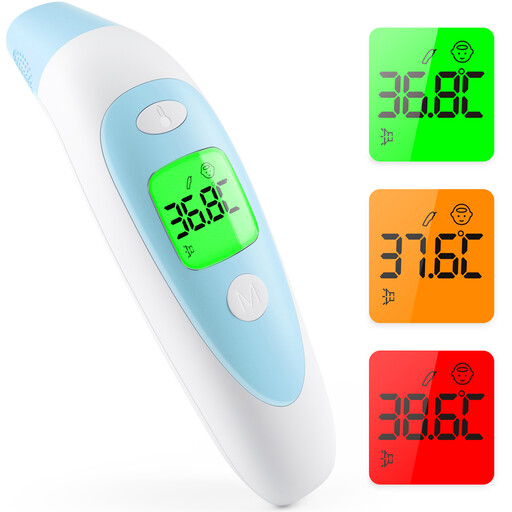
Why it suits this profile: Handy if you need one device to measure body temperature as well as the temperature of milk, bath water or a room.
The three separate modes make it clear what the device is being used for. According to the product description, it stores 32 readings and has a silent mode.
Forehead, ear and object modes, fever alert, Celsius/Fahrenheit selection and a storage case.
We’ve put together a complete, up-to-date list of products that meet these strict selection criteria and the applicable European safety regulations.
Make sure the forehead is dry and clear of hair. Hold the device at the distance specified in the manual and move as little as possible while taking the reading. It’s best to measure in the same place and under similar conditions each time.
Its lifespan depends on battery use, storage, cleaning and the condition of the sensor. Store the device in a dry place, avoid dropping it and remove the batteries if it won’t be used for a long time. A statutory warranty period isn’t the same as a guaranteed measuring lifespan.
For a non-contact or infrared thermometer, ongoing costs usually include batteries. An ear thermometer may also need disposable filters. A pen-style model often uses a small button-cell battery. So check not only the purchase price, but also which accessories and batteries you’ll need.
