
Vandaag of morgen in huis

Kwaliteit gegarandeerd

Welkomstaanbiedingen ontgrendelen: GRATIS bezorging | Tot 80% korting | Gratis 30 dagen JoyPlus-proefperiode
Download de app
A digital thermometer belongs in every household with children and adults. However, choosing the right model is not always straightforward. A forehead thermometer works differently from an ear thermometer, and a quick temperature reading is of little use if the distance, measurement site or method is incorrect.
Many buyers focus mainly on phrases such as “within one second” or “clinically tested”. In practice, the details often matter more: is the screen easy to read, is the sensor simple to clean and is the measurement method suitable for a sleeping baby? With the points below, you can compare a digital thermometer based on verifiable features rather than marketing language.
An infrared thermometer can display a reading in around one second. That is convenient, but speed alone does not automatically make a measurement useful. A forehead thermometer must be held at the specified distance. Sweat, hair, draughts, direct sunlight or cold skin can affect the result.
Therefore, always check:
Fever thresholds can vary by age. A baby thermometer with an age setting can make results easier to interpret, but a colour code is not a medical diagnosis. According to Braun’s own information, Age Precision technology adjusts the colour indication to the selected age group. For a model with this feature, check that the correct age is selected.
If you are unsure, obtain an unusual reading or notice other symptoms, it is advisable to follow the instructions and contact a GP or another healthcare professional.
An ear thermometer may require hygienic probe covers. These are usually not needed with a contactless thermometer, but the sensor must be kept clean and undamaged. Batteries, storage and cleaning also affect everyday use.
Look out for:
A traditional fever thermometer with a flexible tip generally measures orally, rectally or under the arm. This requires direct contact, but can be a straightforward choice if you are looking for a basic device.
A forehead thermometer or contactless thermometer uses infrared technology. This is practical when measuring sleeping children and for shared use within the family. Distance and positioning are particularly important here.
An ear thermometer measures in the ear and can work quickly. With babies and young children, you should carefully follow the instructions for correct positioning. Some models use disposable probe covers for hygienic use.
A display showing temperatures to 0.1 °C makes small differences visible. This does not automatically mean that the device measures equally accurately in all circumstances. Also check the stated measurement range and operating temperature.
For household use, a clear screen, an audible signal and a silent mode are also practical. A silent mode can be useful when you want to check a child’s temperature during the night.
A memory function can store previous readings, allowing you to compare changes. The number of stored readings varies by model: some thermometers save one result, while others store dozens.
A thermometer with several modes can measure body temperature, room temperature or the temperature of milk and bath water. Do not use object mode as a substitute for a body temperature reading. Also check whether the device uses AAA, AA or button-cell batteries.
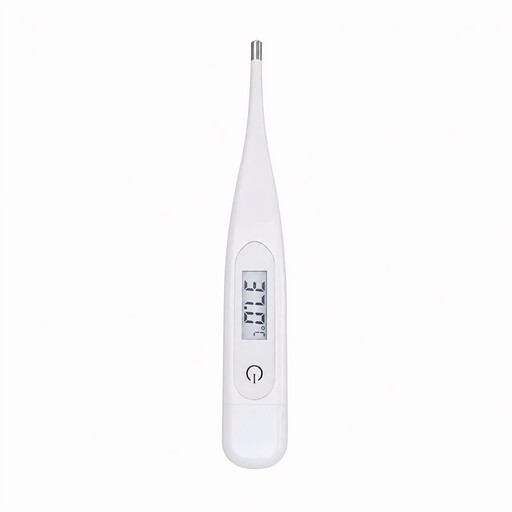
Why it suits this profile: This pen-style model is suitable as a simple thermometer for the whole family and fits easily in a medicine cabinet or wash bag.
The product information states a resolution of 0.1 °C, an audible beep and switching between °C and °F. No disposable probe covers are required.
Versatile basic thermometer for home use, mercury-free design and compact pen-style format.
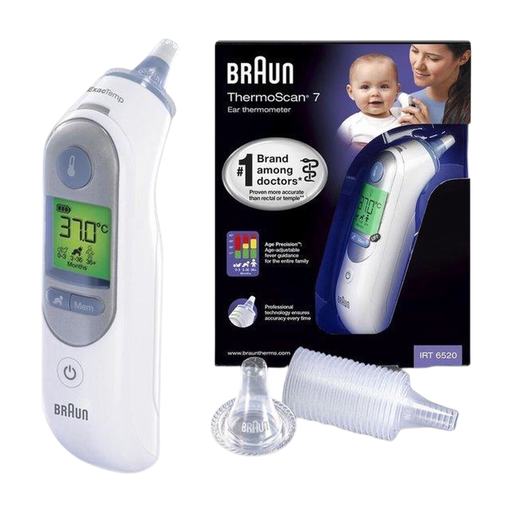
Why it suits this profile: This ear thermometer is designed for families who value age settings, positioning guidance and a complete set.
According to the product description, the ExacTemp indicator helps check that the thermometer is positioned correctly. The set includes batteries, 21 hygienic probe covers and a protective case.
Supports age groups of 0–3 months, 3–36 months and older; memory for previous readings.
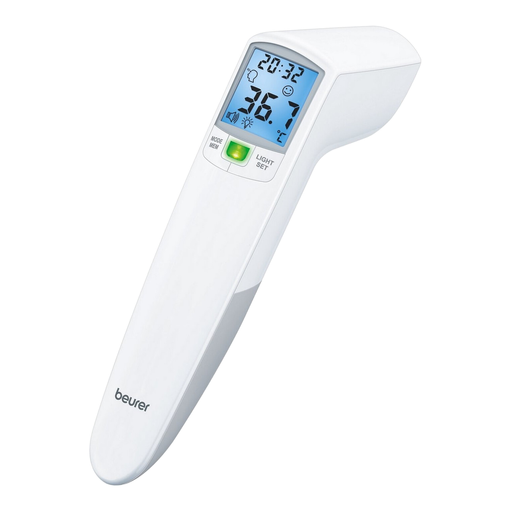
Why it suits this profile: This contactless thermometer is practical for families who take frequent readings and want to review previous results.
According to the product description, the correct measurement distance of 4–6 cm is indicated. This makes it clearer when to take a reading.
60 memory locations, measurements for body, objects and surroundings, plus a colour-coded indication.
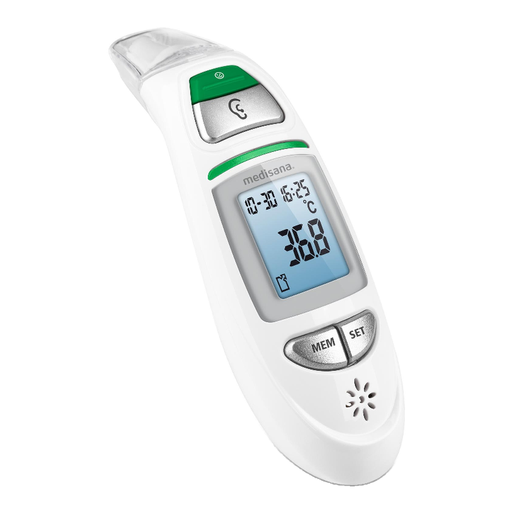
Why it suits this profile: The compact contactless design is convenient for everyday use at home and on the go, without direct skin contact.
The product information explicitly states that the model is designed for forehead measurements. This avoids confusion about taking an internal reading.
Contactless infrared measurement, memory function and display readings to one decimal place.
We have compiled a complete, up-to-date list of products that fully meet these strict selection criteria and the applicable European safety regulations.
A colour code or fever indicator is only a tool for interpreting a result. A thermometer is not a substitute for medical assessment.
Its lifespan depends on battery use, storage, cleaning and damage to the sensor. Store the device in a dry place, replace the batteries in good time and follow the maintenance instructions. If the screen is damaged, the casing is loose or the results keep fluctuating, replacing the thermometer is wiser than continuing to use it.
A forehead thermometer can be practical for a baby, especially when contactless measurement is possible. Always follow the manufacturer’s age and usage instructions. Pay attention to measurement distance, sweat, hair and environmental factors. If you are concerned about a baby’s temperature or condition, contact a healthcare professional.
In addition to the purchase price, batteries, probe covers and any replacement accessories may incur costs. A contactless thermometer usually does not use disposable probe covers, while some ear thermometers do require them. Therefore, compare the included accessories and ongoing costs before making your choice.
