
Vandaag of morgen in huis

Kwaliteit gegarandeerd

Welkomstaanbiedingen ontgrendelen: GRATIS bezorging | Tot 80% korting | Gratis 30 dagen JoyPlus-proefperiode
Download de app
A digital thermometer is a household essential for many families, particularly if you have a baby, child or older person at home. Even so, choosing the right model is not always as straightforward as it seems. A low price, a large screen or a claim such as “one-second reading” does not automatically mean that a thermometer is right for your circumstances.
The key question is not just how quickly you can measure a temperature, but also where you take the reading, how you use the device and whether the instructions are clear. Below, you can find out which features matter and which digital thermometers suit different situations.
An infrared thermometer can display a result within one second. This is useful when measuring a sleeping baby or an unsettled child, but a fast reading is not necessarily a consistent one. Distance, movement, sweat, hair and ambient temperature can all affect the result.
Check whether the manufacturer specifies a particular measuring distance and whether the device has a distance or positioning guide.
A forehead thermometer works differently from an ear thermometer or a pen-style thermometer for underarm, oral or rectal measurements. As a result, the readings are not always directly comparable.
A contactless thermometer is hygienic and convenient for families, but it must be positioned correctly on the forehead. An ear thermometer works quickly, but it needs to be placed correctly in the ear and often requires a clean probe cover. A classic digital thermometer with a flexible tip can support several measuring sites, but because it comes into contact with the skin, cleaning is particularly important.
Memory storage, colour coding, silent mode and object temperature measurement can all be useful. However, they do not automatically make a thermometer more suitable for your household. Large memory capacity is mainly relevant if you want to track temperature changes over several readings. Object measurement is handy for checking bath water or milk, for example, but it does not replace body temperature measurement.
First, choose the measuring site you are most likely to use:
For babies and young children, a silent mode, backlit display and short measuring time are practical features. When choosing a baby thermometer, also check whether the manufacturer specifies a particular age limit or usage restriction.
A display with a resolution of 0.1 °C makes small differences visible. This does not mean that every reading is accurate to exactly 0.1 °C. So also check the stated margin of error and measuring range.
A memory function helps you track consecutive readings. It is also best to record the measuring site and time. This prevents forehead, ear and underarm readings from being compared without context.
Check the following before buying:
A CE mark may form part of the conformity information for a medical device, but you should also check the full product information, manufacturer details and instructions for use. Use a thermometer only as directed. A reading is not a substitute for medical advice.
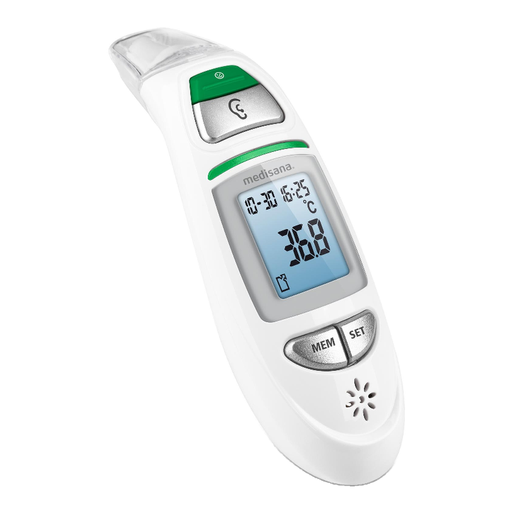
Why it suits this profile: This model is designed for simple, contactless forehead readings and is suitable for babies, children and adults. Its controls and digital display make everyday monitoring straightforward.
The description mentions a memory function and readings shown to one decimal place. The instructions require clean, dry skin and a fixed distance, making it clear that the measuring method still matters.
Contactless forehead readings, memory function and a compact design for use at home.
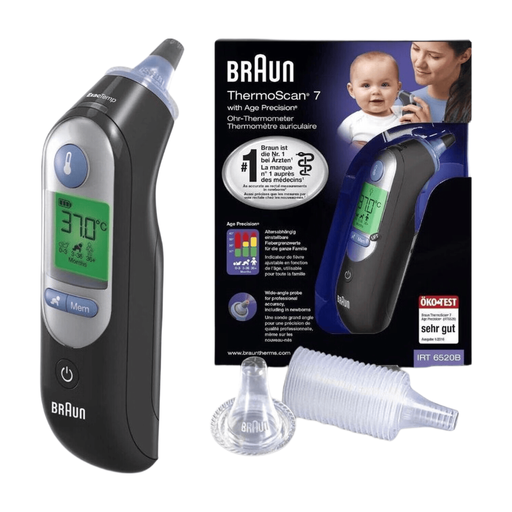
Why it suits this profile: A family that deliberately chooses an ear thermometer gets a model with age settings, a positioning indicator and hygiene covers included.
The ExacTemp indicator helps you position the thermometer correctly in the ear. According to the product information, use a clean cover for each reading to maintain hygiene.
Age settings, colour-coded display, pre-heated probe and positioning guide.
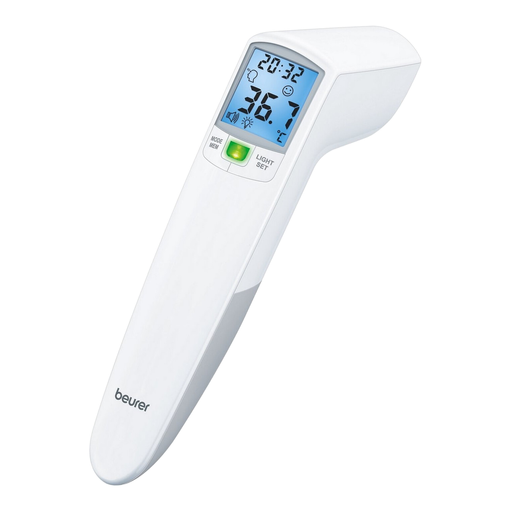
Why it suits this profile: This model is well suited to users who want to record temperatures regularly and also measure surfaces or ambient temperature, such as families with young children.
The recommended distance of 4–6 cm and automatic start help deliver repeatable readings. The colour code and distance signals make the device easier to use correctly.
60 memory spaces, contactless readings, object and ambient temperature measurement, plus a large backlit display.
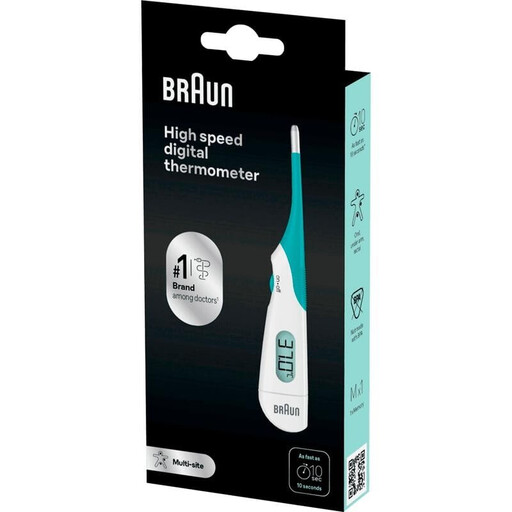
Why it suits this profile: The flexible tip and three measuring options make this a practical choice for adults and families looking for one pen-style medical thermometer to use at home.
You are not reliant on a contactless reading: according to the product information, this model is suitable for oral, rectal and underarm measurements. Clean the measuring tip as instructed.
Flexible tip, memory for the last reading and a stated measuring time of approximately eight seconds.
We have put together a complete, up-to-date list of products that fully meet these strict selection criteria and the applicable European safety regulations.
For a useful result, the conditions are at least as important as the device itself:
A temperature reading is a helpful tool. If you are concerned about a baby, persistent fever, serious symptoms or an unusual reading, contact your GP or NHS 111.
Its lifespan depends on battery use, storage, cleaning and the sensitivity of the sensor. A thermometer may remain usable for longer if you store it in a dry place, do not drop it and clean it only as instructed. Before use, check that the display, casing and measuring tip are undamaged.
An infrared thermometer can be practical for babies because you can often take a reading without touching them. However, follow the specified distance and positioning instructions. If you are unsure about a reading, you can repeat it or seek medical advice. Also check whether the specific model is suitable for your baby’s age.
In addition to the purchase price, you may need to budget for batteries, cleaning materials and, with an ear thermometer, disposable covers. A contactless forehead thermometer generally does not require disposable covers, whereas an ear thermometer may need additional hygiene accessories. Include these recurring costs when comparing models.
