
Vandaag of morgen in huis

Kwaliteit gegarandeerd

Welkomstaanbiedingen ontgrendelen: GRATIS bezorging | Tot 80% korting | Gratis 30 dagen JoyPlus-proefperiode
Download de app
A digital thermometer is part of the standard kit in many Dutch households. But it’s often only after buying one that you find out whether it’s easy to use. Taking a reading can be fiddly, the screen may be hard to read, or a contactless thermometer may show different results if you don’t hold it at the right distance.
As a Joybuy Product Recommendation Officer, I’ve filtered out the most important product specifications and practical points to consider. This will help you choose a digital thermometer that suits your family, when you’ll use it and your budget.
An infrared thermometer that gives a reading in under a second is handy. However, that doesn’t automatically mean every reading will be the same in all conditions. A cold or sweaty forehead, direct sunlight, incorrect measuring distance or movement can all affect the result.
So check:
A red screen, audible signal or colour code can help you recognise a reading quickly. It isn’t a diagnosis. The alert threshold can vary by brand, age setting and measuring method. According to some brands’ product information, colour codes are intended to help with interpreting readings. Always check the instructions and consider any symptoms too.
If you’re unsure, get an unusually low or high reading, or are concerned about a baby or child, it’s sensible to contact your GP or another healthcare professional.
A thermometer with an object mode can also measure milk, bath water or a surface. That’s useful, but only if you actually need the feature. A larger memory, silent mode and backlit screen are most useful when taking readings at night or monitoring several family members.
Also consider ongoing costs. A pen-type thermometer often uses a small button-cell battery. An ear thermometer may need disposable probe covers. A contactless thermometer usually uses AAA batteries, but its sensor needs careful maintenance.
A simple digital thermometer with a flexible tip is suitable if you’re looking for a basic option. This measuring method may take longer, but it has few extra settings.
A forehead thermometer or contactless thermometer is handy for taking a quick reading, especially when children are asleep or you’re measuring several people. An ear thermometer takes a reading in the ear and can be practical for families, but you’ll need to position it at the correct angle according to the instructions.
A 3-in-1 infrared thermometer sometimes combines ear, forehead and object readings. Check whether the object mode is intended for milk, bath water, food or surfaces only. Don’t use object mode as a substitute for measuring body temperature.
A clear screen is important for older people, taking readings at night and situations where you need to act quickly. Useful features include:
An audible signal usually confirms that the reading is ready. With a silent thermometer, you can switch this signal off, but check whether the device still gives a visual or vibration alert.
Clean the sensor according to the instructions. Don’t immerse a digital thermometer in water unless the manufacturer specifically says that you can. Use the recommended hygiene covers with an ear thermometer where required.
Look for a CE mark and check the details of the manufacturer, importer or EU responsible person. A CE mark is a declaration of conformity with applicable European rules; it isn’t a general guarantee that every reading will be error-free in all conditions. Treat claims such as “clinically tested” or “medically approved” as statements made by the brand, and check the product documentation.
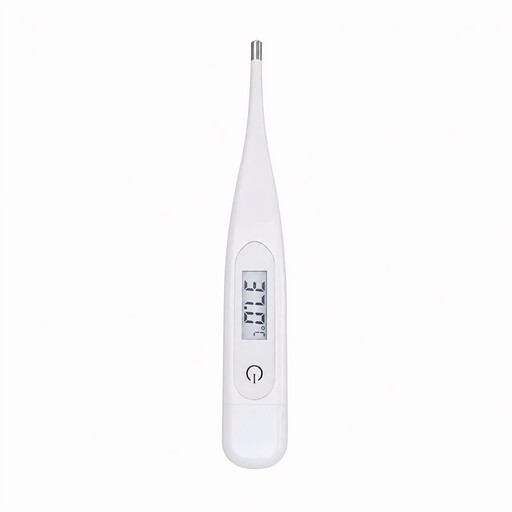
Why it suits this profile: A simple thermometer for measuring body temperature, with no infrared settings. Suitable for the medicine cabinet, travel and everyday use by the whole family.
The pen-style design has no complicated measuring modes. The product information specifies a mercury-free design, a display resolution of 0.1 °C and a range of 32.0 °C to 42.9 °C.
Mercury-free, °C/°F switching and an audible signal when the reading is ready.
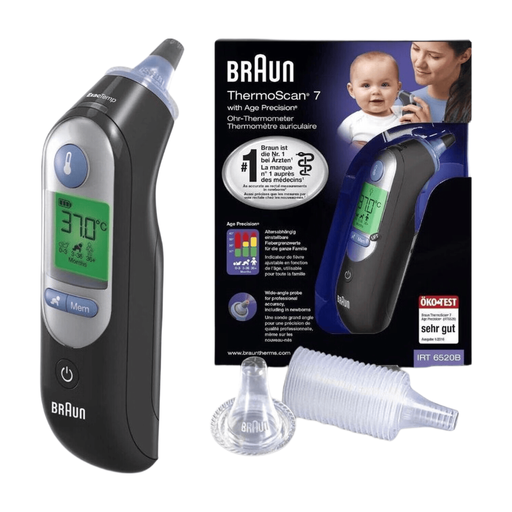
Why it suits this profile: For families looking for an ear thermometer with age settings, positioning guidance and hygienic accessories.
According to the product information, Age Precision and the ExacTemp indicator are designed to support age settings and correct positioning. Follow the instructions provided to use the thermometer correctly.
Age settings, colour-coded screen, pre-warmed tip and storage for 9 readings.
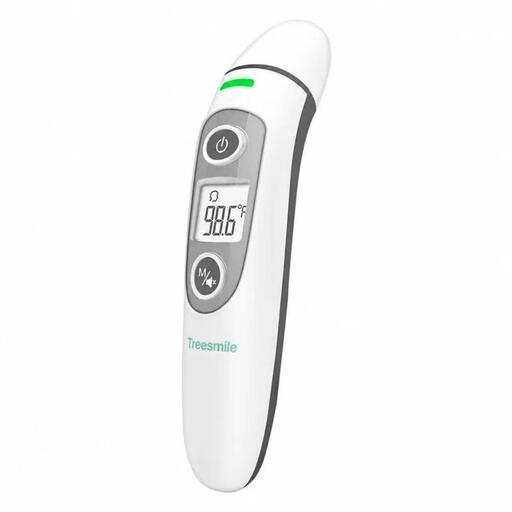
Why it suits this profile: For households that want one device for measuring body temperature, milk, food, bath water and room temperature.
Separate ear, forehead and object modes make it clear which type of reading you’re taking. The product information also specifies a silent mode and memory for 35 readings.
Three measuring modes, an LCD screen with colour backlighting, 35 memory slots and 2 AAA batteries included.
We’ve put together a complete, up-to-date list of products that meet these strict selection criteria and current European safety requirements.
Take extra care when using a thermometer for babies. Don’t take a reading just after a child has been under a warm blanket or has been physically active. For young children, use only the method specified for their age in the instructions.
Its lifespan depends on the battery type, how often it’s used, how it’s stored and how well it’s maintained. Keep the device dry, avoid dropping it and remove the batteries if it won’t be used for a long time. Check the sensor for dirt or damage. Replace the thermometer if the screen, buttons or readings seem unreliable.
A forehead thermometer can be practical because you usually don’t need to touch a sleeping baby to take a reading. Make sure you follow the recommended distance and measuring method. The brand’s product information should be your guide to age limits and use. If you’re unsure about a reading or a baby’s condition, you can seek medical advice.
As well as the purchase price, the main costs to consider are batteries and any accessories. Many models use AAA batteries. Ear thermometers may need disposable hygiene covers, while a contactless forehead thermometer is generally used with a clean sensor. So check what’s included in the box and the recommended cleaning method before you buy.
