
Vandaag of morgen in huis

Kwaliteit gegarandeerd

Welkomstaanbiedingen ontgrendelen: GRATIS bezorging | Tot 80% korting | Gratis 30 dagen JoyPlus-proefperiode
Download de app
An infrared thermometer can be useful when you want to measure body temperature quickly without holding a thermometer against the skin. This is particularly practical when checking sleeping babies, restless children or several family members one after another. However, a contactless reading does not automatically produce a reliable result. The way you measure, the location selected and the additional features can all make a significant difference.
As a Joybuy Product Recommendation Officer, I filter product information according to practical considerations. Don’t just look for terms such as “fast” or “accurate”. Above all, check how the device should be used and which measurement method it supports.
A thermometer that displays a reading within one second is convenient to use. However, that does not mean every reading will be equally useful in all conditions. Sweat, hair, a cold room, direct sunlight or holding the thermometer at the wrong distance from the forehead can affect the result.
With a forehead thermometer, the forehead generally needs to be dry and free from hair. Follow the distance specified in the instructions carefully. Some models provide a distance indicator, while others require you to hold the device a few centimetres away yourself.
A contactless forehead thermometer is not automatically suitable for taking readings in the ear or for internal use. So check which type it is:
Only use a device in accordance with the instructions provided. A model that measures object temperature is not automatically suitable for every form of body-temperature measurement.
A thermometer with a fever alert, colour display or memory function can be useful, but the sensor remains the most important component. Check whether the probe is easy to clean and whether an ear thermometer requires disposable probe covers. Damage, dust and scratches on the sensor can affect the reading.
Also pay attention to the batteries. An infrared thermometer often uses AAA batteries, while a digital pen thermometer usually uses a button cell. Check whether batteries are included and remove them from the device if you are not going to use it for an extended period.
For a thermometer for babies, contactless measurement is often convenient because it disturbs a sleeping child less. An ear thermometer can also be suitable for young children, but correct positioning is important. Some models have age settings that help with interpreting a reading. According to Braun’s product information, the ThermoScan 7 uses different age groups for the fever indication shown. Treat this as an aid when reading the result, not as a medical diagnosis.
For adults and older people, a large display, silent mode or simple operation may be more important than an extensive range of measurement functions.
A display that shows readings to 0.1 °C makes small differences visible. However, this is not the same as guaranteeing a measurement error of just 0.1 °C. Always check the technical specifications and the conditions of use.
A model with a fever alert will usually display a colour, sound a beep or provide a vibration signal when a set threshold is reached. The threshold and the way it is determined vary from product to product. Check whether the alert can be adjusted and whether it can be used silently at night.
A thermometer with a memory function can store previous readings. This is useful when you want to compare temperature changes over several points in time. The number of stored readings varies considerably: some models save the last reading, while others store dozens of values.
With an ear thermometer, you also need to take hygiene covers into account. These increase the running costs, but according to Braun’s product information, they are intended to be replaced before every measurement. A forehead model without disposable accessories may therefore be simpler for everyday family use.
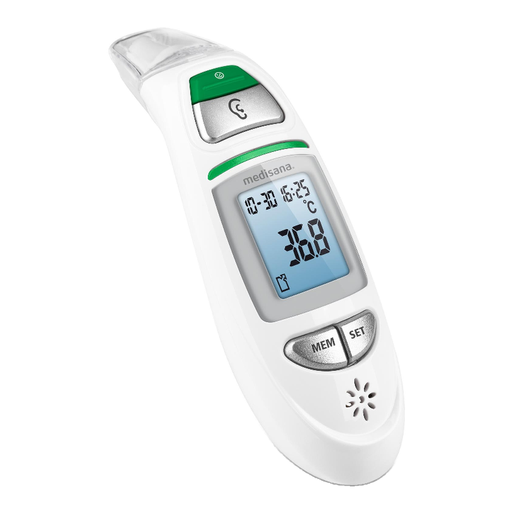
Why it suits this profile: This contactless forehead model is easy to use and, according to the product information, suitable for babies, children and adults. The digital display shows the reading to one decimal place.
The measurement method is clearly described as contactless and intended exclusively for the forehead. This reduces the risk of using the device incorrectly on another measurement site.
Contactless measurement, digital display and a memory function for previous readings. The sensor must be kept dry and clean, and the device is not waterproof.
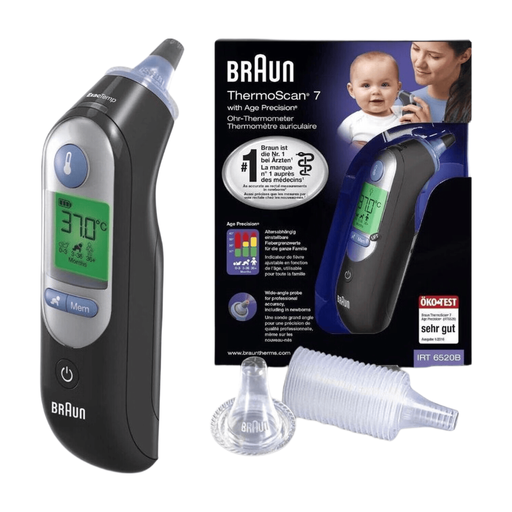
Why it suits this profile: A family that takes regular readings may benefit from an ear thermometer with age settings, a backlit display and positioning assistance.
According to the product information, the ExacTemp indicator supports stable positioning. Always use a clean probe cover and follow the instructions.
Age settings, colour coding, backlit display, pre-warmed tip and hygiene covers included. The covers are an ongoing expense.
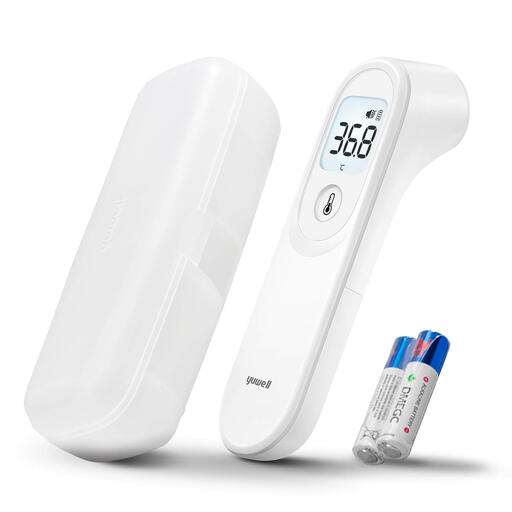
Why it suits this profile: This model focuses on fast readings for adults and children. The product information lists a distance sensor, large display, vibration function and silent mode.
The distance guidance helps prevent a common mistake with contactless models: taking a reading from the wrong distance. Silent mode avoids unnecessary noise during night-time checks.
According to the product information, a reading takes approximately one second, with a fever alert, large display and vibration function. Before buying, check the included instructions and local product documentation.
We’ve put together a complete, up-to-date list of products that fully meet these strict selection criteria and the applicable European safety regulations.
A home thermometer is intended as an aid. The reading does not replace an assessment by a doctor. If you have concerns about a baby, persistent fever, unusual behaviour or other symptoms, contact your GP or another healthcare professional.
A contactless forehead thermometer can be practical for babies because you do not need to touch the skin. Always check the age suitability, measure the temperature according to the instructions and do not rely solely on the number or the alert.
Its lifespan depends on battery use, storage, cleaning and the condition of the sensor. Store the device in a dry place, protect the probe from scratches and replace the batteries promptly. With an ear thermometer, you also need to keep a sufficient supply of hygiene covers.
In addition to the purchase price, you will generally only need batteries. An ear thermometer may involve extra costs because of disposable probe covers. A model with a memory function, silent mode or object measurement may cost more, but only choose these features if you genuinely need them in practice.
