First, measure the humidity and temperature where the clothes are stored, then tackle any persistent source of damp or ventilation problem. A dehumidifier is best seen as an extra measure if the damp problem persists. The Consumentenbond says that refrigerant dehumidifiers are particularly suitable for rooms above 15 °C; for a cold room, Qlima recommends its DD 808 desiccant dehumidifier. Then compare the noise while it’s running, the space available for the appliance, the tank or drainage option, and energy consumption. A stated capacity per day doesn’t guarantee the same performance in your living room.
Who should consider this?
Someone storing clothes in a damp area
You keep clothes in or near the shared living room and want to find out first whether the damp problem persists and what might be causing it. Milieu Centraal and GGD Leefomgeving describe ventilation and tackling damp as part of the solution.
A housemate who needs peace and quiet
You share the room for talking, working or relaxing, so you want to take the noise while the appliance is running into account. The Consumentenbond covers noise and testing methods for dehumidifiers in its buying advice and test information.
Someone using a cool shared room
The living room isn’t heated much, so you want to measure the temperature where the clothes are kept. The Consumentenbond and Qlima outline different considerations for refrigerant and desiccant dehumidifiers in cooler rooms.
What should you look for when choosing?
Start by checking the source of the damp and the temperature where the clothes are stored. Then compare noise levels and day-to-day tasks such as emptying the tank or draining the water. This helps you assess an appliance against the conditions in your shared living room, rather than just the figure on the packaging.
| What to consider |
What should you check? |
Who is this important for? |
| Damp and temperature |
Measure the humidity and temperature where the clothes are kept, and investigate possible sources of damp. Only compare capacity figures when the conditions they were measured in are also given. |
If I store clothes in or near the shared living room, I want to know whether the humidity persists and what’s causing it. Around 33% of consumers put damp control around clothing storage first. |
| Noise |
Compare noise information for each setting and think about when your housemates use the room. A decibel rating doesn’t tell you everything about the sound. |
If I use the same room for working, talking or relaxing, I want to know how noticeable the appliance is while it’s running. Around 27% of consumers put noise at the top of their list. |
| Emptying and positioning |
Check the tank capacity, full-tank warning or automatic shut-off, whether continuous drainage is possible, and the clearance specified in the manual. |
If I have limited space or can’t keep emptying the tank, I want to know in advance where the appliance and any drainage hose will fit safely. Around 20% of consumers put positioning and water drainage first. |
| Energy consumption |
Compare energy-use information under relevant conditions and consider how long you’ll use the appliance for. The stated wattage alone doesn’t predict energy consumption over a full cycle. |
If I’ll be using it regularly, I want to take energy consumption into account and see whether I can reduce the source of the damp first. Around 20% of consumers put running costs first. |
Common buying mistakes
-
Assuming the maximum capacity is what you’ll get each day at home
The amount of water an appliance removes depends partly on the temperature and humidity. The Consumentenbond tests dehumidifiers under different combinations of these conditions.
Measure the conditions in your room and only compare stated capacities when the test conditions are provided too.
-
Choosing a compressor model without checking the room temperature
According to the Consumentenbond, refrigerant models work particularly well above 15 °C. Desiccant models are an option for cold rooms, but generally use more energy, according to its buying advice.
Measure the temperature where the clothes are kept, and compare the different technologies if the area stays cold.
-
Using a dehumidifier instead of ventilating or tackling a source of damp
A dehumidifier doesn’t remove polluted air or fix a leak. Sources of damp and any mould need to be dealt with separately.
Investigate the cause, keep ventilating and deal with any mould separately.
-
Not agreeing who’ll empty the tank or where the appliance and cable will go
A full tank can interrupt use, and a hose or cable can get in the way in a shared room. The manual for the exact model sets out where the appliance should go and how much clearance its air vents need.
Agree who’ll empty the tank, and check the available space, walkways, power socket and model-specific instructions before buying.
Brands to consider
Eurom
The DryBest models are worth comparing for refrigerant dehumidification in a heated room. According to Eurom, the DryBest 10 has a continuously adjustable humidistat, a 2-litre tank and a connection for continuous drainage.
- Eurom states that the DryBest 10 has a capacity of 10 l/24 hours, uses 230 W and operates at 42 dBA.
- These are manufacturer figures for this model, not measured performance in your living room. Follow the positioning and connection instructions for the exact model.
Qlima
Qlima offers refrigerant models such as the D 612, as well as desiccant models such as the DD 808, which the brand recommends for cold rooms.
- Qlima states that the D 612 has a humidistat, a 1.8-litre tank and an option for drainage via a hose.
- Qlima recommends the DD 808 for rooms below 15 °C. Claims about quiet operation or air purification aren’t independent comparisons and don’t automatically apply to other models.
De'Longhi
The Tasciugo AriaDry DEX210SF is a compressor dehumidifier with a stated laundry function, hygrometer and provision for continuous drainage.
- De'Longhi states that the DEX210SF has a capacity of 10 l/24 hours at 30 °C and 80% relative humidity, operates at 36 dB(A) and uses 250 W.
- These figures apply to this model under the stated test conditions; they don’t predict the performance or noise comfort in another room.
Meaco
The Arete One 20L is a larger compressor option. Meaco also offers a version of this model with a pump.
- Meaco gives a coverage area of up to 100 m², based on a ceiling height of 2.5 metres.
- Meaco explains that the actual amount of water removed may be lower than the maximum stated. The coverage area alone isn’t a reason to choose the 20L version for every shared living room.
Dehumidifiers at Joybuy
These dehumidifiers are options to compare for controlling damp in a shared living room. For each model, check the stated conditions, how the water is drained and how much space the appliance needs.
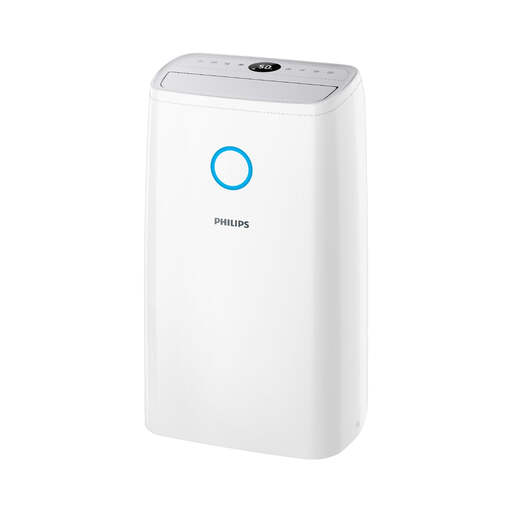 Image unavailable
Philips 3000 Series DE3306/11
A compressor dehumidifier to compare if you’re looking for adjustable humidity and several fan speeds.
The product description lists three fan speeds, a 4-litre tank, optional drainage, a timer and automatic shut-off when the tank is full. The instructions call for at least 30 cm of clearance around the appliance and 50 cm in front of the air outlet. They identify R290 as a flammable refrigerant and warn against using the appliance near naked flames or sources of ignition.
View at Joybuy
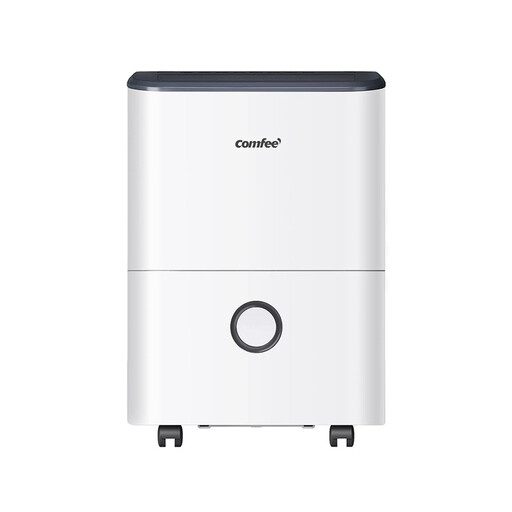 Image unavailable
Comfee MDDF-20DEN7
An option to compare if the stated capacity and power suit the conditions in which you want to dehumidify the room.
The product name states 20 l/24 hours and 290 W. Compare the capacity with the model’s test conditions and the temperature and humidity in your living room.
View at Joybuy
 Image unavailable
CONOPU 16L dehumidifier
A model to compare if you want to consider a drying mode and continuous drainage as well as damp control.
The product description states 12 l/24 hours at 86 °F and 90% RH, a 3.8-litre tank, adjustable humidity and continuous drainage. The instructions say to keep the appliance upright and wait two hours before use after transporting or tilting it. They also specify the required clearance.
View at Joybuy
 Image unavailable
ELECCI 12L/D dehumidifier
An option to compare if you want to take a laundry drying mode and continuous water drainage into account.
The product description states a maximum of 12 l/24 hours at 86 °F and 90% RH, a 3.8-litre tank, adjustable humidity and a 24-hour timer. The instructions say to keep the appliance upright, wait two hours after transporting or tilting it, and leave at least 10 inches of clearance.
View at Joybuy
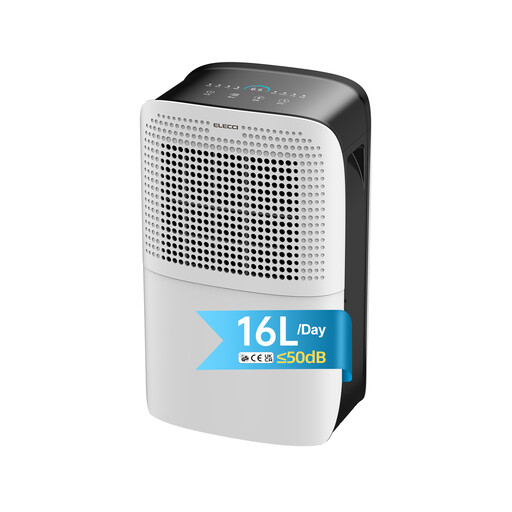 Image unavailable
ELECCI 16L/D dehumidifier
A model to compare if you want to weigh up a drying mode, continuous drainage and several operating modes for your shared room.
The product description lists a 3.1-litre tank, a 24-hour timer and four modes, including a drying mode and adjustable humidity. It also mentions wheels and automatic shut-off when the tank is full.
View at Joybuy
Frequently asked questions
Should I ventilate first, or can I put a dehumidifier in straight away?
Fix any possible leak or other source of damp and keep ventilating. A dehumidifier doesn’t replace removing polluted indoor air. The Consumentenbond suggests a dehumidifier as a possible extra measure if humidity stays consistently above 65% after the causes have been addressed; this is buying advice, not a legal limit.
Can I put the dehumidifier right next to clothes or in a full cupboard?
Check the manual for the exact model and keep the air inlet and outlet clear. The Eurom DryBest manual calls for a flat, stable surface and clearance around the appliance. Don’t assume those model-specific instructions apply to another model.
What should I do with the collected water?
Choose a tank that your housemates can empty or, if there’s a suitable drainage route, a model with continuous drainage. Check the full-tank warning and drainage instructions for the model you choose, as a full tank can interrupt use.
Am I always limited to just two years of statutory warranty in the Netherlands?
No. According to the Dutch government, there’s no fixed statutory warranty period in the Netherlands; consumers are entitled to a product that works as it should. A manufacturer’s warranty is extra, and if there’s a problem, you should contact the seller.


