What should you look for when buying?
The Consumentenbond suggests a dehumidifier as a possible addition if humidity remains consistently above 65% after you have tackled the causes. So first measure at typical times and after showering, then compare temperature, noise and water drainage.
Ventilate the bathroom first
Choose this when: the living room gets damp mainly shortly after showering. GGD Leefomgeving and Milieu Centraal recommend extra ventilation while you shower.
Bear in mind: a dehumidifier in the living room does not extract stale indoor air, so also check that moist air is being extracted from the bathroom.
Compressor dehumidifier
Choose this when: the living room is usually warmer than 15 °C and remains damp after you have tackled the source of the moisture.
Bear in mind: the appliance makes noise, and its stated capacity is based on specified test conditions, not a guaranteed output in your home.
Desiccant dehumidifier
Choose this when: the shared room is usually cold or unheated; according to the Consumentenbond, desiccant dehumidifiers work well in cold rooms.
Bear in mind: the Consumentenbond says desiccant models use more electricity than condensation models.
| Concern |
What to look for when buying |
Who is this important for? |
| Source of moisture and persistent humidity |
Measure before and after showering and at typical times; check bathroom extraction and other possible sources of moisture. |
I want to know whether better extraction will get rid of the dampness peak before my housemates have to manage an appliance. Around 31% of consumers give the source of moisture and persistent humidity top priority. |
| Noise while sharing the room |
Compare the stated dB(A) rating and check whether the fan settings or timer suit the times when the room is in use. |
If conversations and relaxing in the living room come first, I want to know when the appliance will be audible. Around 25% of consumers prioritise peace and quiet while sharing the room. |
| Emptying the water tank and sharing responsibility |
Check the tank capacity, the full-tank protection and whether a drain hose can be used where you plan to put the appliance. |
I want to avoid housemates unexpectedly having to empty a full tank, and would rather agree in advance who will maintain the appliance. Around 19% of consumers give easy shared management of the water tank top priority. |
| Electricity use during regular operation |
Compare the power rating in watts and the expected running time on the same basis; you’ll also need energy use in kWh and your own tariff to work out the cost. |
If the appliance will be on frequently, I want to factor in electricity use when choosing. Around 13% of consumers prioritise running costs during regular use. |
| Performance in a cold living room |
Measure the usual temperature and compare stated capacities only with the corresponding temperature and relative humidity. |
If my shared room is usually cold, I want to choose a type of technology suited to that temperature. Around 12% of consumers give performance in a cold room top priority. |
Dehumidifiers at Joybuy
These products are intended to provide extra dehumidification in a living space if the moisture problem persists after you have tackled its source. Focus on comparing humidity control, the tank and water drainage options.
 No image available
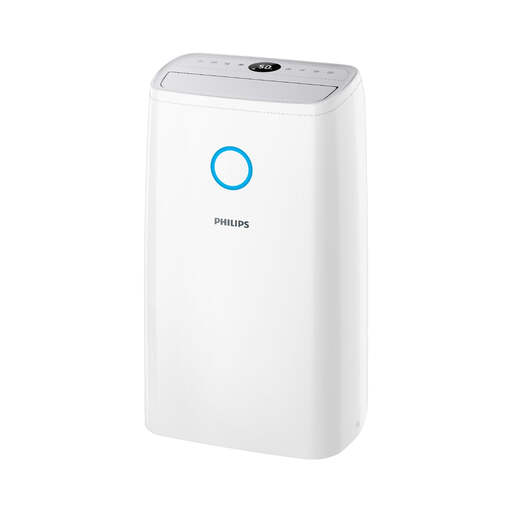
PHILIPS 3000 Series DE3306/11 dehumidifier
Automatic humidity control and options for collecting or draining water may be useful if you want to empty the tank manually less often.
The product information lists a 4 L tank, three fan speeds, a timer, automatic shut-off when the tank is full and optional continuous drainage. The product name specifies rooms up to 150 m²; check that this stated use is suitable for your own room.
For continuous drainage, the product information specifies a hose with an internal diameter of 14 mm and a downward-sloping route to a floor drain. The appliance contains R290: the product information warns against using it near naked flames or ignition sources and says that repairs to the refrigerant circuit must be carried out by a professional.
View at Joybuy
 No image available
CONOPU 16L dehumidifier, 2.5 L tank
The product information lists automatic humidity control and continuous drainage—features worth comparing if the room remains damp after you have tackled the source of the moisture.
The information specifies a compressor, a 2.5 L tank, a 24-hour timer and a sleep mode with a stated noise level of 30 dB. The product name also mentions R290.
View at Joybuy
 No image available
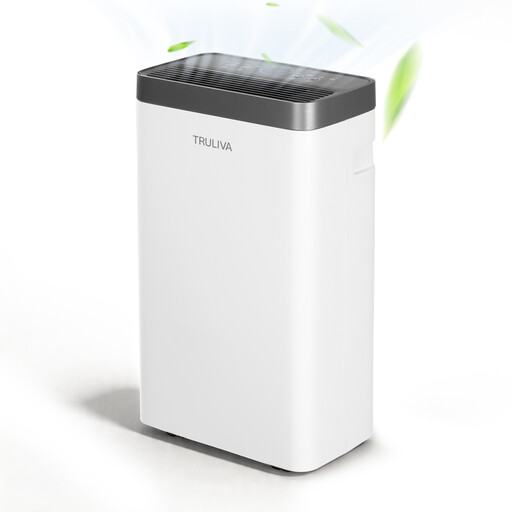
TRULIVA AP10-2012EE dehumidifier
Adjustable humidity settings and continuous drainage may suit a room that remains damp after you have tackled the source, while reducing the need to empty the tank manually.
The product name specifies a coverage area of approximately 32 m². The product information lists a 24-hour timer, automatic defrosting, a washable filter, and the option to collect water in the tank or drain it continuously through a hose.
The product information recommends using it at 5–35 °C; below 15 °C, ice may form and the compressor may stop temporarily during automatic defrosting.
View at Joybuy
 No image available
ELECCI 12L/D dehumidifier, 3.8 L tank
Adjustable humidity settings and the choice between tank collection and continuous drainage are useful if housemates want to share or reduce the need to empty the tank.
The product name specifies rooms up to 25 m². The product information lists a 3.8 L tank, continuous drainage with a hose, automatic defrosting and a 24-hour timer. The product name also mentions R290.
View at Joybuy
 No image available
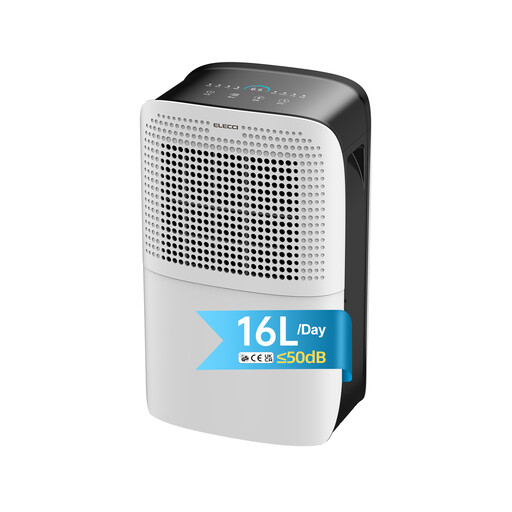
ELECCI 16L/D dehumidifier, 3.1 L tank
Automatic humidity control and continuous drainage are features to compare if humidity remains high after you have tackled the source of the moisture.
The product name specifies rooms up to 32 m². The product information lists a 3.1 L tank, four modes, automatic shut-off when the tank is full, continuous drainage and a 24-hour timer. The product name also mentions R290.
View at Joybuy
Frequently asked questions
Should the dehumidifier go in the bathroom or the shared living room?
Start by tackling shower moisture at its source: ventilate more while showering and make sure moist air can be extracted outdoors. Only consider dehumidifying the living room if measurements show that a persistent problem remains there after you have addressed the source; follow the chosen appliance’s instructions on where to place it.
How should you share the use and maintenance of a dehumidifier?
Agree on who will empty the tank and maintain the filter according to the manual. Before buying, check whether a permanent drain is possible where you plan to put the appliance; this can reduce the need to empty the tank manually.
What does it cost to run, and who can help if it breaks down early?
Running costs depend on how long you use the appliance, its electricity consumption and your electricity tariff. According to ACM ConsuWijzer, statutory warranty is separate from any paid or manufacturer’s warranty: if a product used normally does not meet what you could reasonably expect, the seller is responsible for providing an appropriate solution at no cost.
What safety information should you check when buying in the Netherlands?
The Dutch Government states that electrical appliances placed on the market in the EU must meet the applicable safety requirements and carry the required CE marking. Check the marking and instructions for the exact model; a brand name alone does not show that a particular model meets the requirements.
What should you do about mould or a problem with a rented home?
A dehumidifier will not remove existing mould. The GGD recommends removing mould while also tackling moisture, ventilation and heating. Report damp, leaks or mould linked to poor maintenance to your landlord in writing first; the Dutch Government outlines next steps if the problem is not fixed.


